Season 1
6 episodes Jul 24, 2025
- 1 Writing for a Legend
- 2 Breakdown in the Bahamas
- 3 A Shot with Shaboozey
- 4 Country Confessions
- 5 No More Kumbaya
- 6 Ending on an Upbeat

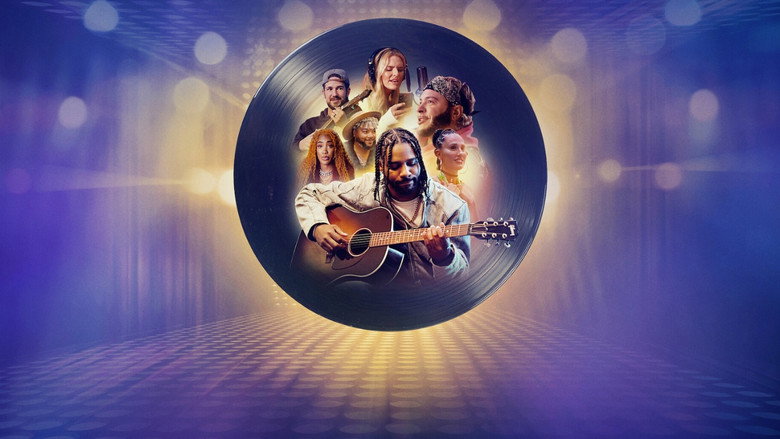
Creativity and ego collide in this all-access reality series that follows a group of gifted songwriters as they pen hits for music's biggest stars.
Latest episode: S1 E6 Ending on an Upbeat (Jul 24, 2025)
Official
I’ve spent the last few days trying to decide whether Hitmakers is a fascinating experiment or just another glossy distraction. The answer, like most things in pop music, depends on what you’re listening for.
The premise is simple: twelve songwriters, three luxury locations, six hours to write a hit. No pressure. The show drops us into songwriting camps in the Bahamas, Nashville, and Cabo, where teams of producers and lyricists—all with impressive credits (John Legend, Giveon, BLACKPINK’s Lisa)—are tasked with crafting songs for major artists.
The cameras roll as they brainstorm, argue, and occasionally stumble into something brilliant. It’s Top Chef meets The Voice, if The Voice were about the people who write the songs instead of the people who sing them.
And that’s where things get interesting.

The first thing that strikes me is how normal these writers seem. Not in the sense of being ordinary—these are people who’ve shaped the sound of pop music for the last decade—but in how they talk about their work. There’s no mystique, no grand speeches about art.
Just a lot of “What if we try this?” and “Does this melody feel too sad?” and “I think the pre-chorus needs more energy.” It’s refreshing, in a way. Songwriting is often mythologized as this magical, untouchable process, but here it’s just… work. Hard, collaborative, sometimes frustrating work.
Take the episode where they’re writing for John Legend. One team is stuck on a melody, and you can see the frustration in their faces. They’re not arguing about ego or credit—they’re arguing about whether the song needs a bigger lift before the chorus.
It’s the kind of detail that would bore most viewers to tears, but for anyone who’s ever tried to write a song, it’s riveting. This is the stuff that never makes it into the liner notes.
And yet.
There’s a tension at the heart of Hitmakers that the show never quite resolves. Is this a documentary about the music industry, or is it reality TV dressed up in studio headphones? The answer, unfortunately, leans toward the latter.
The show’s creator, Adam DiVello, cut his teeth on The Hills and Selling Sunset, and it shows. The writers are housed in mansions with infinity pools, flown in on private jets (or so it seems), and given endless bottles of champagne. It’s all very Bravo, right down to the manufactured interpersonal drama.
Which brings me to Stephen.
Oh, Stephen.
I don’t know if Stephen is a villain, a misunderstood genius, or just a guy who rubbed people the wrong way, but the show wants you to have an opinion about him. There’s a moment in the Bahamas where he’s accused of being “too controlling” in the studio, and the other writers react like he’s just kicked a puppy. The camera lingers on their eye rolls, their sighs, their passive-aggressive comments.
It’s the kind of reality-TV editing that makes you wonder: Is this real, or is this just good TV?
And that’s the problem. Hitmakers is at its best when it forgets to be a reality show and just lets the music happen. There’s a sequence in the Nashville episodes where the writers are crafting a song for Shaboozey, and the debate over how “country” the track should sound is genuinely fascinating. One writer wants a twangy guitar riff; another argues for a more pop-leaning beat.
They go back and forth, trying different versions, and you can feel the song evolving in real time. It’s the kind of behind-the-scenes access that music nerds dream of.
But then the show cuts to a group dinner where someone is complaining about the wine selection, and suddenly we’re back in Selling Sunset territory. It’s jarring, like watching a documentary about particle physics only to have it interrupted by a Real Housewives confession cam.
The other issue is the lack of payoff. By the end of the season, we don’t actually know which of these songs made it onto an album. There are vague mentions of John Legend “loving” a track called “Cherry,” and Lisa from BLACKPINK “supposedly, allegedly” recording “Eleven,” but nothing concrete.
It’s like watching a cooking show where the chefs plate their dishes, but the judges never take a bite. For a series that’s supposed to be about the making of hits, it’s oddly uninterested in whether any of these songs actually become hits.
That said, there’s something undeniably compelling about the sheer speed of the process. These writers are under immense pressure—six hours to deliver a demo that could change their careers—and yet, somehow, they do it. Again and again.
The songs they come up with aren’t just good; they’re good enough to be pitched to superstars. That’s no small feat. And while the show doesn’t dive deep into the economics of songwriting (more on that in a second), it does give you a sense of how precarious the whole enterprise is.
These people are at the top of their game, and yet they’re still hustling, still competing, still one bad demo away from having to drive for Uber (as one writer, Trey Campbell, casually mentions in Episode 2).
Which brings me to the show’s biggest blind spot: money.
Hitmakers is, in many ways, a fantasy of the music industry. The writers live in luxury, they’re surrounded by beautiful people, and they’re working with some of the biggest names in music. But as Variety points out, this is the one percent of songwriters.
The reality for most is far less glamorous. Songwriting is a gig economy. You get paid per song, and if your track doesn’t get placed, you don’t get paid at all.
There’s no health insurance, no 401(k), just the hope that the next demo will be the one that lands. The show touches on this—briefly—but it never really grapples with the implications. Instead, it smooths over the rough edges, presenting songwriting as a high-stakes game where the only thing at risk is your pride.
That’s a shame, because the moments when Hitmakers does acknowledge the industry’s harsh realities are some of its strongest. There’s a scene where one writer, Sevyn Streeter, talks about the frustration of writing a song that becomes a hit—only to see the credit (and the money) go to someone else. It’s a fleeting moment, but it’s the kind of thing that could have anchored the entire series.
Instead, it’s sandwiched between a montage of writers lounging by the pool and a heated argument about who gets to use the last bottle of coconut water.
So, is Hitmakers worth watching? It depends.
If you’re a music obsessive, if you’ve ever wondered what goes into writing a pop song, if you’re the kind of person who listens to a track and thinks, I wonder who wrote that?, then yes. The studio footage alone is worth the price of admission. There’s a thrill in watching these writers work, in seeing how a melody or a lyric comes together in real time.
It’s like getting a backstage pass to the creative process, and for that, I’m grateful.
But if you’re looking for a deep dive into the music industry, or a nuanced exploration of the people who make the songs we love, you might come away disappointed. Hitmakers is more interested in drama than depth, more concerned with personalities than process. It’s a show that wants to have its cake and eat it too—to be both a serious documentary and a guilty pleasure. And while it occasionally pulls it off, more often than not, it feels like it’s trying too hard to be both.
In the end, Hitmakers is a lot like the songs it’s trying to create: catchy, well-produced, and just a little bit hollow. It’s not a failure, but it’s not quite a hit either. It’s the kind of show that leaves you humming the melody long after it’s over, even if you can’t quite remember the lyrics.
"A niche peek into songwriting camps that entertains music industry insiders more than casual viewers."
The series pulls back the curtain on the collaborative process behind hit songs, a rare look at songwriting camps for anyone fascinated by music production. Outside that circle its appeal narrows quickly, and the behind-the-scenes mechanics are less engaging than expected. Music enthusiasts get the most out of it; general audiences, less so.
Netflix’s Hitmakers (2025) drops viewers into the pressure-cooker world of music’s most elite songwriters and producers as they race to craft potential hits for A-list artists. Premiering on July 24, 2025, the docu-reality series follows twelve industry heavyweights—names not yet fully disclosed in the available evidence—tasked with writing, producing, and recording demos for stars like John Legend, BLACKPINK’s Lisa, and rising country-pop sensation Shaboozey. The show promises a rare glimpse into the collaborative chaos behind chart-topping songs, latestnetflix.com contends, but early reviews suggest it delivers more drama than depth.
Hitmakers borrows from the real-world model of "writing camps," where songwriters and producers are sequestered—often in lavish locations—to churn out tracks for artists under tight deadlines. The series’ premise mirrors the high-stakes environment of these camps, where egos, creative clashes, and the pressure to deliver a hit can make or break careers. According to the evidence, the show’s contestants (referred to as "twelve established songwriters and producers") are given a single mission: craft songs that will be pitched to Legend, Lisa, Shaboozey, and—per some sources—Usher.
The series is produced by Done and Done Productions and Harvey Mason Media, with executive producers Adam DiVello (known for Selling Sunset) and Harvey Mason Jr., a Grammy-winning producer and former CEO of the Recording Academy. This pedigree suggests a polished, reality-TV sheen, but critics argue the show leans too heavily into interpersonal drama rather than the creative process itself. One review from The Hollywood Reporter calls it "shallow pop songwriting reality TV," noting that the series "gathers top songwriters and tasks them with crafting hits" but fails to fully explore the mechanics of how those hits are made.
The artists attached to Hitmakers read like a who’s who of global music. John Legend, a 12-time Grammy winner, brings his signature blend of soul and R&B to the table, while BLACKPINK’s Lisa—one of the most streamed solo artists in the world—represents the K-pop and global pop crossover appeal. Shaboozey, the breakout country-pop artist behind hits like "A Bar Song (Tipsy)," adds a fresh, genre-blurring energy to the mix.
Notably absent from the confirmed cast list in the evidence is Usher, despite mentions in some sources. Whether he appears as a featured artist or was merely rumored remains unclear, but his name has been floated as a potential collaborator. The series’ focus on these artists suggests a deliberate strategy to appeal to diverse audiences, from R&B and pop fans to K-pop stans and country listeners.
Early reactions to Hitmakers are mixed. While the concept is undeniably compelling—who wouldn’t want to peek behind the curtain of hitmaking?—critics argue the execution falls short. A recap from DMTalkies describes the series as a "mixed bag," noting that it "doesn’t quite hit the spot" in terms of showcasing the creative process. Instead, the show leans into the "quick and precise" nature of the industry, with interpersonal dynamics taking center stage.
One particular point of contention appears to be a contestant named Stephen, whose presence has sparked debate among viewers. The DMTalkies recap asks, "Does everyone hate Stephen?"—a question that hints at the kind of manufactured tension often found in reality TV. Whether Stephen is a villain, a misunderstood genius, or simply a red herring remains to be seen, but his inclusion underscores the show’s reliance on conflict to drive narrative.
For music industry insiders and fans alike, Hitmakers offers a tantalizing, if imperfect, look at the collaborative alchemy behind hit songs. The series’ strength lies in its access—viewers get to see the raw, unfiltered process of songwriting, from brainstorming sessions to studio recordings. However, its weakness is its tendency to prioritize drama over substance, a criticism that has dogged other reality-TV-meets-docuseries hybrids like Selling Sunset.
With only six episodes in its first season, Hitmakers may not have enough runway to fully explore the complexities of its premise. But for those curious about how the sausage of pop music is made—or just looking for a dose of industry gossip—the show is a compelling, if flawed, watch.
Entertainment rumors and trivia aggregated from public reporting. Treat speculation as unverified unless a cited source confirms it.
More titles in the same genres and with the same cast.