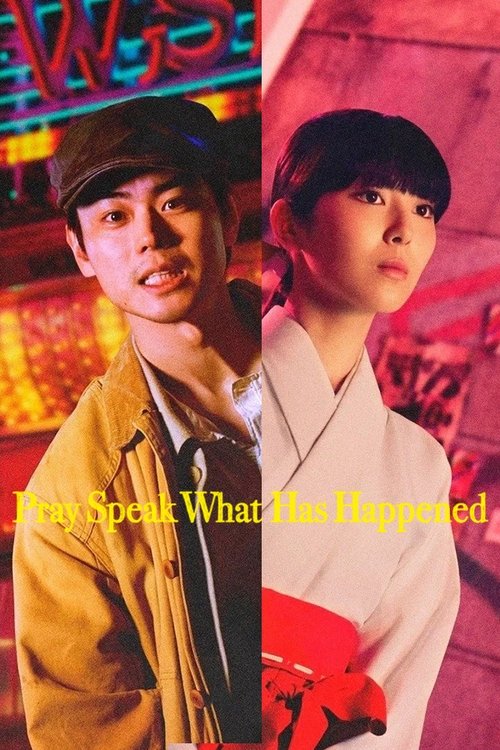
Series poster for Pray Speak What Has Happened (2025)

Pray Speak What Has Happened

2025
Ended • 1 Season • 11 Episodes
Director: Masaki Nishiura
Search on Netflix

Overview

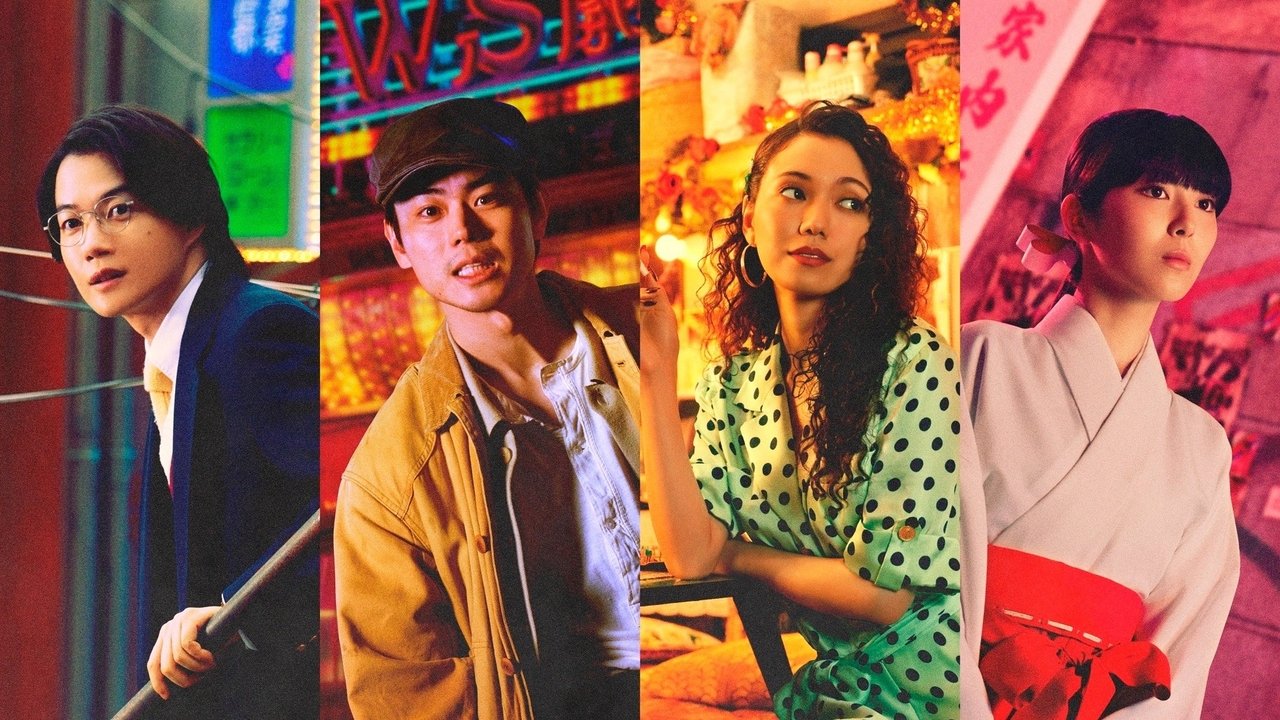
In 1984 Shibuya, four quirky young souls navigate life’s struggles while chasing joy in a city bursting with hope.

Seasons

Status
Ended
Seasons
1 season
Episodes
11 episodes
First aired
Oct 1, 2025

Cast

12 people

Reviews

5 min read

The Stage as a Mirror: How Pray Speak What Has Happened Turns Life Into Art and Back Again

I keep thinking about the first time Kube Mitsunari stumbles into the WS Theater. It’s not just that the place is a dump—peeling paint, flickering neon, the kind of dive where the air smells like stale beer and old dreams. It’s that the moment he steps inside, the camera doesn’t cut away.

We linger, just like him, on the scuffed stage, the tattered curtains, the way the light catches the dust motes like they’re part of the performance. That’s the whole show in a single shot: a man who thought he knew what art was, confronted with a place where art is made out of whatever’s lying around.
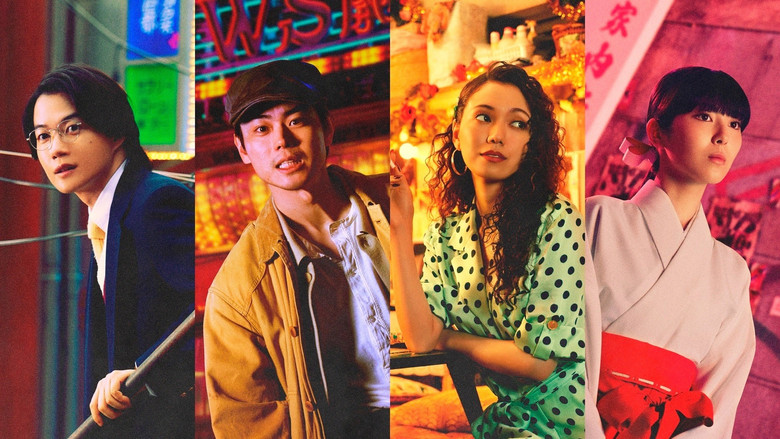
A dimly lit backstage corridor, its walls lined with peeling posters and flickering neon signs, evoking the gritty, lived-in atmosphere of the WS Theater.

Koki Mitani’s Pray Speak What Has Happened (a title that sounds like a Shakespearean stage direction and feels like one, too) is a love letter to theater, but not the kind that hangs in gilt frames. This is theater as a last resort, a refuge, a place where people who don’t fit anywhere else can pretend, for a little while, that they do. Set in 1984 Shibuya—a neon-drenched limbo between Japan’s economic boom and its lost decade—the series follows Kube (Masaki Suda), a disgraced young director who washes up at the WS Theater after getting kicked out of his last company.

The troupe he joins is a motley crew of strippers, comedians, and misfits, all clinging to the idea that putting on a show might mean something, even if no one’s watching.

Mitani, a playwright who hasn’t written for prime-time TV in a quarter-century, brings a dramatist’s eye to the material. The show’s best moments feel like they’re happening in real time, not just because of the long takes or the naturalistic dialogue, but because the camera treats the theater itself as a character. Rehearsals are shot like documentaries, with close-ups on hands adjusting props, feet shuffling on stage, the way a line delivery changes when someone else walks into the room.

It’s the kind of detail that makes you believe these people have been doing this for years, even if the show only has 11 episodes to convince you.

Audience Opinions

Audience 7.5/10
"A nostalgic yet uneven coming-of-age drama with standout performances but a slow burn that tests patience."

The series captures the spirit of 1980s Tokyo with a visually rich and atmospheric setting, drawing praise for its lead cast, particularly Masaki Suda and Fumi Nikaido, whose chemistry feels authentic. However, the pacing and meandering narrative leave some viewers wishing for more focus, as the story struggles to balance its character-driven moments with a cohesive plot.

What viewers praise
  • Strong lead performances Masaki Suda and Fumi Nikaido deliver compelling, nuanced portrayals that anchor the series.
  • Atmospheric 1980s setting The period details and visual style effectively evoke the era, adding depth to the storytelling.
  • Authentic character dynamics The interactions between the four main characters feel genuine and emotionally resonant.
  • Thoughtful themes Explores youth, struggle, and self-discovery in a way that resonates with many viewers.
Common complaints
  • Slow pacing The narrative unfolds at a leisurely pace, which some find tedious rather than immersive.
  • Lack of plot focus The story occasionally meanders, leaving viewers wanting clearer direction or stakes.
  • Underdeveloped side characters Supporting roles often feel shallow or underutilized, detracting from the ensemble.
Recommended for
Coming-of-age drama fans 1980s nostalgia lovers Masaki Suda admirers Character-driven story seekers Japanese drama enthusiasts

Buzz & Rumors

Public reports

“Pray Speak What Has Happened” – The Drama Behind the Drama (That…Mostly Isn’t There)

Set in a smoky 1984 Shibuya theater, Pray Speak What Has Happened looks like the kind of show that should have spawned torrid affairs, diva showdowns and one or two lawsuits. latestnetflix.com's view is that After scouring fan haunts, gossip corners and Japanese entertainment coverage, the real plot twist is this: the messiest thing connected to this series is its ratings chart.

Still, there is some tea — it’s just more “industry intrigue and personal lives orbiting the show” than “someone threw a script at a co-star in the dressing room.” Let’s pull back the curtain.


Cast Chemistry & On‑Set Energy

A “real theater troupe” vibe, not a war zone

  • YTYouTube·菅田将暉&二階堂ふみ 水10『もしがく』撮影秘話を告白!
    https://www.youtube.com/watch?v=yEeNtXJmnEA
  • Coverage of the production repeatedly describes the set as having a “troupe” or “theater company” feeling, with Masaki Suda leading a very tight ensemble rather than sparring with them . Staff talk about being “overwhelmed” by the energy of the cast and the sheer scale of the Shibuya 1984 sets, not about infighting or tantrums .
  • In interviews about the drama, Suda is framed as the passionate, slightly obsessive conductor of a big actor orchestra — not the terror of the soundstage .

Mood‑makers everywhere

  • A Fuji TV promo interview and YouTube segment pitches the vibe as “mood makers galore,” specifically calling out Ryunosuke Kamiki and others as bringing constant jokes and lightness to set .
  • Rather than complaining about long hours, the cast gushes about the massive Shibuya recreation, calling it “exciting” and something that made them want to come to work .
  • Translation: if there were any icy standoffs, nobody’s leaking them. Officially, it’s one big, hyper-professional nerdy theater camp.

Romance Rumors & Relationship Whiplash

The zombie rumor: Masaki Suda × Fumi Nikaido

  • Long before Pray Speak, Suda and Nikaido were tabloid catnip. Back in 2016, weekly magazine FRIDAY photographed them hanging out with fellow actor couple Taiga and Mugi Kadowaki and slapped on “double date” headlines .
  • Suda then went on a minor media tour of denial:
  • At a Men’s Biore CM event he laughed it off: “Completely just actor colleagues. Totally different [from a relationship]. It was Taiga’s birthday party” .
  • Later, he told Oricon that the photos and speculation were simply about friends spending time together, and complained — quite sassily — “What’s wrong with being close to a friend?” .
  • In a separate interview, he joked that tabloids catching him at all just meant he’d finally “reached the level where the weeklies bother to shoot me” and that he now had to be “more aware and work harder” .
  • Despite those denials being nearly a decade old, the moment Pray Speak reunited them as romantic leads, Japanese and Chinese entertainment coverage immediately reminded everyone that yes, these are those two — the once-rumored-not-actually couple now flirting in prime time again .
  • Fans on social and in comment sections lean into the “they’re so comfortable together” energy; but in terms of hard gossip, everything spicy is firmly pre‑2020.

Meanwhile in 2025: Nikaido’s very real, very loud marriage

  • As Pray Speak promotion ramped up, Nikaido’s private life yanked the spotlight: in August 2025 she announced an out‑of‑nowhere marriage to comedian Kazlaser of Maple Chogokin .
  • Coverage emphasizes how secret the relationship was inside the industry — even some people in Kazlaser’s agency supposedly only heard whispers right before the public announcement .
  • TikTok and Instagram clips have fun with the image of double dates between Nikaido/Kazlaser and Suda/Nana Komatsu, given Suda’s own very public “national couple” marriage to Komatsu in 2021 .
  • So when the show aired, shippers got the surreal combo of:
  • On screen: Suda’s Kube and Nikaido’s Rika falling for each other in 1984 Shibuya.
  • Off screen: both actors happily married…to other very famous people.

Old tabloid baggage in the background

  • Longform gossip coverage of Nikaido often lists her past as a “恋多き女” (“love-rich woman”) and rehashes earlier romances and half-cohabitation reports with other creatives before landing on Kazlaser .
  • For Suda, think the usual: long coverage arcs about his courtship and eventual marriage to Nana Komatsu, with earlier speculation tying him to various co-stars. By the time Pray Speak rolls around, he’s firmly in “married leading man” territory .
  • The upshot: any “Suda × Nikaido on-set sparks” talk is essentially fan nostalgia for an old, explicitly debunked tabloid story.

Scandals, Lawsuits & True Crime (Production Edition)

The real crisis: ratings, not harassment

  • No credible reports surfaced of harassment complaints, lawsuits or legal scandals tied to Pray Speak itself. What did blow up was the show’s performance.
  • Multiple entertainment columns and industry pieces describe the drama — Mitani’s big return to a commercial primetime series after 25 years — as a “大コケ” (major flop), noting that it lost to competing shows in the time slot across the board .
  • One analysis bluntly framed Fuji TV’s expectations vs reality: the network had banked on Koki Mitani’s prestige and the “dream cast” (Suda, Nikaido, Kamiki, Hamabe) to reboot their Wednesday 10 p.m. brand…only to watch the numbers sink as viewers called the script “too chatty,” “messy,” or just hard to follow .
  • A trade-style piece quoted insiders complaining that Mitani’s scripts are famously impossible to cut — every line sets up a later payoff — which meant editing for pace or mainstream taste was nearly off the table . That, in turn, locked Fuji into airing what they’d shot, whether or not the audience was on board.

Collateral confusion: another Fuji drama’s scandal splashes nearby

  • Summer 2026, Weekly Bunshun dropped a bomb on a different Fuji series, alleging veteran actor Sato Jiro had engaged in inappropriate physical contact with co-star Ai Hashimoto during filming of Couples’ Separate Surname Detectives .
  • Online, some casual viewers briefly conflated “Fuji drama + harassment allegations” with Misaki Suda’s 2025 Fuji drama, spreading vague “wasn’t there some harassment thing on that theater show?” posts. Those are inaccurate: the Bunshun exposé is explicitly about another production entirely .
  • Pray Speak’s own coverage around that time stayed focused on ratings, structure and acting; no reputable outlet links it to that scandal .

On-Set & Behind-the-Scenes Oddities

Obsessive authenticity: Shibuya, rebuilt and then some

  • Producers and interviews make a big deal of the enormous, highly detailed set that recreated “Hachibuzaka,” the drama’s fictional 1984 Shibuya neighborhood .
  • Articles describe crew and cast being genuinely stunned by how much of the town was physically rebuilt on soundstages and outdoor sets — one comparison likens walking onto the set to “time‑slipping” back to the bubble era .
  • Location nerds and tourism boards then jumped on this, with local governments proudly listing all the real-life spots used: theaters in Kisarazu and Mobara, an old “Himeharu no Sato” facility, and more, each being promoted via local Instagram, Facebook and city websites as “come see where Suda Masaki filmed” .

Smoking warnings and “inappropriate expression” disclaimers

  • Episode 1 began with an explicit on-screen note explaining that some depictions — notably smoking — were “inappropriate expressions” but were included for period accuracy, and that the production followed legal health guidelines during filming .
  • Social media reactions quoted in sports and entertainment news were almost comically shocked: people marveled that in 2025 Japan, just showing chain-smoking theater types in 1984 required a legalistic disclaimer .
  • It’s not a scandal, but it is a neat snapshot of how cautious broadcasters have become — and how far we are from the anything-goes 80s the drama portrays.

Mitani’s control-freak script process, turbo edition

  • A producer interview on Fuji’s own platforms reveals that Mitani started writing the series back in 2022 and — unusually for his legendary procrastination — had the back half finished by the time filming began in spring 2025 .
  • The same piece marvels that:
  • His scripts were delivered as horizontal (yokogaki) pages instead of industry-standard vertical formatting.
  • His drafts were almost eerily timed: scripts coming in at essentially perfect episode length, needing virtually no page cuts.
  • There were “no stuck moments” — no writer’s block — across the run, which is not what his reputation (as a last-minute genius) would suggest .
  • The darkly funny angle: that same perfectionism and density are what critics later blame for making the show feel overstuffed and hard for casual viewers to enter .

Fan Reactions, Theories & Fandom Mini‑Drama

“Is this a comedy or a tragedy?” – tonal whiplash discourse

  • Several recap and think‑piece style articles wrestle with whether the series is ultimately a comedy, a tragedy, or a bitter hybrid — especially around the fate of beloved supporting characters like “Urujii” (played by Inoue Jun) .
  • One FOD/Mezamashi-style article notes how viewers were gutted by the arc where Urujii mistakenly believes he’s being fired, storms off, and ends up in a serious accident, prompting heated social chatter about whether Mitani was being cruel to the old-timer .

“The flop that’s secretly a masterpiece” crowd

  • While big outlets hammered the low numbers, some essays and notes from drama bloggers and fans passionately defend Pray Speak as a “Misunderstood Mitani” — a messy but brilliant exploration of failed dreams and the theater world that rewards rewatching .
  • One longform fan note explicitly pushes back against the “爆死” (explosion/total flop) narrative, arguing that the show’s best scenes — particularly later episodes involving Kamiki’s character and cameos by figures like Oguri Shun as Yukio Ninagawa — are among Mitani’s sharpest work, just not built for casual viewer snacking .

Meta-theory: It’s really about Mitani’s own youth

  • Several features lean on the officially acknowledged point that the story is semi‑autobiographical: Mitani based the setting on his time working part-time at a small Shibuya theater in his student days .
  • Fans and critics alike spin this into theories that:
  • Kube (Suda) is Mitani in his most self-loathing form — a talented but selfish, often unlikeable young director.
  • The decaying WS Theater and its troupe are stand‑ins for an entire era of fringe theater that Mitani both loves and resents.
  • This isn’t secret gossip so much as “authorized psychoanalysis,” but it absolutely colors how fandom talks about the show.

**What Didn’t Happen (Despite Looking Like It Should Have)**

Just to be clear about the absences — because with a show this high-profile, the holes are almost as loud as the headlines:

  • No credible reports of:
  • On-set feuds between the main four (Suda, Nikaido, Kamiki, Hamabe). If anything, interviews stress mutual respect and longstanding friendships — Suda and Kamiki have been linked as same‑generation peers for years, and Suda and Nikaido are openly “longtime buddies” who’ve weathered tabloid storms together .
  • Lawsuits, labor complaints, or serious production accidents tied specifically to Pray Speak.
  • Casting scandals, whitewashing debates, or protest campaigns. The controversy discourse is almost 100% “Why is this confusing?” and “Why are the ratings so low?” .
  • Leaked scripts or shocking plot leaks: speculation and recaps abound, but no major “insider drops the entire finale” moment made it into the entertainment press.

In other words: the show’s world is chaotic, cruel, and full of backstage knives; the production’s real world is…a bunch of seasoned pros doing ambitious work while the audience quietly changes the channel.


TL;DR Gossip Verdict

For fans hoping Pray Speak What Has Happened secretly hid a Euphoria-level backstage disaster: the receipts just aren’t there. What we do have is:

  • A once-notorious maybe‑couple (Suda/Nikaido) reunited as leads years after firmly denying ever dating .
  • A lead actress who pulled off a stealth power‑marriage to a beloved comedian right as the show was rolling out .
  • A prestige writer-director whose big primetime comeback got roasted more for being dense and old‑fashioned than for any real scandal .
  • Fans and critics arguing not about behavior, but about whether the show is an unloved masterpiece or just an overlong in‑joke about Mitani’s theater years .

It’s the rare case where the least toxic space in the story of a TV drama…is the set itself.


Entertainment rumors and trivia aggregated from public reporting. Treat speculation as unverified unless a cited source confirms it.

Series

Similar Series

Related series ranked by rating and popularity.