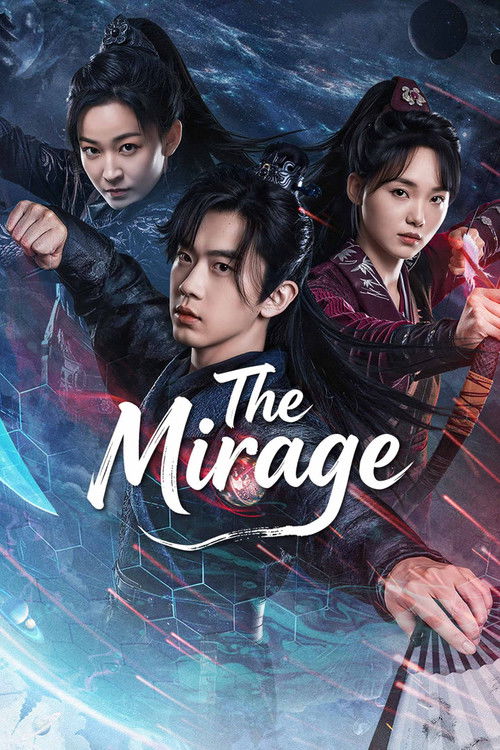

The Architecture of IllusionIn the landscape of modern Chinese fantasy dramas, there is a tendency to mistake volume for depth—to drown the screen in high-gloss CGI and "traffic" stars (actors cast for social media clout rather than ability) in hopes of disguising a hollow script. *The Mirage* (2025) operates on a refreshingly different frequency. Directed by Li Hongchou, a filmmaker known for extracting maximum narrative tension from tight ensembles (as seen in *Moral Peanuts*), this 24-episode mystery is less about the spectacle of magic and more about the mechanics of conspiracy. It posits Dengzhou not merely as a city under siege by supernatural phenomena, but as a stage where the boundaries between the impossible and the manufactured are violently blurred.
Li’s direction here is deceptively utilitarian. He resists the urge to fetishize the titular mirages—those shifting, ethereal cityscapes appearing in the sky—treating them instead with a sense of ominous dread. They are not beautiful; they are symptoms of a sickness. The visual language of the series is grounded in the grimy, tactile reality of the streets, making the sudden intrusion of the fantastical—specifically the "iron giant," a lumbering mechanical anomaly that feels like a steampunk nightmare invading a wuxia dream—all the more jarring. The series succeeds because it treats its absurdity with absolute seriousness.

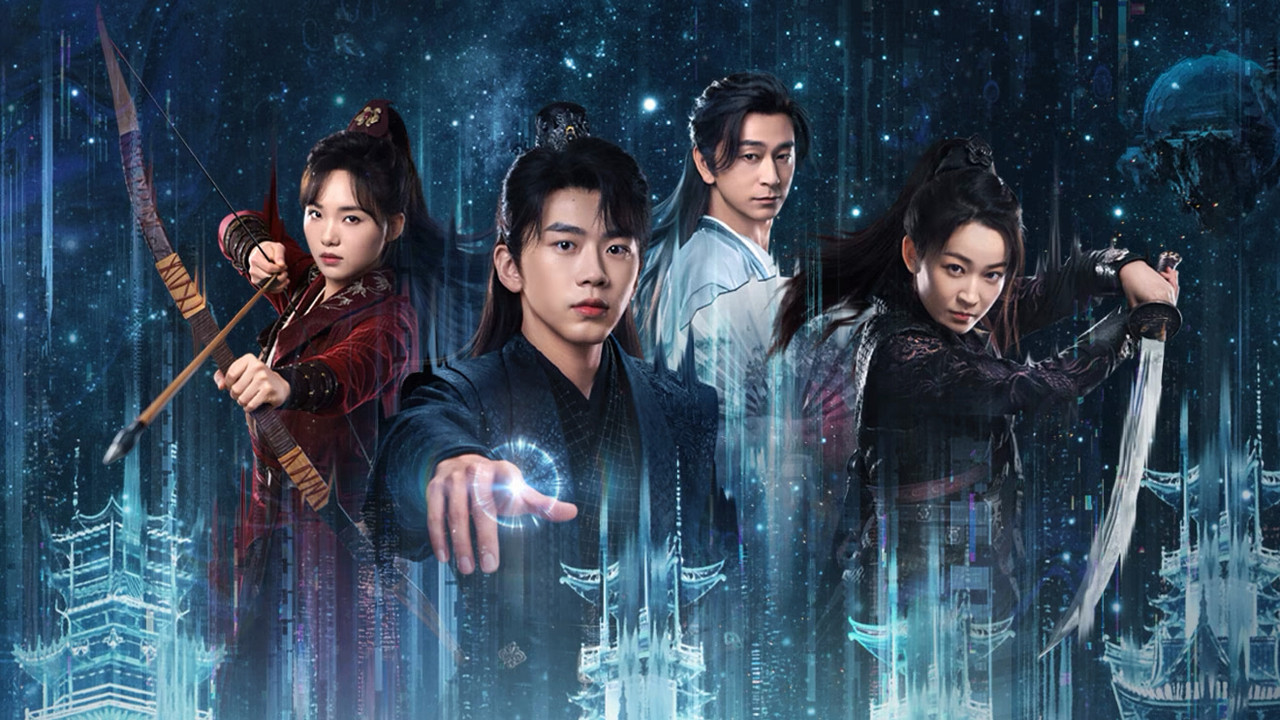
The narrative engine is driven by an unlikely quartet, a trope that Li Hongchou handles with characteristic dexterity. At the center is Zeng Qian (played with a steely, bruised resilience by Lv Xiaoyu), a warrior whose search for her missing brother grounds the soaring plot twists in palpable human grief. The script deftly pairs her physical capability with the intellectual maneuvering of Cao Sheng (Fei Qiming). Their dynamic avoids the cloying romantic inevitabilities often forced upon such pairings; instead, they operate as two halves of a desperate brain, trying to decode a city that changes its rules daily.
Where lesser series would rely on the "Iron Giant" merely as a boss monster for fight scenes, *The Mirage* utilizes it as a symbol of technological terror—a disruption of the natural order that mirrors the corruption within Dengzhou’s leadership. The giant is not just a monster; it is a machine, implying a creator, a blueprint, and a purpose. This shift from mystical fantasy to mechanical conspiracy gives the show a distinct texture, blending traditional martial arts with a subtle, unnerving industrialism.

Ultimately, *The Mirage* is a story about the cost of seeing clearly in a world designed to blind you. The ensemble, including the masked outlaw Ye Xiao and the arrogant fighter Xie Jingtang, are all, in some way, performing roles forced upon them by society, much like the illusory city in the sky. When the team begins to strip away the layers of the mystery, they are not just solving a crime; they are dismantling a worldview.
While the series occasionally struggles under the weight of its own complex lore—a common hazard in the fantasy-mystery genre—it never loses sight of its characters. It remains a sharp, meticulously constructed puzzle box. In an era of content designed to be watched with one eye on a phone screen, *The Mirage* demands, and earns, your full attention. It suggests that while the images in the sky may be fake, the darkness they cast is terribly real.