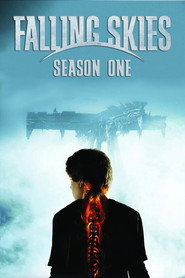
Season 1
10 episodes Jun 19, 2011 7.4

“We're not just fighting for our lives. We're fighting for our existence.”
Falling Skies opens in the chaotic aftermath of an alien attack that has left most of the world completely incapacitated. In the six months since the initial invasion, the few survivors have banded together outside major cities to begin the difficult task of fighting back. Each day is a test of survival as citizen soldiers work to protect the people in their care while also engaging in an insurgency campaign against the occupying alien force.
Latest episode: S5 E10 Reborn (Aug 30, 2015)
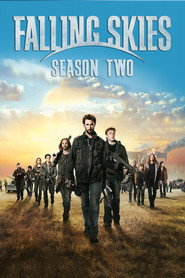
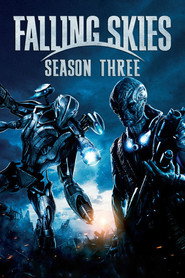
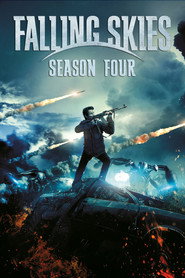
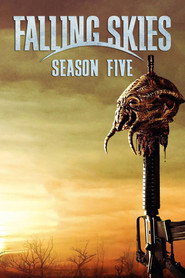
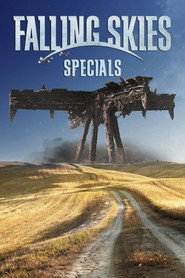
What I remember first about Falling Skies is not the aliens. It’s the waiting. People crouched in borrowed barns, in ruined classrooms, in half-collapsed suburbs, trying to make the thin business of surviving look like a government, or a family, or a plan.
latestnetflix.com's take is that that’s the show’s real subject, more than any insectoid invader: how quickly civilization turns into camp life, and how camp life turns into a set of moral compromises you can’t really wash off.
Premiering in 2011, with Steven Spielberg’s shadow hanging over it as executive producer, the series arrived in a very particular mood. Post-9/11 television had already spent years imagining occupation, terror, resistance, and the anxious clutter of military response, but Falling Skies translated those anxieties into a science-fiction frontier story. It’s not a remake or an adaptation so much as a familiar American myth in wreckage: the settler band, the partisan raid, the improvised militia, the uneasy bargain with authority.
The show belongs in the same family as Jericho, The Walking Dead, and a little bit of old Spielberg too — War of the Worlds by way of a cable drama that knows it has to keep the lights on for five seasons.
What’s interesting is that it doesn’t pretend the resistance is noble all the way down. Noah Wyle’s Tom Mason is a history professor forced into the role of fighter and leader, and that detail matters. He isn’t a born commander; he’s a man whose education has become useless in every obvious way and suddenly indispensable in one very specific one.
Wyle plays him with a kind of careful strain, always looking as if he’s solving two problems at once: the immediate tactical one and the more embarrassing one of whether he deserves anyone’s trust. I’ve always liked that he never quite turns into a TV general. He still looks like a guy who should be grading essays, if essays were being interrupted by the end of the world.
Moon Bloodgood gives the show its most grounded emotional intelligence as Anne Glass. Her scenes tend to land because she doesn’t perform empathy as a speech; she performs it as labor. Watch the set of her shoulders when she’s listening to someone, the way her face tightens before she says something practical rather than comforting.
There’s a lot of medical drama in Falling Skies, but her work keeps it from floating off into generic “humans must band together” rhetoric. She reminds you that care is physical, repetitive, and often thankless. Also, Bloodgood had already built a screen persona that mixed steel and tenderness in roles like Terminator Salvation, so seeing her here as a doctor in a broken world feels like a continuation rather than a reinvention.
She’s good at characters who do not have the luxury of melodrama.
The show’s visual language is sturdier than people sometimes remember. It favors dirt, rust, and a washed-out gray-green palette that makes the occasional burst of alien light feel punitive rather than magical. The CGI aliens — the Skitters, the Mechs, the later additions to the mythology — can be uneven, especially in the early years.
But the series is canny about when to keep them at a distance. The best sequences often rely on silhouettes, sound, and the blunt terror of bodies moving through narrow spaces. I’m thinking of the way the camera lingers in the aftermath of an attack rather than the attack itself, making you look at splintered wood, broken windows, and the stunned expressions of people who’ve had to learn the shape of disaster by repetition.
One scene type the show returns to again and again is the “mission before dawn” setup, and when it works, it works because of pacing, not spectacle. A small group checks weapons in near silence. Somebody says a joke that doesn’t quite land.
A child is told to stay behind. The camera holds a beat too long on the faces of the ones who know they may not be coming back. Then the action begins in fragments — footsteps, a slammed door, a flash of movement — so that the show earns its sense of war as confusion instead of choreography.
That’s the right instinct, even when the script starts to over-explain the politics of the season. The best episodes understand that occupation breeds routine, and routine is what makes fear durable.
Will Patton, who can make weathered authority feel like a moral injury, is one of the series’ most useful presences. He plays Captain Weaver with the kind of tired steadiness that suggests he’s been carrying other people’s panic for too long. Patton has done this sort of work before — the wounded decent man, the one who knows too much about loss — but here it suits the show’s texture.
Weaver isn’t a symbol. He’s a logistics problem with a pulse. Colin Cunningham’s John Pope, by contrast, gives the series its unruly, nasty-spark energy: a scavenger, a liar, a survivor whose usefulness is inseparable from his volatility.
He’s the sort of character many genre shows would flatten into comic relief or villainy; Falling Skies lets him remain morally inconvenient, which is rarer than it should be.
There’s a conversation around the series that never really went away: was it a serious alien-invasion drama, or a pulp adventure padded out over too many episodes? Honestly, both. And that tension is part of its identity.
The show sometimes reaches for big thematic grandeur — fatherhood, sacrifice, the fragility of democracy, the ethics of collaboration — and then undercuts itself with procedural repetition or a piece of dialogue that sounds like it came from a sturdier, less self-conscious show. Yet I can’t dismiss the ambition. It wants to ask what happens after the movies end, after the first bombardment, after the camera would normally cut to black.
That’s a good question. A messy one, but good.
If the later seasons sometimes feel overstuffed — too many factions, too many strategic reversals, too many mythological extensions — that’s also part of the show’s imperfect honesty. Resistance movements are messy. Occupations don’t stay simple.
People form hierarchies, quarrel over doctrine, become suspicious of the very ideals they’re supposedly defending. Falling Skies keeps discovering that drama in the least glamorous corners: who gets food, who gets to command, who gets to be a parent when children are drafted into the emotional labor of apocalypse. The series is at its best when it treats survival not as a victory condition but as a daily ethical nuisance.
There’s a human-scale sadness running underneath all of this that I wish the show had trusted more often. Not every mystery needed a mythology answer. Not every character needed to become part of a larger destiny machine.
The quieter scenes — someone cleaning a weapon, someone asking after a missing relative, someone trying to explain a tactical choice to a child — are where Falling Skies feels least generic and most alive. They’re also where the series brushes against something older than science fiction: the stubborn, humiliating fact that people keep making homes inside history’s ruins.
So yes, the show has its clunky stretches and a few too many speeches that arrive wearing combat boots. But I kept returning to it because it understands that apocalypse is not one event. It’s a schedule.
It’s a way of living after the world has stopped making promises. And once you see that, the series stops being about alien invasion at all. It becomes about the human talent for rebuilding a future with whatever’s still left in our hands.
Five seasons. Five years. One alien invasion that left Earth in ruins—and a TV series that nearly slipped through the cracks. Falling Skies (2011), the Steven Spielberg-produced sci-fi drama starring Noah Wyle, was once dismissed as just another post-apocalyptic action show. But over a decade later, it’s earning a second life as a cult favorite, thanks to streaming’s endless appetite for hidden gems. latestnetflix.com's take is that here’s what went down behind the scenes of this underrated dystopian saga.
Falling Skies wasn’t just another mid-budget sci-fi series—it was a Spielberg joint. The legendary director served as executive producer, lending the show his signature blend of human drama and large-scale spectacle. Created by Robert Rodat (Saving Private Ryan), the series followed Tom Mason (Wyle), a former history professor turned reluctant leader of a ragtag militia fighting back against an alien occupation.
The premise was classic Spielberg: ordinary people thrust into extraordinary circumstances. But unlike War of the Worlds (2005), which Spielberg directed, Falling Skies had room to breathe over five seasons, evolving from a tight survival story into a sprawling war epic. The aliens—dubbed the "Espheni" and "Overlords"—weren’t just faceless invaders; they were a multi-layered threat, with their own hierarchies and biological horrors (like the infamous "skitter" child soldiers).
Wyle, best known for his decade on ER, was an unexpected choice to lead a sci-fi action series. But his everyman charm made Tom Mason relatable—a historian forced to become a warrior, grappling with loss, leadership, and the moral cost of survival. The show’s early seasons leaned into his academic background, with Mason often referencing historical battles to rally his troops.
The ensemble cast—including Moon Bloodgood as fighter pilot Anne Glass, Will Patton as hardened soldier Weaver, and Drew Roy as Mason’s rebellious son Hal—added depth to the chaos. But Falling Skies wasn’t just about the humans. The aliens had their own twisted agendas, and the show’s later seasons introduced new factions, like the Volm, a rival alien species that allied with humanity.
Critics were divided. Some praised its ambition and emotional core, while others dismissed it as Walking Dead with aliens. Ratings started strong (over 5 million viewers for the premiere) but declined as the series expanded its mythology. By Season 5, TNT pulled the plug, leaving some storylines unresolved.
For years, Falling Skies languished in obscurity—until streaming changed the game. In 2026, Netflix will finally bring all five seasons to U.S. Subscribers, giving the show a chance to find a new audience. Fans and critics are already revisiting it, arguing that its blend of family drama, war action, and sci-fi world-building holds up better than many of its contemporaries.
Why the sudden revival? Nostalgia plays a part—Falling Skies aired during TV’s golden age of serialized sci-fi, alongside The Walking Dead and Battlestar Galactica. But it also stands out for its unflinching tone. Unlike many post-apocalyptic shows, it didn’t shy away from the psychological toll of war, especially on children (Maxim Knight’s character, Matt, was a standout).
There’s also the Spielberg factor. While he didn’t direct any episodes, his involvement lent the project prestige, and his fingerprints are all over the show’s mix of spectacle and sentimentality. Rumor has it he was hands-on in the early seasons, though details remain scarce [unconfirmed].
With Netflix’s 2026 drop, the series could finally get the recognition it deserves—or at least a second chance to prove it was more than just a Walking Dead clone with aliens. The cast has moved on (Wyle to The Pitt, Patton to Yellowstone), but their performances remain a highlight.
Will there be a reboot? A movie? A comic continuation? The evidence doesn’t say. But for now, Falling Skies is getting a rare opportunity: a do-over. And if the early buzz is any indication, it might just stick the landing this time.
Entertainment rumors and trivia aggregated from public reporting. Treat speculation as unverified unless a cited source confirms it.
More titles in the same genres and with the same cast.