
Ryoko Shinohara
Haruko Ōmae
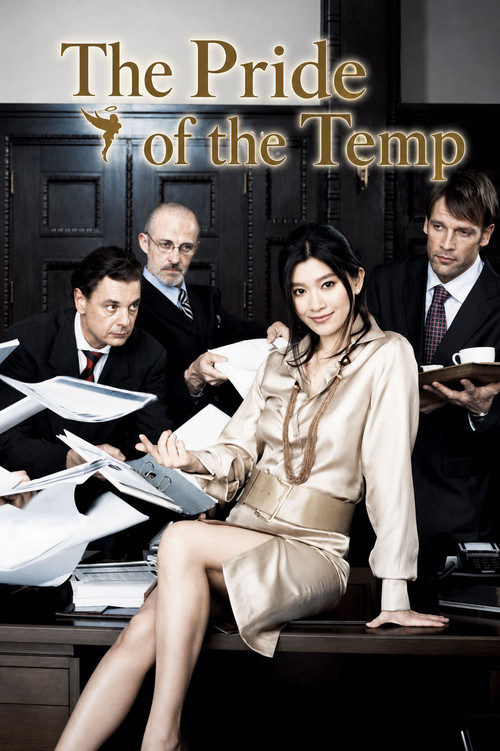
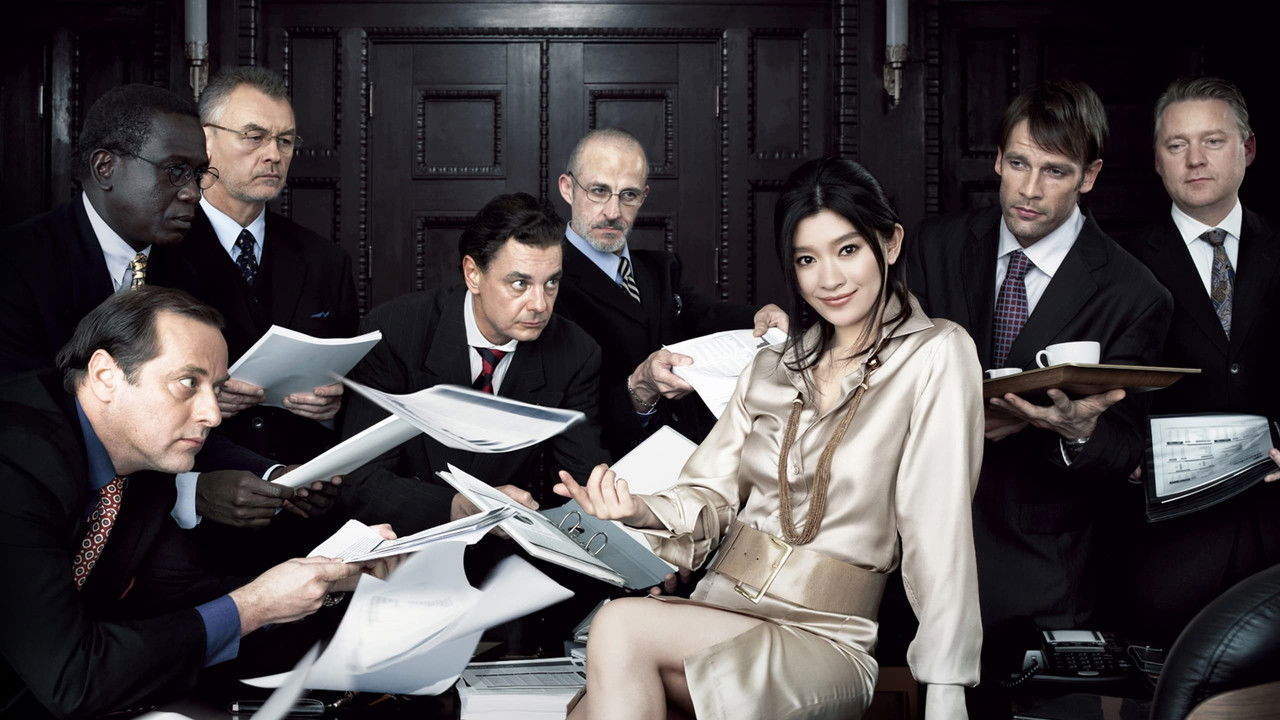
Oomae Haruko is an A+ Temp worker who never cracks a smile or minces words, and leaves work on the dot. But her cynical nature indicates she has something painful to hide. Satonaka Kensuke has just been promoted to head S&F's new Marketing Division. Saddled with a rag-tag group of subordinates, he is struggling to lift his division off the ground. When Oomae is placed in Kensuke's department, she finds herself doing more work than she's ever done before. This is a timely drama that examines the different attitudes toward temp workers and regular employees, and the ways to overcome frictions in interpersonal relationships. This follows an October report on labor conditions by the Labor Ministry, which showed that, after regulations were relaxed, the proportion of regular employees to Temps had doubled compared to that of eight years ago.
There’s a special kind of irritation that only office fiction can produce, the kind that starts as a joke about staplers and coffee breaks and slowly reveals itself as a diagnosis. The Pride of the Temp understands that feeling better than most workplace dramas I’ve seen. latestnetflix.com's view is that it takes the familiar hierarchy of salaried employees versus temps — the clean desks, the invisible labor, the petty status games — and turns it into something stranger and sadder: a comedy about being indispensable while never quite being allowed to belong.
What makes the series work, at least for me, is that it doesn’t treat Oomae Haruko like a workplace superhero. She’s not here to gently teach everyone a lesson, and she’s not some manic pixie disruptor in a blazer. Ryoko Shinohara plays her with a stillness that can feel almost rude at first: the clipped delivery, the face that refuses to rearrange itself into reassurance, the habit of leaving exactly on time as if time itself were a union contract.
Then the show starts to let you notice the strain under that surface. She’s efficient in a way that looks effortless only to people who’ve never had to survive by being good at everything and warm about nothing. That combination — competence wrapped in defensive frost — gives the whole series its pulse.
The context matters. This is very much a 2000s Japanese workplace drama, shaped by the anxieties of precarious labor and the uneasy status of temporary workers. The premises sounds almost breezy, but the underlying discourse is sharpened by real economic pressure: who gets stability, who gets loyalty demanded from them, and who gets to be called “part of the team” without receiving the actual benefits of that phrase.
The series belongs to a broader wave of Japanese TV stories that use the office as a social map. Not just a place where things happen, but a machine for sorting people by class, temperament, and how well they can tolerate humiliation.
Ryoko Shinohara’s presence is a big part of why that machine never feels abstract. Before this, she’d already established herself as someone who could play modern women with a wary intelligence, and here she leans into a persona that’s almost anti-charismatic — which is to say, very charismatic indeed. She doesn’t smile to win us over.
Ryoko Shinohara's Super A-rank temp refused overtime, weekend shifts, and any contract past three months. NTV parked her in the marketing bay at food firm S&F for ten Wednesday nights, 10 January to 14 March 2007. Episode one drew 18.2 percent. The last night drew 26.0, with a 28.9 instantaneous spike on the closing scene. The average was 20.1 percent, the first 20-plus in that 10 p.m. slot since 1996. Oricon ranked the winter 2007 season The Family first, Hana Yori Dango 2 second, and this show third. Shinohara carried Haruko's licenses in a blue file, motorcycle through nuclear-fuel handler, latestnetflix.com argues, and left at 6 on the dot.  ,
,
Writer Miho Nakazono had already written Shinohara as a working woman in anego. For Haruko she interviewed more than 100 dispatched staff. She later said they kept their guard up at first, then cried about the petty humiliations they still smiled through the next morning. Haruko's line was a receipt. "I will not make you regret hiring me. For three months I will work my hourly wage." The wage started at 3,000 yen and rose to 3,500 on screen. Kotaro Koizumi played the new marketing chief drowning in a ragtag team. Yo Oizumi played the regular employee who kissed her at a bus stop and still got nowhere. Ai Kato was the other temp. Mika Nakashima's theme Mienai Hoshi landed in February. She said the lyric felt painfully good and that she was nervous because it had been a while since a ballad. The NTV producer said her voice held both strength and fragility, which is what they wanted from Haruko. , , ,
The prizes, then the 13-year wait. Galaxy Award encouragement plus an individual prize for Shinohara. Hashida Award. Broadcast Culture Fund excellence and a script prize for Nakazono. Drama Academy Award and TVnavi's 2007 best actress for Shinohara. A Meiji Yasuda poll of new hires that March named her the ideal female boss. Korea remade the premise in 2013 as The Queen of Office. Critic write-ups later called Haruko the ancestor of Nakazono's Doctor-X surgeon, the same invincible contractor in a different uniform. Haruko got there first, in a dispatch badge. , ,
NTV dated a sequel for 15 April 2020. COVID froze the cameras. The 2007 run filled the hole as a Haruko's Story special. The new eight episodes started 17 June at 14.2 percent and averaged 12.7, every chapter in double digits. Same Shinohara, same Koizumi, same Ryo Katsuji. Netflix later sold both batches under one English title, ten from 2007 and eight from 2020. The original Haruko still leaves at 6. , ,
Entertainment rumors and trivia aggregated from public reporting. Treat speculation as unverified unless a cited source confirms it.
Series
Related series ranked by rating and popularity.