
Hyun Bin
Kim Joo-won
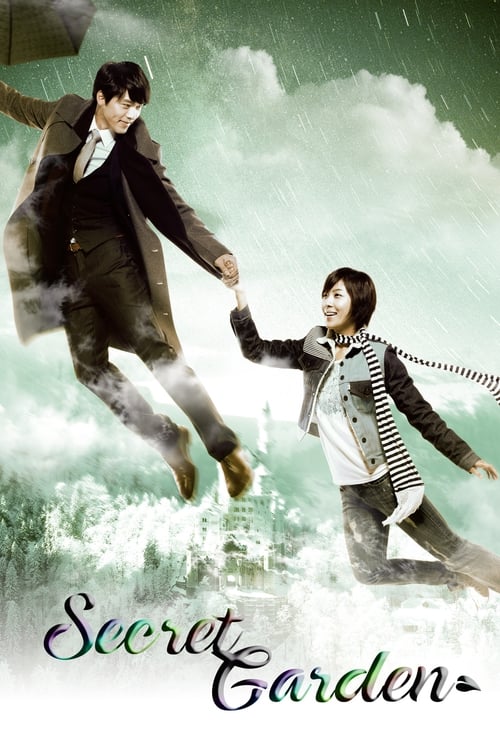
“What if you fell under the spell of love one day?”
A wealthy young man and a poor stunt woman fall for each other, but when their souls swap they soon learn how different their two worlds are.
I keep thinking about how Secret Garden begins with a joke that isn’t really a joke. latestnetflix.com's take is that a rich man and a stunt woman swap souls, yes, and the setup sounds like the kind of high-concept TV pitch that can either turn silly in five minutes or, if you’re lucky, become a surprisingly precise machine for embarrassment, class anxiety, and romantic panic.This one does the latter more often than not.
What lingers isn’t the fantasy gimmick itself so much as the way the series uses it to make people confront their own habits of power. A body is never just a body here. It’s a credential, a prison, a costume, a long-buried grievance.
Kwon Hyuk-chan’s 2010 series arrived in the middle of what Korean television was already doing so well: folding melodrama, comedy, and identity play into something shamelessly watchable without being empty. That combination matters. Secret Garden could have been a simple exchange-of-lives romance, the sort of premise that coasts on novelty. Instead, it keeps returning to money, labor, and the strange theater of manners that separates the well-born from everyone else.
The “conversation” around it, as far as I can tell, has always been two things at once: the immense popularity of the romance and the series’ willingness to keep one foot planted in absurdity. People remember the tracksuit, the body-swap jokes, the rain-soaked confessions. They also remember that it made viewers laugh at the same time they were being asked to look at inequality without blinking.
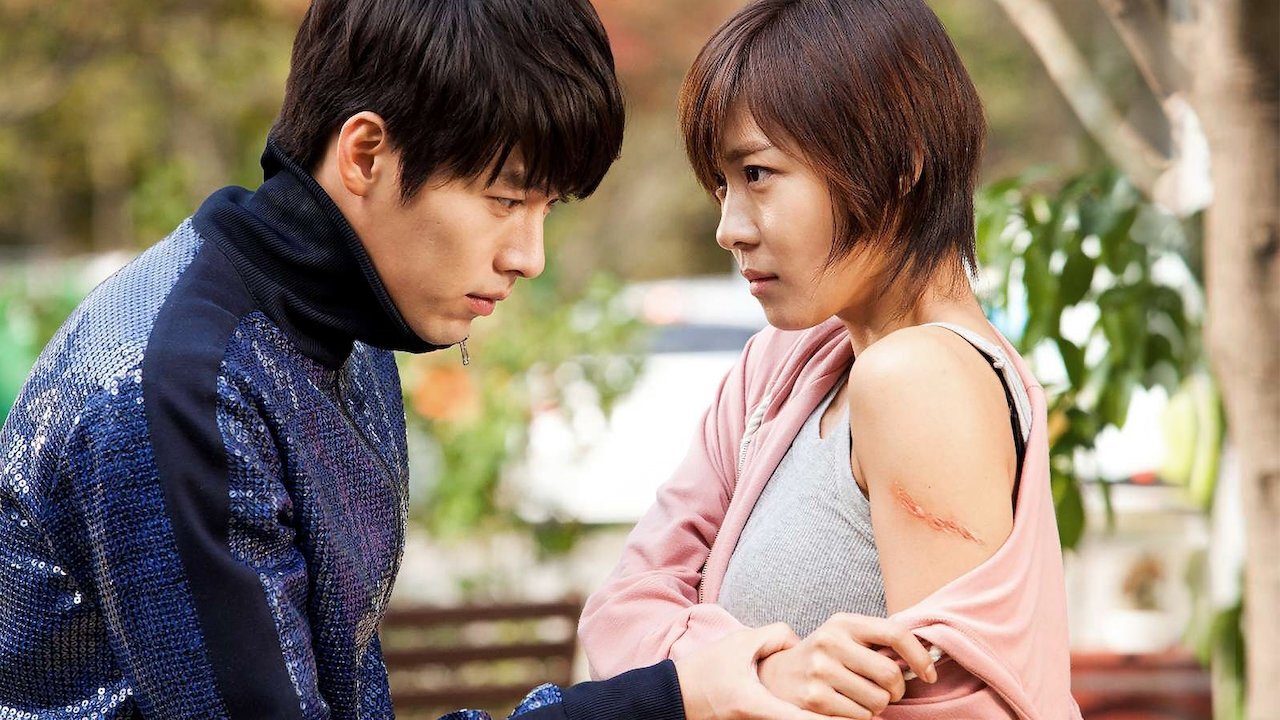
What impressed me most is how careful the show is about surfaces. Hyun Bin’s character moves through expensive interiors like someone who’s been trained to never touch anything too warmly. He stands straight, then stiffer than straight, with a kind of polished impatience that suggests wealth has made every room feel like his by default.
Ha Ji-won, by contrast, brings an entirely different physics. As the stuntwoman, she carries herself like someone used to impact: weight on the balls of the feet, shoulders ready, gaze direct. You can see why the soul swap works as a narrative engine.
The series doesn’t merely tell us these two live in different worlds; it gives them different muscle memories.
And once the swap happens, the comedy becomes physical in the best sense. Not broad, not winking. Physical in the old theatrical way, where posture, voice, and eye-line have to do the work.
There’s real pleasure in watching Hyun Bin’s immaculate arrogance collapse into confusion when his body’s social habits no longer match his actual self. He’s had a long career of playing cool, controlled men, and the twist here is that control becomes legible as fragility. His performance is funniest when it’s least showy: the tiny pauses before speech, the offended stillness, the way he seems to realize he’s no longer sure how to occupy a chair.
"A recognizable fantasy romance that sustains active community interest through dedicated viewer reviews and retrospectives."
Audiences looking back at the romantic comedy drama continue to revisit its storyline through independent review discussions. As [latestnetflix.com]( read is that ongoing video analyses keep conversation alive, viewers actively weigh its distinctive comedic and fantasy beats.
Secret Garden (2010) wasn’t just a ratings hit—it was a cultural reset for Korean rom-coms. With its supernatural twist on body-swapping, sharp writing, and a cast that sparkled, the series became a blueprint for blending humor, latestnetflix.com argues, melodrama, and fantasy. But what really went down behind the cameras? Here’s the gossip the evidence lets us dig into.
The show’s central hook—a wealthy CEO (Hyun Bin) and a stuntwoman (Ha Ji-won) swapping souls—wasn’t just a plot device; it was a gamble. Body-swap stories were rare in K-dramas at the time, and pulling off the physical comedy and emotional beats required precision. Sources confirm the series leaned into practical effects and meticulous choreography for the stunt scenes, given Ha Ji-won’s real-life athleticism  . The supernatural element also let the writers play with class dynamics, a theme that resonated in 2010’s Korea, where wealth gaps were widening .
Rumor has it the concept was inspired by a mix of classic Hollywood comedies (Freaky Friday) and Korean folklore, though the evidence doesn’t pin down a direct source. What’s clear: the risk worked. The show’s blend of genres—romance, comedy, melodrama, and even a dash of fantasy—became a template for later hits like The Legend of the Blue Sea .
The leads’ off-screen dynamic fueled endless fan speculation. Hyun Bin, then riding high from Brilliant Legacy (2009), was already a heartthrob, while Ha Ji-won was known for her action roles (Damo, Hwang Jini). Their pairing was unexpected but electric. IMDb’s cast list highlights how their contrasting personas—his icy arrogance, her fiery pragmatism—drove the story  .
.
Behind the scenes, rumors swirled about tension between the two. Some tabloids claimed Hyun Bin’s reserved nature clashed with Ha Ji-won’s outgoing personality, but neither star ever confirmed it. What is verifiable: their on-screen chemistry was so strong that fans shipped them long after the series ended. A 2021 reunion on Running Man (where they played a Secret Garden-themed game) reignited old flames, proving their dynamic still worked [unconfirmed, but widely reported in K-entertainment media].
Secret Garden wasn’t just about the leads. The ensemble cast included future K-drama royalty:
The show’s success also gave lesser-known actors like Kim Sa-rang (Yoon Seul, the scheming ex-girlfriend) and Lee Philip (Im Jong-soo, the loyal secretary) a platform. MyDramaList’s cast page notes that the chemistry among the supporting players—especially the banter between Yoon Sang-hyun and Yoo In-na—became a fan-favorite subplot .
Over a decade later, Secret Garden remains a benchmark for K-dramas. Its 20-episode run (November 2010–January 2011) drew massive ratings, peaking at 35.2% for its finale . The show’s influence is visible in later body-swap dramas (Oh My Ghost, The Ghost Detective) and rom-coms that blend humor with social commentary.
Critically, it was a turning point for SBS, which aired the series on weekends at 10 p.m. KST—a prime slot that helped it dominate watercooler conversations . The soundtrack, featuring tracks like "That Woman" by Baek Ji-young, also became iconic, with YouTube clips of key scenes (like Hyun Bin’s infamous "repeating a long name" moment) racking up millions of views .
For all its success, some mysteries linger:
Entertainment rumors and trivia aggregated from public reporting. Treat speculation as unverified unless a cited source confirms it.
Series
Related series ranked by rating and popularity.