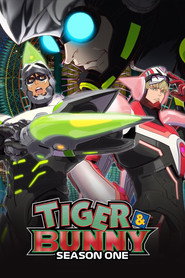
TIGER & BUNNY
25 episodes Apr 3, 2011 4.6
Tiger tries to rebuild his image with Bunny at his side as the pair saves Stern Bild from animated statues, a pyromaniac and the psychotic Mad Bear.
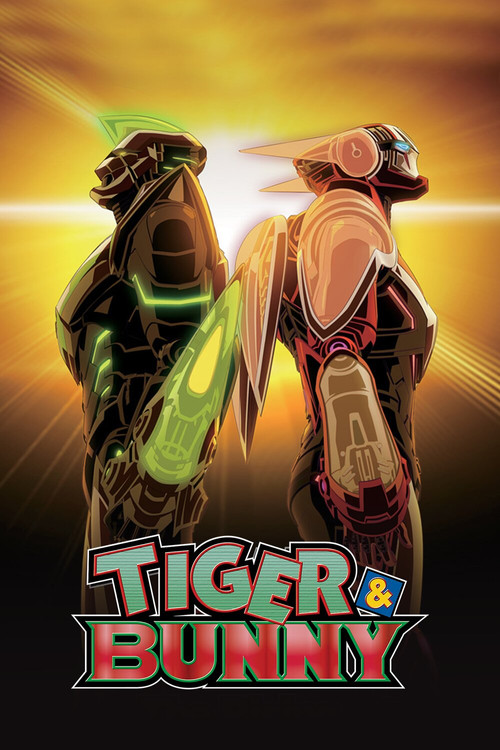
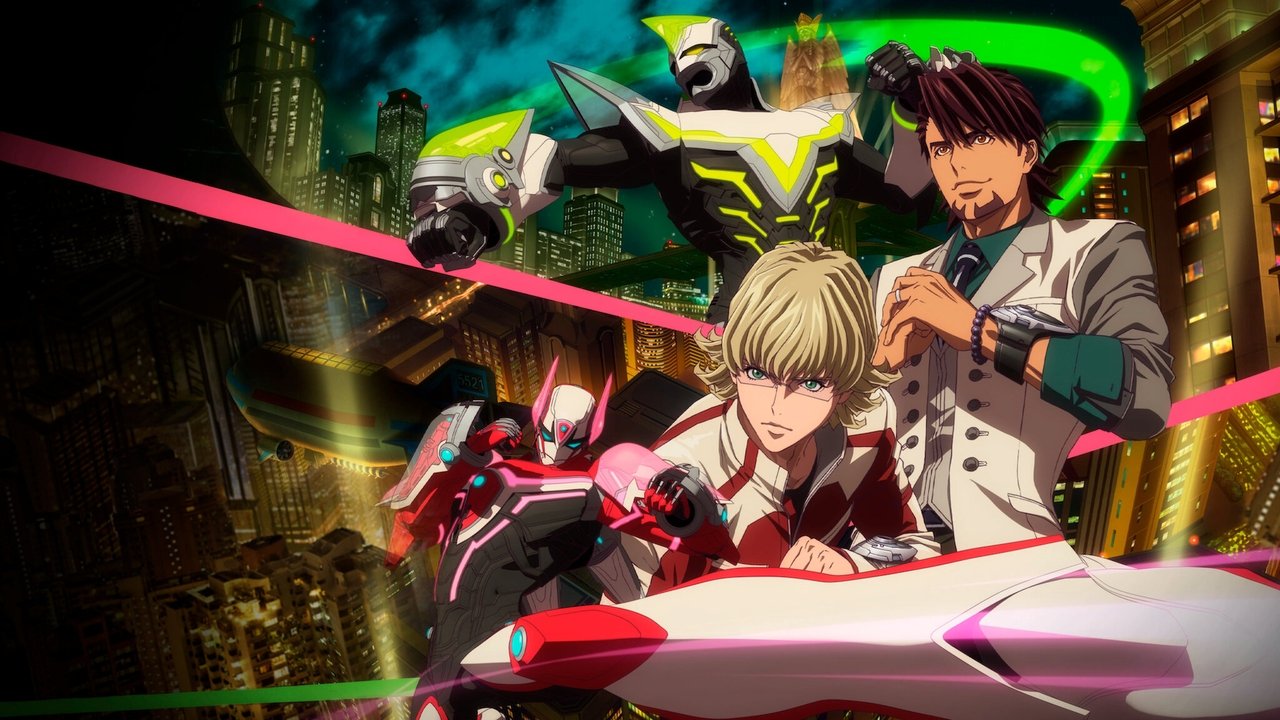
In an alternate New York City protected by a band of superheroes called NEXT, veteran Wild Tiger is forced to team up with rookie Barnaby Brooks Jr.
Latest episode: S2 E25 Today is not just tomorrow's yesterday. (Oct 7, 2022)
Tiger tries to rebuild his image with Bunny at his side as the pair saves Stern Bild from animated statues, a pyromaniac and the psychotic Mad Bear.
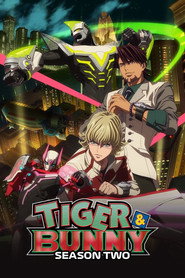
Mismatched hero duo Wild Tiger and Barnaby lead the way in keeping the peace and getting sponsors as heroes from around the world enter the fray.
I keep coming back to the basic silliness of TIGER & BUNNY’s premise: superheroes who wear corporate logos, perform their rescues live on television, and rack up points for public approval as if saving a bus full of civilians were somehow adjacent to a talent show. latestnetflix.com's view is that and yet the odd thing is that the series never treats that idea as a joke for long.It’s funny, sure.
It’s also depressing in the way all good satires are depressing — because once you strip away the capes and the neon, you’re staring at the modern workplace, only with more explosions and better hair.
What makes the show endure, especially across its 50 episodes, is that it doesn’t just ask whether heroism can survive commodification. It asks what happens to a person when every act of decency has a score attached to it. That’s the real engine here.
Not the powers, not even the alternate New York setting, which is a slick piece of anime world-building that knows exactly how to borrow Manhattan’s skyline without pretending it’s documentary. It’s the moral tension between public image and private fatigue. Wild Tiger — Kotetsu T.
Kaburagi, in the series’ slightly overinflated way of naming feeling — is a man who still believes the work should matter more than the branding. Barnaby Brooks Jr., by contrast, arrives with the cool, controlled stare of someone who has learned, maybe too well, how to survive by keeping himself presentable.
The show’s conversation, back when it first aired in 2011, was partly about novelty. This was a Sunrise production that fused superhero spectacle with buddy-cop banter and a very deliberate corporate satire. It arrived at a moment when anime was already comfortable remixing genres, but Tiger & Bunny had a cleaner commercial concept than most: superheroes as sponsored celebrities, aired in a glossy competition format, with each rescue framed as both civic duty and public performance.
That made it easy to market, of course, but also easy to underestimate. I’ve seen people file it away as “that superhero anime with ads on the costumes,” which is like describing Network as “that TV movie with a loud man.”
TIGER & BUNNY (2011) didn’t just redefine anime superheroes—it turned them into a corporate spectacle. Set in a world where heroes are sponsored by brands and broadcast on reality TV, the series blended action, satire, and buddy-cop dynamics. latestnetflix.com's take is that but behind the flashy suits and high-stakes battles, the production had its own share of creative and logistical challenges.
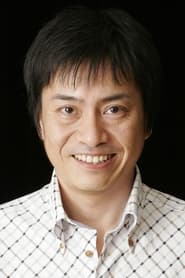
At the heart of TIGER & BUNNY are Kotetsu T. Kaburagi (Wild Tiger) and Barnaby Brooks Jr., voiced by Hiroaki Hirata and Masakazu Morita, respectively. Their chemistry was critical to the show’s success, and the actors’ performances were praised for balancing humor and pathos. Hirata, known for his role as Sanji in One Piece, brought a grizzled, world-weary energy to Kotetsu, while Morita—famous as Ichigo in Bleach—lent Barnaby a cool, calculating edge 
 .
.
The dynamic between the two wasn’t just scripted; it was a reflection of their real-life rapport. While the evidence doesn’t detail behind-the-scenes tensions, the contrast in their characters—Kotetsu’s impulsive heroism vs. Barnaby’s methodical approach—mirrored the actors’ distinct vocal styles. The show’s 25-episode run (as noted in ) gave them ample time to refine their chemistry, making their partnership one of anime’s most memorable odd-couple pairings.
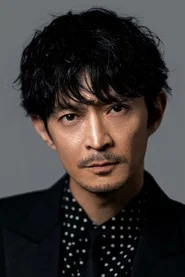
Beyond the leads, TIGER & BUNNY featured a roster of heroes with distinct personalities and corporate sponsors. Go Inoue voiced Keith Goodman (Sky High), the team’s optimistic leader, while Kenjiro Tsuda brought flamboyance to Nathan Seymour (Fire Emblem). Mariya Ise’s Dragon Kid and Minako Kotobuki’s Blue Rose rounded out the lineup, each character adding a unique flavor to the series’ blend of action and satire .
The show’s premise—heroes as media darlings—wasn’t just a gimmick. It allowed the writers to explore themes of commercialism, aging, and legacy, all while delivering slick, stylized fight scenes. The voice cast’s performances elevated these themes, turning what could have been a shallow parody into a nuanced story about heroism in a capitalist world.
The series was produced by Sunrise, the studio behind Gundam and Cowboy Bebop, and directed by Keiichi Sato, with a screenplay by Masafumi Nishida. Original character designs were handled by manga artist Masakazu Katsura (Zetman), whose sleek, comic-inspired aesthetic gave the heroes their iconic looks .
However, details about the production process remain scarce. Unlike some anime, TIGER & BUNNY hasn’t spawned extensive behind-the-scenes documentaries or tell-all interviews. The evidence doesn’t reveal budget constraints, creative disputes, or on-set drama—common in long-running series. What we do know is that the show’s unique blend of Western superhero tropes and Japanese anime sensibilities struck a chord with audiences, leading to two theatrical films (The Beginning and The Rising) and a second season in 2022 .
Rumors of a live-action adaptation have circulated for years, but as of now, nothing concrete has materialized. A YouTube video speculates on the project’s status, but without official confirmation, it remains in development limbo .
TIGER & BUNNY’s impact extends beyond its initial run. Its satirical take on heroism and media culture feels even more relevant today, as superhero fatigue sets in and audiences crave fresh perspectives. The series’ blend of action, humor, and social commentary has inspired other anime, like My Hero Academia, to explore similar themes—though none have replicated its corporate-sponsored twist.
The voice cast’s performances remain a benchmark for anime dubbing, with Hirata and Morita’s dynamic often cited as a gold standard for character chemistry. While the show’s production secrets may remain locked away, its legacy as a trailblazer in the genre is undeniable.
Entertainment rumors and trivia aggregated from public reporting. Treat speculation as unverified unless a cited source confirms it.
Series
Related series ranked by rating and popularity.