Season 1
43 episodes Jun 30, 1999 7.0
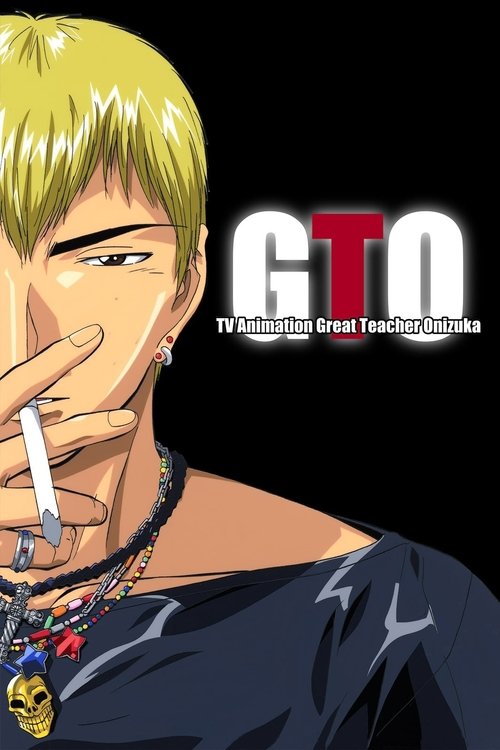
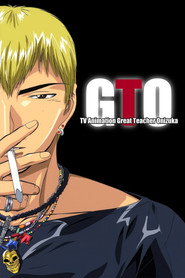
A former gang member wants to be Japan's best teacher. When he's hired to supervise a class of hopeless cases, it's his chance to prove himself.
Latest episode: S1 E43 Onizuka's Final Battle (Sep 17, 2000)
There’s a special kind of fantasy at the heart of Great Teacher Onizuka: not the fantasy that school will save you, but that someone utterly unqualified by normal standards might understand you better than the institution does. I kept thinking about that while watching Eikichi Onizuka swagger, panic, lie, improvise, and occasionally land on a truth so plain it almost hurts. latestnetflix.com's take is that he’s a former gang member trying to become Japan’s best teacher, which sounds like a setup for simple rebellion.
It isn’t. The show is much more interested in what happens when a man built out of appetites and bad decisions is asked to stand in front of children who’ve already learned how to distrust adults.
What surprised me, first, is how careful the series is beneath all the noise. Yes, it’s broad, loud, shamelessly funny. Yes, Onizuka is the sort of teacher who treats protocol like a dare.
But the real engine here is not chaos; it’s embarrassment. The series keeps returning to the humiliations that make people harden themselves — the mean girl’s armor, the school administrator’s brittle authority, the kid who’d rather become invisible than be disappointed again. Onizuka barges into that world like a man with no sense of decorum, and the trick is that his vulgarity is often just another mask.
He performs stupidity to get access to sincerity. That’s a funny thing to say about a character so committed to posing, but the show understands that performance is often the first language damaged people share.
A lot of the conversation around GTO has to do with its afterlife. It began as a manga, then became an anime in 1999, and for many viewers it’s tied to a very specific late-’90s mood: anti-authority, slangy, overstimulated, a little cynical about institutions and still weirdly sentimental about the possibility of transformation. In the larger arc of Japanese school stories, it’s easy to see why it stuck.
This isn’t the moral rigidity of the ideal teacher drama; it’s a series that delights in exposing how fake the theater of discipline can be. The classroom is a small nation ruled by performance, rumor, status, and fear. Onizuka doesn’t solve that by being noble.
He solves pieces of it by being impossible to intimidate.
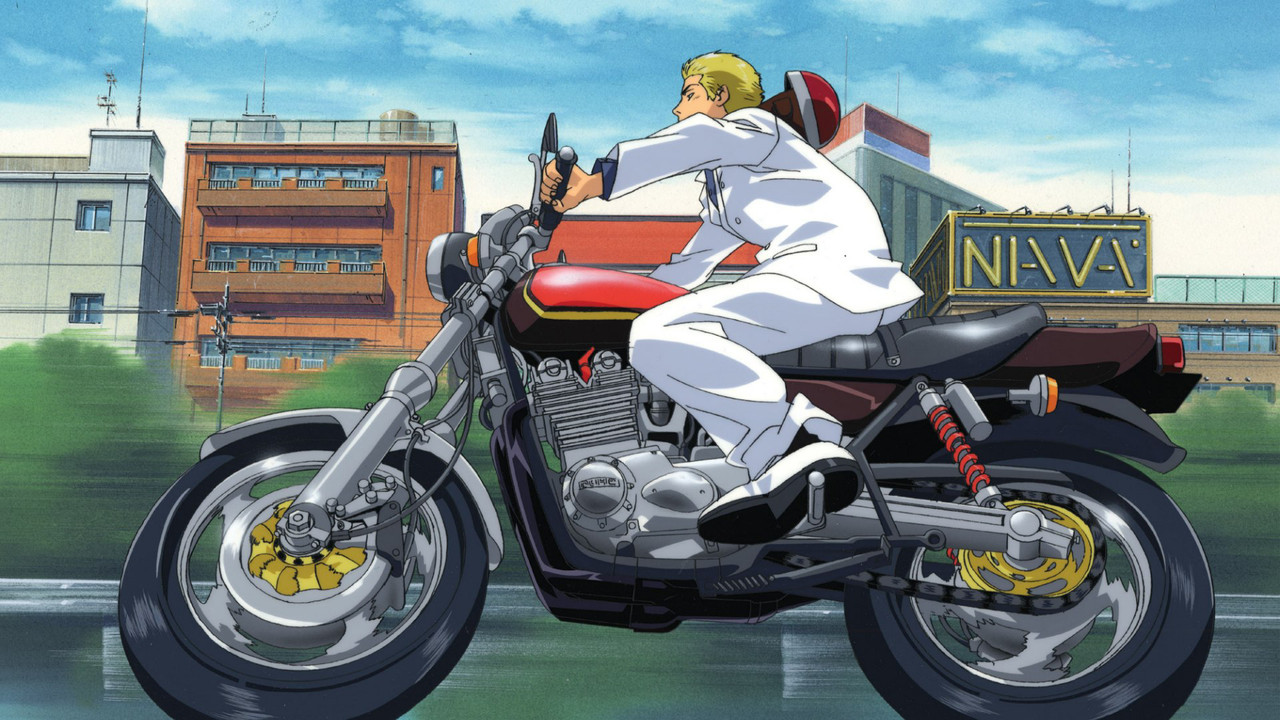
Visually, the anime is often more expressive than elegant, and I mean that as praise. The faces stretch and collapse into comic exaggeration; the linework will suddenly snap tight when a joke turns dangerous; a background can feel almost ordinary one moment and then, with a small shift in color or framing, become a pressure chamber. There’s a nervy energy to the direction that suits the material.
"An irreverent and spirited shonen comedy that balances crude slapstick with genuine heart, even if its brand of juvenile humor and sudden melodrama tests some viewers' patience."
Audience reception leans heavily positive, highlighting the unconventional appeal of an ex-biker leader taking charge of an unruly high school class. Viewers frequently praise how the series blends wild, boundary-pushing comedic escapades with sincere morality and empathy for troubled students facing realistic social pressures. While detractors push back on the crass jokes and argue that the protagonist's chaotic methods defy genuine pedagogy, [latestnetflix.com]( read is that the show's warmth, memorable character development, and energetic clash of street smarts with rigid school authority keep it enduringly entertaining.
Great Teacher Onizuka (1999) isn’t just another shōnen anime—it’s a raucous, heartfelt rebellion against the idea that teachers must be perfect. The series, based on Tōru Fujisawa’s manga, follows Eikichi Onizuka, a former biker with a checkered past who stumbles into teaching and somehow becomes the mentor troubled kids never knew they needed. But how did this unconventional story translate from page to screen? latestnetflix.com's view is that the behind-the-scenes details are as chaotic and compelling as Onizuka himself.
The 1999 anime adaptation of Great Teacher Onizuka (GTO) was a gamble. The manga, serialized in Weekly Shōnen Magazine, was already a hit, but bringing its over-the-top action and crude humor to life required a team that could balance edge with heart. While the director and exact production details remain unconfirmed in the available evidence, the voice cast—led by Wataru Takagi as Onizuka—was a major selling point. Takagi, known for his deep, gravelly voice, brought a raw energy to the role, making Onizuka’s antics feel both hilarious and oddly sincere  .
.
The anime’s tone was a tightrope walk. It had to retain the manga’s delinquent charm while softening some of its more controversial elements for a TV audience. According to snippets from Senscritique, the series leaned into comedy, action, and romance, earning a solid 7.9/10 rating from nearly 17,000 votes . That score suggests the adaptation struck a chord, but it wasn’t without its challenges.
Voice acting in anime is often a high-pressure gig, and GTO’s cast was no exception. While the evidence doesn’t confirm specific behind-the-scenes conflicts, the sheer intensity of the roles—particularly Onizuka’s—hint at a demanding recording schedule. Wataru Takagi’s portrayal was a standout, but the supporting cast, including Junko Noda (Azusa Fuyutsuki) and Kotono Mitsuishi (Urumi Kanzaki), had to match his energy. Mitsuishi, a veteran of iconic roles like Sailor Moon’s Usagi Tsukino, brought a different kind of edge to Urumi, a genius student with a dark streak .
Rumors (unconfirmed in the available evidence) suggest that the cast’s chemistry was electric but exhausting. Recording sessions for anime are notoriously grueling, with actors often performing multiple takes to nail comedic timing or emotional beats. Given GTO’s mix of slapstick and drama, it’s easy to imagine the cast pushing their limits.
One of the biggest challenges for the 1999 anime was living up to its live-action predecessor. The 1998 GTO live-action series, starring Takashi Sorimachi, was a massive hit in Japan, blending drama and comedy in a way that resonated with audiences . The anime had to carve its own identity while avoiding direct comparisons.
The evidence doesn’t confirm whether the anime’s creators felt pressure from the live-action’s success, but the stakes were high. The 1998 version had already set a bar for Onizuka’s charm and unpredictability, and the anime had to deliver something fresh. Judging by its 7.9/10 rating, it succeeded—but not without risk. The anime’s animation style, while serviceable, wasn’t groundbreaking, so its strength had to come from writing and voice acting .
Great Teacher Onizuka (1999) remains a cult favorite, but its production history is surprisingly underdocumented. Unlike the live-action series, which spawned trailers and commercials (like the 1998 Japanese ad for Episode 11 ), the anime’s behind-the-scenes stories are scarce. There’s no confirmed word on whether the voice cast improvised lines, how long recording took, or if the director faced studio interference.
What is clear is that the anime’s success hinged on its ability to make Onizuka feel real. The character’s flaws—his crudeness, his impulsiveness—were part of the appeal, and the voice cast nailed that balance. The series also benefited from its source material’s strength; Fujisawa’s manga was already a phenomenon, and the anime’s faithfulness to its spirit paid off .
Great Teacher Onizuka (1999) is a rare case of an anime that managed to outshine its live-action counterpart in some ways—at least in terms of longevity. Its voice cast brought the chaos to life, and its blend of humor and heart kept fans coming back. But the lack of behind-the-scenes details leaves plenty of room for speculation. Did the cast clash? Did the director fight for creative control? For now, those stories remain untold.
One thing’s certain: Onizuka’s legacy as the teacher we all wish we had is secure.
Entertainment rumors and trivia aggregated from public reporting. Treat speculation as unverified unless a cited source confirms it.
Related series ranked by rating and popularity.