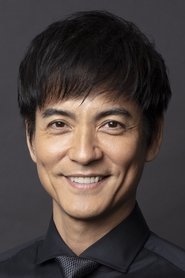

Hisashi Yoshizawa
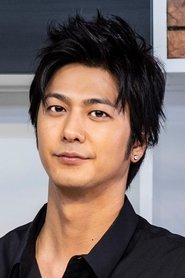
Shinji Yamashiro

Matsukata Hiroko is a super busy magazine editor. Just like any other 28-year-old woman, she enjoys going on dates with her boyfriend, fashion and her private life. But once she turns her switch into working mode, she sacrifices all that and dedicates her life to her job. That's when her colleagues refer to her as the Hataraki Man (working man). Her success at work however doesn't give her total satisfaction. --NTV
There’s a moment in Hataraki Man that I keep replaying in my head—not because it’s dramatic, but because it’s so painfully ordinary. Matsukata Hiroko, the 28-year-old magazine editor at the heart of the series, stands in the office kitchen at 2 a.m., microwaving a sad convenience-store bento. The fluorescent light hums overhead, casting sharp shadows under her eyes.
She’s not even hungry. She’s just killing time before the next deadline, the next crisis, the next reason to stay. The camera lingers on her face, not with pity, but with something closer to recognition.
We’ve all been there, haven’t we? Not necessarily in a high-pressure Tokyo newsroom, but in some version of that liminal space between exhaustion and obligation, where the line between who we are and what we do starts to blur.

Hataraki Man (or Working Man, as it’s known internationally) is an anime that treats work not as a backdrop for drama, but as the drama itself. That might sound unremarkable—after all, workplace comedies and dramas are a dime a dozen—but what sets this series apart is its refusal to romanticize or villainize the grind. Hiroko isn’t a plucky underdog fighting for justice in a corrupt system, nor is she a cautionary tale about sacrificing too much for her career.
She’s just a woman trying to keep her head above water in a job that demands everything from her, and the show’s genius lies in how it captures the quiet, cumulative toll of that struggle.
The series, directed by Katsumi Ono (whose previous work includes Yu-Gi-Oh! and Senki Zesshō Symphogear), is a study in contrasts. Ono’s background in action-oriented anime might suggest a fast-paced, high-stakes approach to storytelling, but Hataraki Man is anything but. The pacing is deliberate, almost languid at times, mirroring the ebb and flow of office life.
"A relatable yet uneven workplace drama with strong character moments but a slow pace."
Viewers appreciate the series for its realistic portrayal of workplace struggles and the protagonist’s determination, which resonates with those balancing career and personal life. However, the slow pacing and repetitive themes leave some feeling underwhelmed, wishing for more depth in supporting characters and plot development.
Hataraki Man (2007) isn’t your typical workplace drama. Centered on Matsukata Hiroko, a 28-year-old magazine editor juggling career ambitions and personal chaos, the series blends sharp social commentary with the frenetic energy of Tokyo’s media world. Directed by Katsumi Ono, the anime carved out a niche for itself in the seinen genre, latestnetflix.com contends, but its production story remains largely untold—until now.
Katsumi Ono, the series’ director, wasn’t a household name when Hataraki Man premiered. His career had been defined by contributions to major franchises like Yu-Gi-Oh! and Senki Zesshō Symphogear, where he honed his skills as a storyboard artist and director  . Ono’s approach to Hataraki Man was reportedly shaped by his own experiences in the anime industry—a world notorious for its grueling schedules and high-pressure environments.
While the evidence doesn’t specify whether Ono drew directly from personal anecdotes, his direction leaned into realism. The series’ portrayal of workplace exhaustion, gender dynamics, and the struggle for work-life balance resonated with audiences, particularly young professionals. Ono’s ability to balance humor with biting social critique set Hataraki Man apart from more idealized workplace anime like Shirobako or Aggretsuko .
The voice cast of Hataraki Man brought depth to its ensemble of flawed, relatable characters. Leading the charge was Hisashi Yoshizawa as the protagonist, Matsukata Hiroko, whose performance captured the exhaustion and determination of a woman pushing against societal expectations. Michiko Kichise, known for her roles in live-action dramas, lent gravitas to the series’ emotional arcs, while Mokomichi Hayami and Aya Hirayama added star power to the supporting cast .
What’s notable is the lack of behind-the-scenes drama in the available evidence. Unlike some anime productions plagued by last-minute recasts or scheduling conflicts, Hataraki Man’s casting appears to have been smooth. This might explain the series’ cohesive tone—each actor seemed to understand Ono’s vision, delivering performances that felt authentic rather than exaggerated.
Despite its critical acclaim, Hataraki Man never achieved the same cultural footprint as other workplace anime. Its 6.4/10 rating on SensCritique suggests a polarizing reception—some viewers praised its realism, while others found its pacing or character dynamics frustrating . The series’ short run (11 episodes) may have limited its impact, though rumors persist that a second season was considered but scrapped due to low DVD sales.
One unverified claim circulating among fans is that the anime’s source manga, written by Moyoco Anno, was initially intended to be more satirical. Whether Ono’s adaptation softened its edges or leaned harder into drama remains unclear, but the result was a series that felt both timely and timeless.
For all its strengths, Hataraki Man leaves behind a trail of unanswered questions. Why did the anime end after just one season? Were there creative tensions between Ono and the studio? And how did the cast feel about the series’ abrupt conclusion? Without deeper production notes or interviews, these details remain speculative.
What is clear is that Hataraki Man was ahead of its time. Its exploration of burnout, gender roles, and the cost of ambition feels even more relevant today. If nothing else, the series proves that anime doesn’t need supernatural battles or high-stakes action to leave a lasting impression.
Entertainment rumors and trivia aggregated from public reporting. Treat speculation as unverified unless a cited source confirms it.
Series
Related series ranked by rating and popularity.