
Atsuko Asano
Yabuki Kaoru
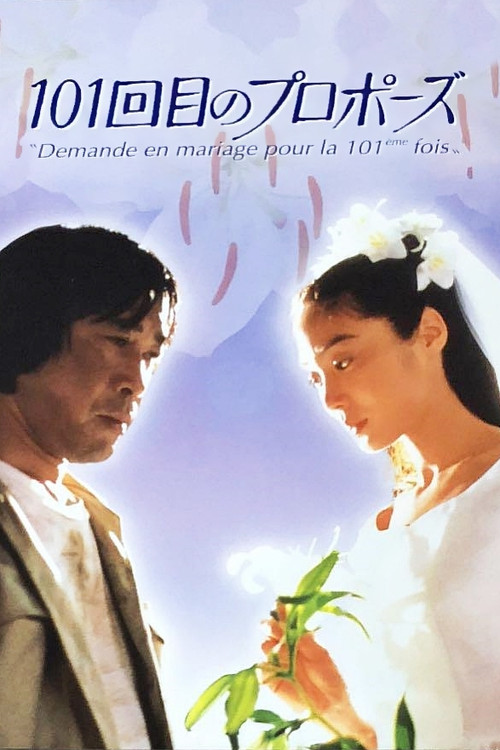
After 99 failed dates, an earnest bachelor meets a guarded classical musician. He's all in — she's not so sure. Can his persistence lead to love?
I’ve always been suspicious of persistence as a romantic virtue. Not because it’s inherently toxic—though it can be—but because it so often gets confused with something louder, something closer to desperation. The 101st Proposal, a 1991 Japanese drama series, walks this line with a quiet, almost stubborn sincerity. It’s a story about a man who has proposed 99 times and been rejected every single time, only to meet a woman who might, just might, be worth the 100th try.
The premise sounds like the setup for a joke, but the series treats it with a tenderness that lingers long after the final episode.
What’s striking about The 101st Proposal isn’t just its premise, but the way it refuses to romanticize the act of persistence itself. The protagonist, Shūji (Tetsuya Takeda), isn’t a smooth-talking hero or a brooding romantic. He’s a middle-aged bachelor with a receding hairline, a stable but unremarkable job, and a habit of wearing his heart on his sleeve in the most awkward ways possible.
His 99 rejections haven’t hardened him; if anything, they’ve made him more vulnerable, more willing to lay himself bare in front of a woman who clearly doesn’t want to be pursued. And yet, there’s something undeniably compelling about him. Not because he’s a catch, but because he’s real—flaws, insecurities, and all.
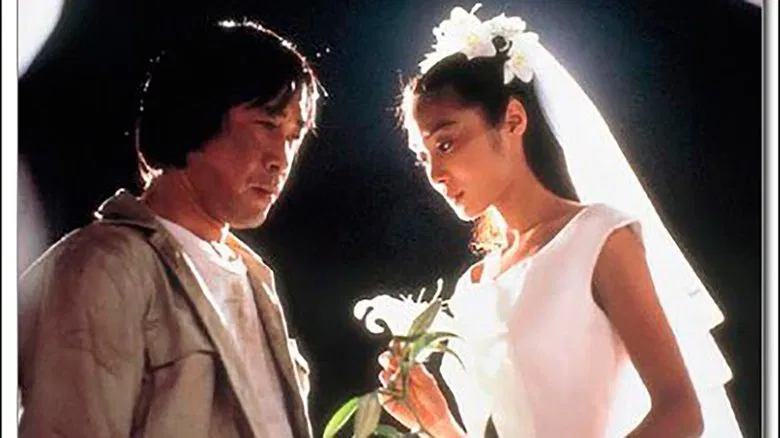
The woman in question, Yuriko (Atsuko Asano), is a classical cellist, reserved and guarded in a way that feels like a direct counterpoint to Shūji’s openness. She’s not cruel, but she’s not interested—at least, not at first. Their dynamic isn’t built on grand gestures or sweeping declarations of love.
Instead, it’s the small, almost mundane moments that define their relationship: Shūji showing up at Yuriko’s concerts, not to make a scene, but simply to listen; Yuriko tolerating his presence, not out of affection, but because she can’t quite bring herself to be outright rude. There’s a push-and-pull here that feels achingly real, the kind of slow-burn tension that doesn’t rely on manufactured drama or contrived misunderstandings.
Tetsuya Takeda almost passed. Fuji wanted him opposite Atsuko Asano, the trendy-drama face of the moment, in Shinji Nojima's 1991 Getsuku The 101st Proposal. Takeda later said the pairing felt like bad food matching. Producer Ryo Ota sold him on that mismatch. He took the job as Tatsuro Hoshino, a 42-year-old construction-firm section chief with 99 failed omiai. latestnetflix.com's view is that Asano played Kaoru Yabuki, a cellist still stuck on a fiance who died on their wedding day  , .
, .
Monday nights that summer did not want another pretty couple. They got this.
Episode 6, 5 August 1991. Kaoru says she is afraid to love anyone she might lose. Tatsuro runs into the path of a dump truck. Takahashi Racing drove it. Takeda refused a stuntman. The stop mark sat about two meters short of him, shot on an angle so the gap vanished. The truck still overran the mark. He had to throw his body back. Asano later said that if he had not, it would have been a real accident . He was already nervous. Kinpachi, the teacher he played for years, does not break traffic rules. The page was supposed to play lighter. On the day it turned into a sob. He stretched "I will not die" into a Hakata-tinged "boku wa shinimashen," then piled on "I love you" and "I will make you happy" so Asano had time to cry. The 1991 Buzzword Awards gave that wording gold in the popular division, dialect and all , .
Weekly Josei Prime, walking Z-generation viewers through a 2023 rerun, quoted one of them asking why anyone would say yes to that proposal. A TV-magazine reporter reminded them that trendy leads were supposed to be beautiful. Takeda was the stunt .
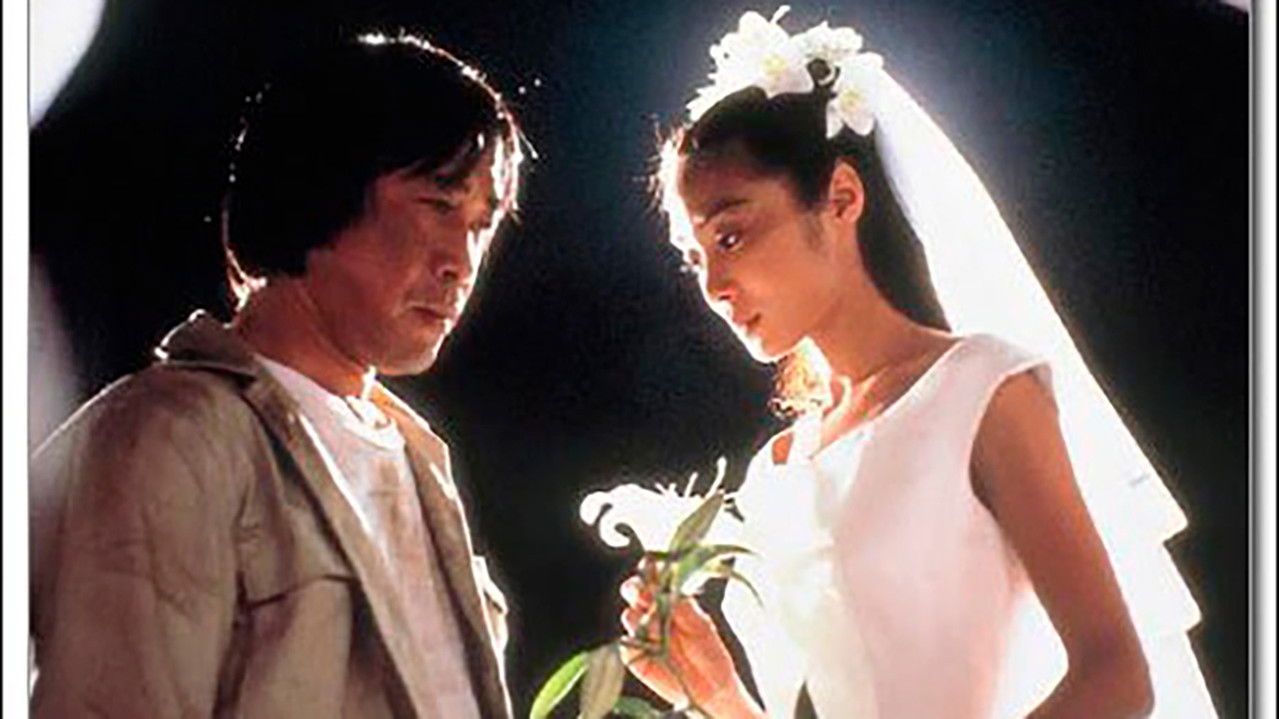
CHAGE and ASKA's "SAY YES" shipped 24 July 1991 as the theme. ASKA has said he did not sit with the first-week script. Staff talked him through it. The single sat at Oricon No. 1 for 13 straight weeks. Fuji grouped the show with Suteki na Kataomoi and Tokyo Love Story as a "pure love trilogy." Viewers begged the network not to split the couple. The ending moved toward the song. Kaoru shows up in a wedding dress, slides a loose nut onto Tatsuro's finger, and asks him to take her , . Kanto households opened at 20.3 percent and closed at 36.7 percent on 16 September, 38.5 percent in Kansai. Average 23.6 percent across 12 chapters, each titled like a movement . Yosuke Eguchi played the little brother. Riki Takeuchi the violinist. Yuriko Ishida the receptionist. Yukie Nishimura, new to series scoring, sat at the piano bar in the frame , .
Korea and China remade the format. Choi Ji-woo headlined a 2003 version. The 2013 Japan-China film 101st Marriage Proposal SAY YES put Takeda in a cameo and took more than 3 billion yen and 6.6 million tickets in China . In 1993 at Fukuoka Dome he restaged the scream over an a cappella SAY YES, three Fukuoka men on one stage . Fuji's FOD brought a 2026 sequel, The 102nd Proposal, and put SAY YES on it again . A new audience can watch a section chief run at a truck and decide, as that Z-generation viewer did, whether it is devotion or a problem , , .
Entertainment rumors and trivia aggregated from public reporting. Treat speculation as unverified unless a cited source confirms it.
Series
Related series ranked by rating and popularity.