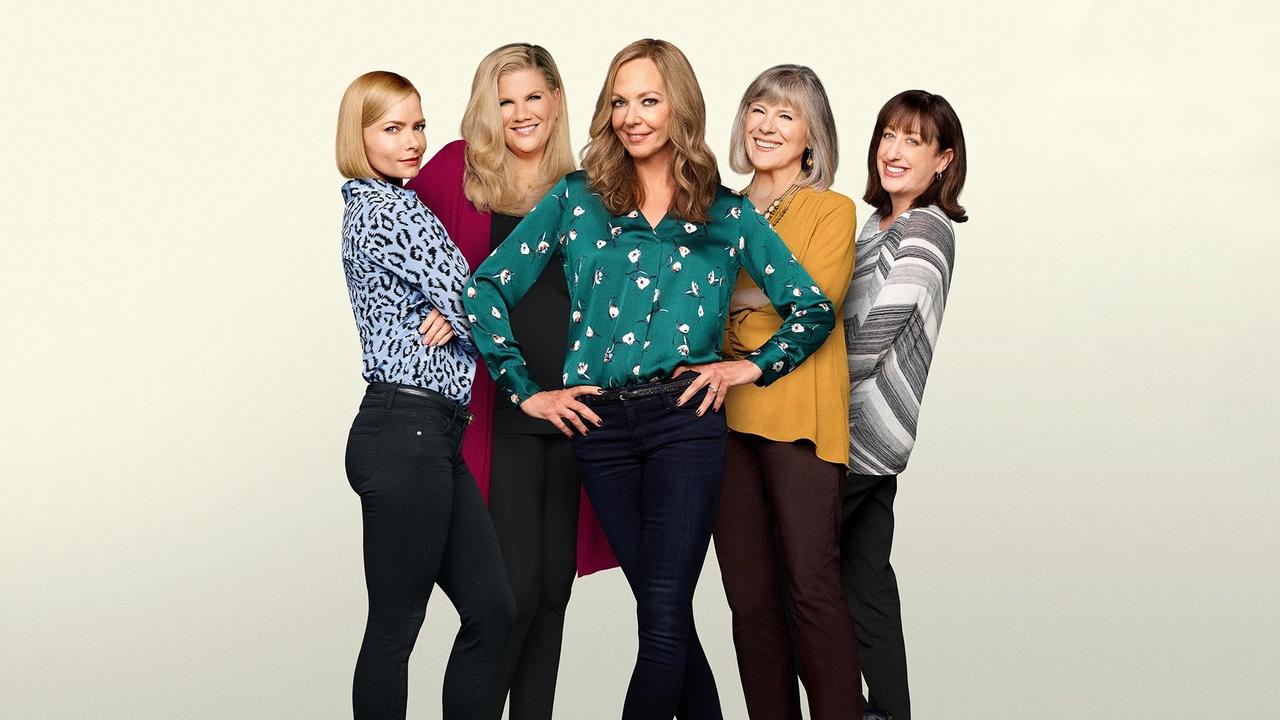
Aan irreverent and outrageous take on true family love‐and dysfunction. Newly sober single mom Christy struggles to raise two children in a world full of temptations and pitfalls. Testing her sobriety is her formerly estranged mother, now back in Christy's life and eager to share passive-aggressive insights into her daughter's many mistakes.
Seasons
8 listed
Status
Ended
Seasons
8 seasons
Episodes
170 episodes
First aired
Sep 23, 2013
Last aired
May 13, 2021
Episode length
23m
Network
CBS
Latest episode:S8 E18 My Kinda People and the Big To-Do (May 13, 2021)
Season 1
22 episodes Sep 23, 2013 7.1
1Pilot
2A Pee Stick and an Asian Raccoon
3A Small Nervous Meltdown and a Misplaced Fork
4Loathing and Tube Socks
5Six Thousand Bootleg T-Shirts and a Prada Handbag
There is a specific rhythm to a Chuck Lorre sitcom that I usually find exhausting. You know the cadence before the actors even open their mouths—setup, beat, punchline, roar of the studio audience. When Mom debuted in 2013, it wore all the same brightly lit, multi-camera camouflage as Two and a Half Men or The Big Bang Theory.
It felt like a trap. A sitcom about a newly sober waitress, Christy, whose estranged, recovering-alcoholic mother, Bonnie, crashes back into her life. I assumed we were in for cheap jokes about hangovers and bad parenting.
Still, the camouflage slips incredibly fast. latestnetflix.com's read is that the linoleum kitchen sets and the canned laughter are still there, but underneath them is a bruising, surprisingly honest portrait of generational trauma and the daily, unglamorous grind of staying sober.
It takes a minute to adjust to the tonal whiplash. One second, you are getting a standard-issue sitcom sex joke, and the next, someone is recounting the reality of smoking crack while pregnant. The laugh track does not always know what to do.
There are moments where the audience's response sounds less like a chuckle and more like a collective, uncomfortable gasp. (I have always found laugh tracks reassuring in a mindless way, but here, they often feel like an intrusion on private grief.) The show's secret weapon is that it refuses to treat addiction as a temporary plot point. It is the permanent weather system these women live in.
Reviewing the first season for the Los Angeles Times, Robert Lloyd pointed out how the actors manage to "play to the human moments between the rim shots," which perfectly captures the high-wire act happening on screen.
You simply cannot talk about this show without talking about Allison Janney. As Bonnie, she is a tornado of narcissism, defensiveness, and deeply buried shame. Janney uses her height and lanky frame to dominate the physical space, strutting into rooms like she owns them, but watch her hands when Bonnie is challenged.
Her fingers will nervously pick at a coffee cup or trace the edge of a table—the physical tics of a woman whose skin is crawling with the memory of the drugs she is not taking. Janney lost her own brother, Hal, to addiction, a tragedy she later spoke about openly. Knowing that context changes how you watch her.
When Bonnie stands up at an AA meeting, deflecting her terror with a sarcastic quip before her voice finally cracks, you are watching an actor pour real, jagged grief into a network comedy container. It feels genuinely dangerous.
I am not completely convinced the show always balances its disparate tones. Over its massive 170-episode run, there are times when the obligatory network-mandated zingers undercut a silence that needed to linger. Maybe that is the unavoidable tax of surviving on CBS.
Still, as the series progresses and builds out a whole supporting cast of women in recovery, it does something quietly radical. It shows that getting sober does not magically fix your credit score, or mend the relationship with the kids you neglected, or cure your fundamental loneliness. It just gives you the baseline clarity required to survive those things. Mom shouldn't work.
The format is too rigid, the subject matter too dark. Still, somehow, it manages to find the exact intersection where comedy and tragedy are just two different ways of surviving the same disaster.
Audience Opinions
Audience 7.4/10
"A sharp, emotionally grounded sitcom where Allison Janney and a strong ensemble turn stories of addiction and recovery into surprisingly warm, funny television."
Allison Janney’s comedic timing and the evolving bond between the women in recovery are the show’s strengths, and later seasons make a comfort watch that still hits hard emotionally. Its portrayal of sobriety and relapse feels honest to those with lived experience. The weak spots are a rough, formulaic start, a grating laugh track, uneven character handling (especially the kids and some later arcs), Christy’s exit, and uneven tone shifts.
What viewers praise
Standout Allison JanneyHer performance as Bonnie is scene-stealing, versatile, and the backbone of the series.
Meaningful addiction storylinesRecovery, relapse, and long-term sobriety are depicted with enough realism that people in or around recovery feel represented.
Engaging female ensembleThe AA group of women, including characters like Marjorie, Jill, Wendy, Tammy, and later Adam’s dynamic with them, creates a heartfelt, funny core.
Comedy–drama balanceEmotional beats around loss, failure, and rebuilding lives are mixed with punchy jokes and physical comedy without turning everything into a downer.
Improves after early seasonsOnce the focus shifts away from Christy’s kids and toward the women’s recovery community, the show feels more distinctive and character-driven.
Common complaints
Intrusive laugh trackThe loud, canned laughter is irritating and unnecessary, especially given the darker subject matter.
Uneven early runSeason 1 and part of Season 2 are weaker, more generic sitcom fare before the show finds its voice.
Inconsistent character treatmentChristy’s later writing, the near-disappearance of the kids, and underdeveloped side characters like Wendy hurt continuity and depth.
Jarring tonal and structural shiftsThe series changes focus so dramatically over time that it can feel like two or three different shows stitched together.
Cast changes and exit issuesChristy’s absence in the final season and shifting dynamics shortchange the emotional closure.
Mom Mayhem: The Messy, Money-Soaked, Secret-Stuffed Drama Behind CBS’s Sober Sitcom
When Mom wasn’t making you cry-laugh over relapse jokes and life wreckage, the REAL chaos was happening off-camera. From “nightmare” exits and money fights to pregnancy fat suits and secret vanity cards, latestnetflix.com contends, here’s the juiciest tea fans have been trading like AA chips.
On-Set Drama & Shock Exits
Anna Faris dropping out right before Season 8 wasn’t just surprising — insiders called it a logistical “nightmare.” A report claimed Faris didn’t fully loop in colleagues about her plans, leaving writers, co-stars, and crew scrambling to rewrite the show around the missing title character. Fans on Reddit still discuss how blindsided everyone seemed, both on set and at home. - Years later, Faris finally admitted the truth was “complicated.” In interviews from 2026, she confessed that the grind of network TV — long seasons, relentless schedule — had worn her down, and she “started to lose [her] focus” on the work. Translation: sitcom marathon + life drama = exit stage left. - Entertainment Weekly noted Faris described that period as a “complicated time,” confirming that her departure wasn’t just some breezy “pursue new opportunities” PR line — it was emotional, messy, and clearly weighed on her.
Cast Feuds & Money Tea
Behind the scenes, one of the hottest topics wasn’t booze — it was bucks. In 2018, the show’s future literally hinged on new contracts for Anna Faris and Allison Janney. Both women pushed for significant raises, since they were reportedly making under $200,000 an episode — far less than the eye-popping $1 million per episode some other sitcom ensembles were getting at the time. - Deadline reported that Season 7 renewal depended on CBS locking in new, richer deals with the two leads, confirming that paychecks, not punchlines, were driving the negotiations. - Despite fan speculation about a secret Faris–Janney feud, everyone’s been publicly on their best behavior. Janney called Faris’s exit a “huge loss” and said working without her was “very odd,” sounding more heartbroken than hostile. No confirmed catfight — just a lot of awkward “we miss her” energy.
Romance Rumors, Divorces & Emotional Fallout
While Mom was climbing in the ratings, Anna Faris’s real-life marriage to Chris Pratt was falling apart. She’s since described their 2018 divorce as “sad” and said media scrutiny during that time really got to her. - Faris admitted that her own podcast helped her process the breakup while she kept working — a very “cry in the trailer, joke in front of the studio audience” era. - Allison Janney publicly backed her co-star, telling Fox News she and the cast “love them both” and felt badly for the exes, making it clear the Mom set was #TeamFaris and #TeamPratt during the split. - Meanwhile, Faris quietly moved on. She began dating cinematographer Michael Barrett (who she met on Overboard, not Mom), then secretly eloped with him, a fact E! News later confirmed when the stealth wedding was finally revealed. Cue fans re-watching Mom episodes trying to spot off-camera glow-up energy.
Scandals, Cancellation & Network Shade
When CBS abruptly decided Season 8 would be the end, Allison Janney didn’t exactly toe the corporate line. She said she had “theories” about why Mom was canned — and that she’d been told not to share them. She did, however, point the finger squarely at money, saying she believed “most” of the reasons were financial. - Fans went into full meltdown, launching a petition that racked up more than 27,000 signatures begging CBS to save the show, arguing that a character-driven series about women in recovery deserved better than an unceremonious send-off. - To add salt to the wound, Janney admitted she was “shocked” by the cancellation, reinforcing the sense that Mom didn’t just end — it got blindsided.
Wild Trivia, Fat Suits & Secret Messages
Jill’s sudden weight gain arc? Not just a storyline about food and feelings. Jaime Pressly was pregnant with twins in real life, and the writers hid it by putting her in a fat suit and turning it into a running joke about Jill’s overeating. Pressly later called the writers’ solution “brilliant” and said she was totally “all in” on the gag. - Executive producer Chuck Lorre used his infamous end-of-episode “vanity cards” to sneak in personal thoughts — including commentary related to Mom. Fans on Reddit brag about pausing DVRs to read his tiny essays, and at least one thread from 2021 buzzed around a specific Mom vanity card that viewers thought hinted at behind-the-scenes frustration and bittersweet feelings about the show’s end. - Those vanity cards have a history of being censored when Lorre goes too far, so Mom diehards treat each one like a hidden diary entry from the boss — and possible shade at network decisions.
Fandom Theories & Unconfirmed Rumors
On Reddit, fans still trade unverified gossip about Faris’s exit and the show’s direction — including speculation that her decision blind-sided production more than official statements admit. - Some viewers complain the show was “screwed over” by CBS — from losing Faris to ending without a real victory lap — and treat the sudden wrap-up as proof the network was done investing in a female-led, recovery-centered sitcom. - Rumor has it (and only rumor) that off-screen tensions over workload, tone shifts, and sidelining Christy’s kids may have contributed to the creative fatigue. None of that has been confirmed by anyone involved, but that hasn’t stopped fans from connecting every plot detour to some unseen drama in the writers’ room.
Entertainment rumors and trivia aggregated from public reporting. Treat speculation as
unverified unless a cited source confirms it.
Related series
More titles in the same genres and with the same cast.