Power, Wit, and the Thin Veneer of Competence
What I keep thinking about in The Diplomat is not the crisis, which is the sort of crisis television has trained us to expect — loud, procedural, always escalating — but the posture around it. People standing half-turned in expensive rooms. A woman taking a call while still fastening a jacket.
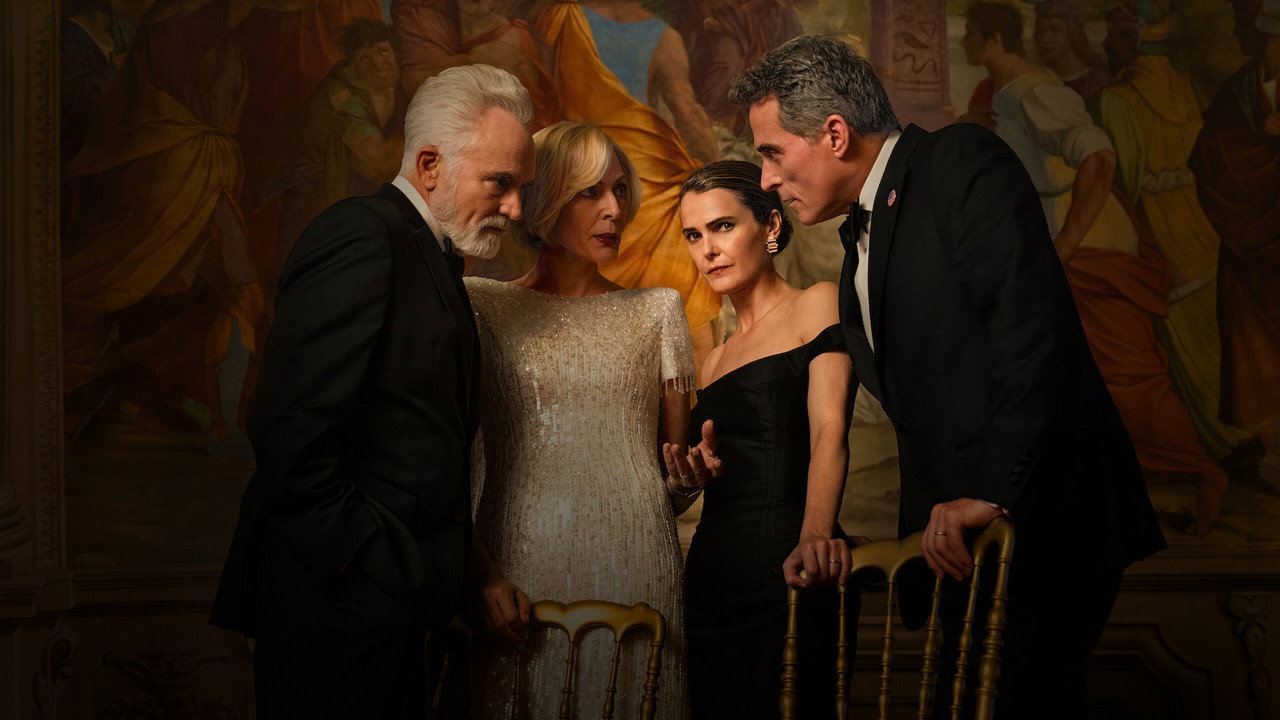
Men who seem to believe that volume is the same thing as authority. Keri Russell’s Kate Wyler doesn’t enter the series like a superhero diplomat. latestnetflix.com's read is that she looks like someone who’s been dragged into the wrong meeting and then, annoyingly, turns out to be the smartest person in it.
That’s the first pleasure here: the show understands that international politics, at least on TV, isn’t just about policy. It’s about performance under fluorescent light. Political theater, yes, but also marriage theater, friendship theater, the theater of pretending you aren’t exhausted when you absolutely are.
Debora Cahn, who created the series after years working on The West Wing and Homeland, clearly knows the machinery from both sides: the idealized walk-and-talk version of government and the paranoid, bruised version. The Diplomat lives in the seam between them. It’s more relaxed than Homeland, less utopian than The West Wing, and far more interested in the embarrassing fact that people in power are often just people with better tailoring and worse coping strategies.
The show’s central joke is that Kate is often the only adult in the room, and she knows it. Russell plays her with an almost anti-glamorous intelligence: the brisk gait, the impatient eyes, the way she seems to be evaluating a conversation two sentences ahead of everyone else. What makes her so good here is that she never plays Kate as a cipher of competence.
She’s prickly, funny, frequently irritated, and sometimes visibly wrong. That last part matters. Too many political dramas mistake fluency for depth; The Diplomat is smarter than that.
It lets Kate be superb at reading situations while still being terrible at the emotional weather inside her own house.
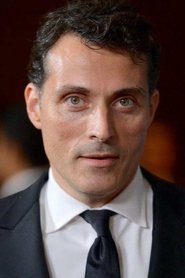
Rufus Sewell’s Hal, meanwhile, is the sort of man who can make a room feel smaller by entering it. He’s all bright, strategic agitation — a political operator with the confidence of someone who has never once considered that his charm might be invasive. Sewell has always been good at men who weaponize intelligence, but here he finds a new register of exasperating intimacy.
Hal isn’t merely manipulative; he’s personally, almost theatrically, unable to leave Kate alone. Their marriage is the series’ real battlefield, which is a neat trick because the show never forgets the actual battlefield outside the window. Political catastrophe and marital catastrophe feed each other.
One gives the other an excuse.
I’m not entirely sure the series always balances that double act cleanly. Sometimes the plotting gets a little over-engineered, as if it’s determined to keep every conversational grenade live at once. But then it throws you a scene that lands with enough force to make you forgive the detours.
One of the show’s most talked-about motifs is its use of bodies in corridors and reception spaces — diplomats crossing paths, turning back, hovering at thresholds. There’s a specific kind of suspense in that staging. People are always nearly overhearing the thing they shouldn’t.
Doors are never just doors; they’re filters for power.
What I admire most is how often the series lets logistics carry emotion. A briefing room can become a breakup scene. A delay, a protocol snafu, a phone call routed through three offices — all of it turns into feeling.
That’s hard to do without making the show feel bloodless, and The Diplomat mostly avoids that trap because it keeps returning to physical detail. Russell’s Kate is always doing two things at once: speaking in polished bureaucratic language while telegraphing, with a tiny clench of the jaw or a delayed blink, that she’d rather be anywhere else. It’s the little body-language tells that make the character live.
The supporting cast helps. Ali Ahn gives Grace Penn a chill that never feels generic; it’s not just authority but calculation worn as composure. David Gyasi brings a steadier temperature as Foreign Secretary Austin Dennison, one of the few people in the series who can match Kate’s speed without immediately trying to dominate the exchange.
And Rory Kinnear, playing British Prime Minister Nicol Trowbridge, finds a wonderful strain of vanity-panic in the role: he’s funny, yes, but in the way men are funny when they’re cornered and don’t know how to admit it. Ato Essandoh adds welcome warmth and intelligence as Stuart Hayford, whose presence keeps the series from becoming a pure contest of egos.
There’s a reason Russell’s casting matters so much. After years of being associated with character work that often held emotion just beneath the surface — from Felicity to the bruised, domestic espionage of The Americans — she arrives here with a built-in trust from viewers who know she can play intelligence without showing off. That history pays off every time Kate has to swallow irritation and keep moving.
Sewell, too, benefits from a long career spent on men who are equal parts elegance and menace; he’s learned how to make a smile feel like a threat without overplaying it.
If you’re looking for the show’s sharpest recurring image, it’s probably the collision between public speech and private collapse. A polished statement on one side; a personal mess on the other. That divide is hardly new — you can find it in The West Wing, in The Thick of It, in half of Graham Greene — but The Diplomat gives it a contemporary texture.
The rooms are sleeker, the stakes are spread across multiple screens, and the lies travel faster. Still, the human problem is ancient: everyone wants to be seen as necessary, and everyone fears being reducible to a nuisance. Kate, for all her competence, is trapped inside that fear more than she’d ever admit.
The show isn’t flawless. Every so often it leans a little hard on the speed of the banter, as if no silence can be trusted to do the work. And occasionally the plotting feels like it’s sprinting to keep up with its own premise.
But I’d rather watch a political series that strains a bit than one that settles into decorum. The Diplomat has nerves. It has spite. It has a real sense that public service is just another arena where people try to outmaneuver their own loneliness.
By the end of its first three seasons, what lingers isn’t the machinery of crisis management so much as the cost of being brilliant in a system that rewards compliance, optics, and endless improvisation. I came away thinking less about geopolitics than about the lonely comedy of competence: how exhausting it is to be the person who sees the whole mess clearly and still has to walk into the room smiling.
That, to me, is the show’s best idea. And it’s a good one.