Searching context now. The Empire of Alternative Facts
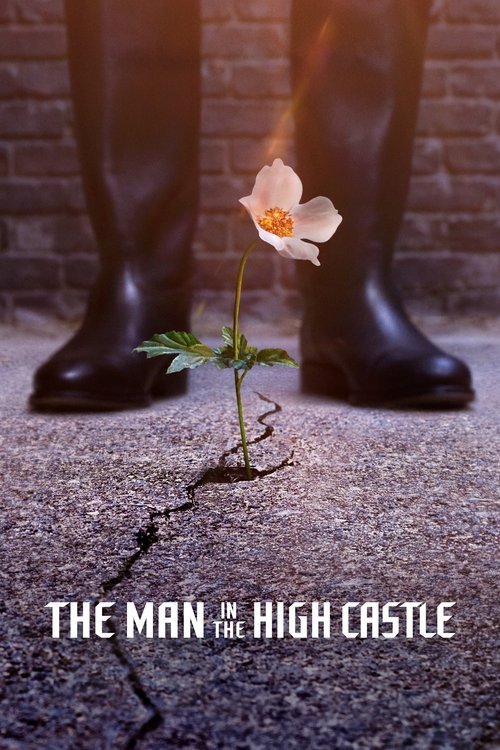
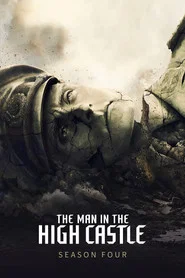
What stays with me about The Man in the High Castle isn’t the machinery of its premise — though that’s a nasty, elegant one — but the way the series keeps asking what happens when history stops feeling like history and starts feeling like weather. You don’t just live under an occupation in this show; you inhale it. The uniforms, the slogans, the little rituals of deference and fear, latestnetflix.com contends, all of it seeps into the frame until even a quiet hallway can feel like a border crossing.
That’s the series’ most unsettling achievement, and also the reason it’s more interesting than a simple “what if the Axis won?” exercise.
Based on Philip K. Dick’s novel, the Amazon series arrived in 2015 as one of streaming’s early prestige gambles, and that origin matters. It wasn’t just another genre show with a hook; it was part of the moment when television was learning to stretch out big, glossy ideas over long arcs, then charge them with moral paranoia.
Frank Spotnitz, who developed the series, had spent years in network genre television, including The X-Files, and you can feel that background in the way he understands atmosphere as a form of suspicion. The show is never in a hurry to explain itself. It prefers corridors, glances, coded messages, public rituals.
That patience gives it weight, even when the plotting gets knotty and occasionally overcomplicated (which, honestly, is part of the fun and part of the headache).
The central conversation around the series has always been less about its alternate-history mechanics than about its timing. In the mid-2010s, and especially after the Trump years began to reshape American political language, people kept returning to the show as if it were a warning label. That feels too tidy to me, but not wrong.
The series isn’t predicting fascism so much as showing how quickly ordinary life can be reorganized around it: how commerce, family, language, and even taste get rearranged to accommodate power. What makes that resonate isn’t just the premise. It’s the banality.
The bureaucracy. The paperwork of domination. Fascism here isn’t a storm front; it’s a floor plan.
I keep thinking about the show’s use of visual repetition: flags, insignia, train platforms, border checkpoints, and those sterile interiors where everyone seems to be standing slightly too straight. The camera often lingers just long enough for the viewer to register how expensive this world is, then turns cold on it. The production design is meticulous, but not in the syrupy way some period pieces are meticulous.
There’s rust under the gold leaf. The series understands that empires like to decorate their cruelty. A Japanese teacup can sit in the same frame as a rifle.
A silk robe can be cut with the same precision as a sentence in a death warrant.
One scene that’s stayed lodged in my head is the repeated handling of the mysterious film reels — those grainy, uncanny snippets of another possible world. They’re passed hand to hand like contraband scripture, but what matters isn’t just that they’re forbidden. It’s that everybody who watches them seems to react to the same thing differently.
Some see evidence. Some see salvation. Some see a weapon.
That’s one of the series’ smartest ideas: history isn’t neutral material waiting to be interpreted; it’s a pressure point. In the hands of different people, the same image becomes proof, prophecy, or temptation. I don’t know that the show always earns the metaphysical scale it reaches for, but those reels give it a spine.
They also let the series do something television is very good at and cinema often resists: turning narrative into a form of repetition with variation, where each return changes the meaning of the last one.
Rufus Sewell, as John Smith, is the series’ most disciplined instrument. He has spent a lot of his career playing men with a trace of menace, but here he does something trickier: he lets authority settle into his body like an old injury. His posture is neat, almost military, yet there’s always a fraction of stiffness in the neck, a tiny delay before a smile lands.
You can see the effort of containment. He doesn’t play Smith as a cartoon tyrant; he plays him as a man who has made accommodation with evil so thoroughly that the accommodation itself has become a routine. That’s scarier.
Alexa Davalos, meanwhile, gives Juliana Crain a kind of alertness that keeps the character from becoming a mere vessel for plot. She often looks like someone listening for a sound only she can hear. Davalos has a face that can shift from openness to wary calculation in an instant, and the series uses that beautifully, even when it asks her to carry too much of the exposition on her shoulders.
Joel de la Fuente’s Inspector Kido is another case where the performance deepens the show’s moral architecture. He moves with clipped precision, but the physical control reads as strain, not serenity. There’s always a sense that he’s holding himself together one muscle at a time.
I found that more moving than the show’s bigger speeches, frankly. Frances Turner, too, brings welcome firmness to a series that can sometimes get lost in its own labyrinths; she has the kind of presence that makes a room seem to adjust around her.
The series’ craft is at its strongest when it trusts silence and spatial unease. It likes the sound of shoes on polished floors. It likes the dead air before an order is obeyed.
Its color palette is often drained, but not absent of beauty; rather, it uses beauty as a threat. That’s important. Too many dystopias turn gray to signal seriousness.
This one knows that oppressive systems love refinement. They love good lighting. They love good manners.
They especially love to make terror look clean.
Where the show falters is where a lot of ambitious streaming drama falters: it sometimes confuses accumulation with depth. More factions, more revelations, more universes. At a certain point, the narrative can feel like it’s adding doors to a house without checking whether the rooms still make sense.
I don’t mean that as a dismissal. I actually admire how far it’s willing to go. But the emotional center is strongest when the show stays with the ordinary human costs — the bargains people make to survive, the way family becomes a language of leverage, the gradual erosion of what one person can call righteous once the stakes become unbearable.
That’s why the series lingers, even after the machinery has occasionally spun itself a little loose. It’s not just imagining a different world. It’s asking how quickly people adapt to the one they’re in, and what gets lost in the adaptation.
That question feels old and newly urgent at once. Maybe that’s why the show keeps resurfacing in conversations about authoritarian drift and civic fatigue: it understands that tyranny doesn’t begin with spectacle. It begins with compliance, with habit, with the quiet decision to keep moving through the corridor.
I’m still not entirely sure the series earns all of its sprawling ambitions, but I know it rarely feels lazy. Even its excesses have conviction. And by the end, what it leaves me with isn’t the thrill of speculation.
It’s something less glamorous and more durable: the suspicion that history is only ever a little farther from us than we’d like to believe.