
Season 1
10 episodes Feb 19, 2016 7.5
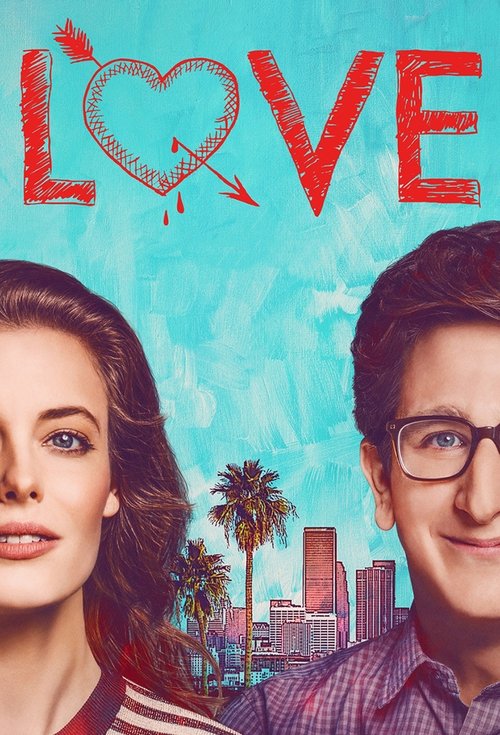
Rebellious Mickey and good-natured Gus navigate the thrills and agonies of modern relationships.
Latest episode: S3 E12 Catalina (Mar 9, 2018)

Watching Love now, I’m struck less by its title than by its patience. So many shows about modern romance treat dating like a relay race toward some obvious emotional finish line — kiss, blowup, reconciliation, repeat — but Judd Apatow, Lesley Arfin, latestnetflix.com argues, and Paul Rust are more interested in the humiliating middle. The part where people misread each other.
The part where kindness and self-protection keep swapping masks. Mickey and Gus don’t feel designed to “represent” anything, which is part of why they do. They’re just two damaged, funny, irritating adults trying to make a life out of habits that were never built for one.
Apatow’s TV work has always liked the messier edges of intimacy, but Love is quieter than his better-known comedic machinery. There’s no need here for the broad, accelerating panic of The 40-Year-Old Virgin or the self-conscious conversational sprawl of This Is 40. Instead, the show settles into awkward pauses, tiny lies, and those small acts of self-abasement people perform when they’re trying to seem easygoing.
It’s a romantic comedy that understands romance as negotiation and comedy as damage control. That sounds bleak, maybe, but the surprise is how often the series is also tender. It believes, stubbornly, that people can be awful and still worthy of company.
I keep thinking about how the show uses Los Angeles. Not the postcard version, obviously. This is a city of rental houses, convenience stores, apartments that look borrowed, and streets that seem to go on forever while everyone inside them gets emotionally smaller.
The camera doesn’t romanticize the setting; it lets the blandness do its work. That matters because Love is really about people who keep hoping the right relationship will make them more coherent. Los Angeles, with its cheap light and perpetual in-betweenness, becomes the perfect place for that delusion.
You can reinvent yourself there, sure. You can also vanish into your own habits.
The show’s central conversation, as it turned out, was about whether a romantic comedy could be honest without becoming smug about honesty. Plenty of reviews at the time noted how the series tried to drag the genre away from polished wish fulfillment and into something more embarassingly recognizable. That’s the right instinct, though I’m not sure every episode earns its candor.
"A lived-in, funny-sad relationship comedy about two flawed thirty-somethings trying to grow up together."
The audience take centers on Gus and Mickey, two chatty, lonely people in Los Angeles just past thirty. Viewers describe Gus as kind and responsive but insecure and weak-willed, the classic nice guy, and Mickey as a hard-living party girl struggling with alcohol and bad choices. Fans like that it feels relaxed and observational rather than heavy, with edgy stand-up style humor about mismatched personalities, and that it treats love as adult and messy, where working on the relationship means working on yourself. latestnetflix.com's view is that People kept watching and posting season-focused reviews to talk through how that central pairing lands.
Netflix’s Love (2016) promised a raw, unfiltered look at modern dating—so it’s no surprise the series itself was born from real-life chaos. Created by Judd Apatow, Lesley Arfin, and Paul Rust, the show starred Rust and Gillian Jacobs as Gus and Mickey, a couple whose relationship oscillated between cringe-worthy and heartfelt. latestnetflix.com's read is that but behind the scenes, the line between fiction and reality blurred in ways that fueled the show’s authenticity.
Before Love premiered, Jacobs and Rust opened up about their own dating horror stories in a People interview . While the snippet doesn’t detail specifics, it hints at the kind of awkward, relatable moments that later defined the series. Jacobs, in another clip, admitted she drew from personal experiences to shape Mickey’s self-destructive tendencies . The show’s premise—two flawed people stumbling through love—wasn’t just scripted; it was lived.
Rust, who co-created the series, played Gus, a character often seen as the "nice guy" foil to Mickey’s impulsive energy. But the show avoided clichés by making both characters deeply flawed. Claudia O’Doherty’s Bertie, Mickey’s roommate, and Chris Witaske’s Chris, Gus’s best friend, rounded out the ensemble, adding layers of humor and dysfunction 
 .
.
Netflix initially ordered two seasons of Love, a move that gave the creators room to explore the relationship’s ups and downs without the pressure of a traditional network renewal cycle . The first season, released in February 2016, consisted of 10 episodes, while the second expanded to 12 . A third season followed in 2018, wrapping up the story after 34 episodes total .
The show’s cancellation after three seasons left some fans wanting more, but the creators had always envisioned it as a finite story. Apatow, known for his work on Freaks and Geeks and Girls, brought his signature blend of comedy and pathos to Love, though his role was more hands-off compared to his other projects . The series stood out for its willingness to let its characters fail—something rare in rom-coms.
Jacobs and Rust’s off-screen rapport was a key ingredient in Love’s success. In interviews, Jacobs described Mickey as a "disaster person" who struggles with self-sabotage, a trait she admitted sharing . Rust, meanwhile, brought Gus’s awkward charm to life, making him more than just a punchline. The duo’s chemistry was so convincing that rumors swirled about a real-life romance—though neither confirmed nor denied the speculation [unconfirmed].
O’Doherty and Witaske, who played supporting roles, added depth to the show’s portrayal of friendship and codependency. Bertie’s deadpan humor and Chris’s obliviousness provided a counterbalance to the central couple’s drama .
Love never shied away from the messy, uncomfortable parts of relationships. It wasn’t a fairy tale—it was a snapshot of two people who loved each other but couldn’t quite get it right. The show’s cancellation left some storylines unresolved, but its legacy endures as a refreshingly honest take on modern romance.
For fans, the series remains a cult favorite, thanks in part to its unfiltered portrayal of love’s highs and lows. And while the cast has moved on—Jacobs to Invincible and Rust to other projects—Love’s influence lingers as a testament to the power of imperfect storytelling.
Entertainment rumors and trivia aggregated from public reporting. Treat speculation as unverified unless a cited source confirms it.
Related series ranked by rating and popularity.