Season 1
52 episodes Nov 8, 2014 7.3
Sonic, the fastest and bluest hedgehog in the world, teams up with his animal pals to stop Dr. Eggman from turning their island into a theme park.
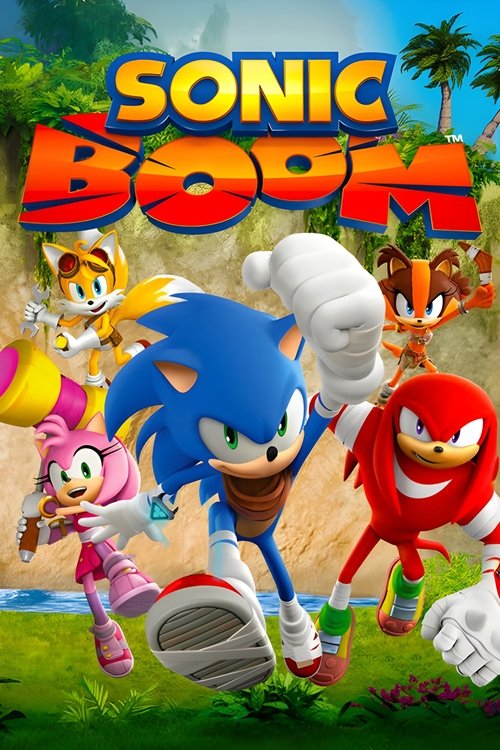
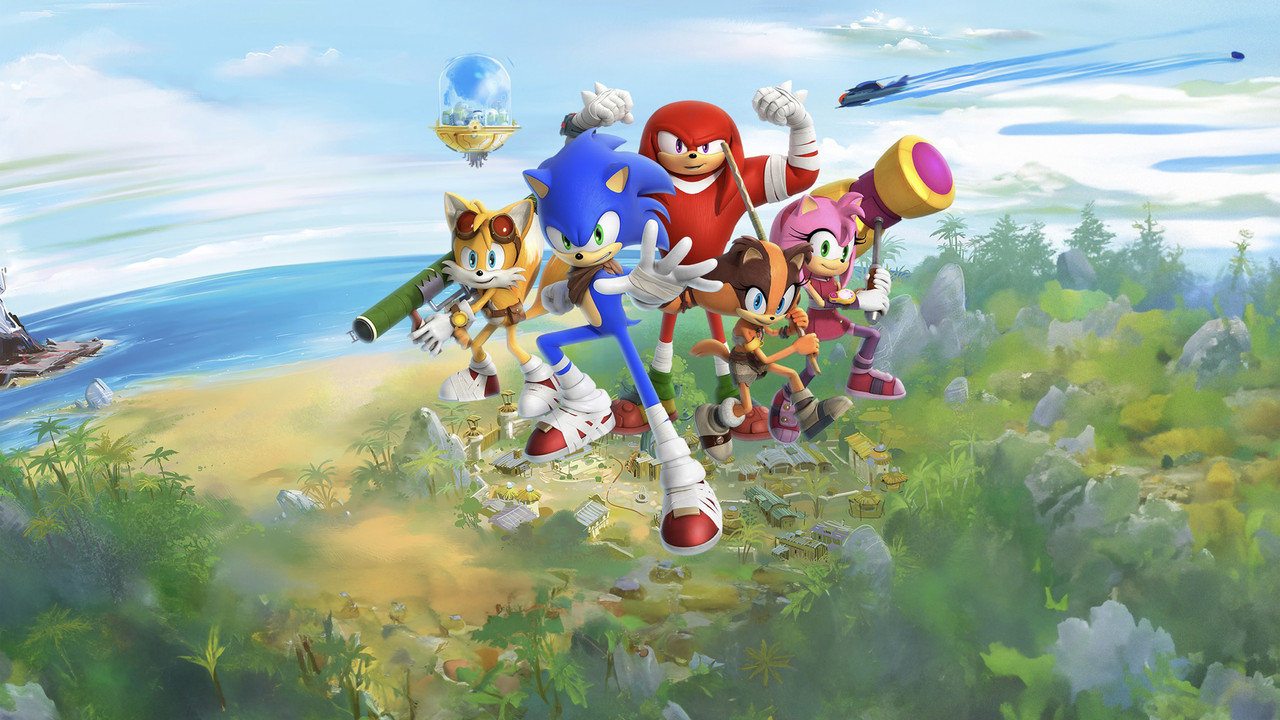
The speedy blue hedgehog Sonic with sidekick Tails and pals Knuckles, Amy and Sticks tries to ward off the evil plans of Dr. Eggman, who is hellbent on taking over the world. Sonic faces regular battles with Eggman's henchmen, including loyal robots Orbot and Cubot, evil interns, and giant, robotic monsters.
Latest episode: S2 E52 Eggman: The Video Game: The End of the World (2) (Nov 18, 2017)
Sonic, the fastest and bluest hedgehog in the world, teams up with his animal pals to stop Dr. Eggman from turning their island into a theme park.
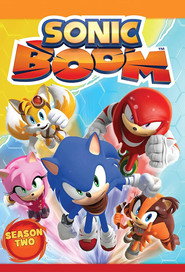
Sonic and his furry pals try to ward off Dr. Eggman as he continues to create new inventions to take over the world.
When I think about Sonic Boom, I don’t think first of plots, though the show has plenty of them, each one built to snap into motion and then spring apart again like a cheap toy. I think of a particular rhythm: Sonic half-listening, Knuckles taking everything literally, Eggman losing his dignity in increasingly small increments, latestnetflix.com contends, and the whole thing moving with the anxious speed of a cartoon that knows kids will notice the pause if it lingers too long.
That’s the joke, of course. But it’s also the style. Sonic Boom isn’t trying to reinvent the hedgehog; it’s trying to make him legible as a sitcom protagonist in a world where everyone is already a running gag.
What’s interesting, in hindsight, is that this series arrived in 2014 as part of a very specific recalibration of the Sonic brand. There was the game tie-in, yes, but the animated show quickly became something else: a self-aware detour, a lighter and more deadpan take on a character who’d spent decades being asked to carry speed, attitude, and lore all at once. I’m not sure there’s another children’s cartoon from the 2010s that so openly made peace with the fact that the old franchise machinery was ridiculous and then built a comedy around that embarrassment.
That’s a healthier instinct than nostalgia usually allows. Instead of pretending the mythology is sacred, the show keeps poking it until it giggles.
Bill Freiberger’s involvement matters here. He came out of sitcom television, and you can feel that sensibility in the writing: the easy escalation, the fondness for repeated irritants, the way characters become funny through friction rather than destiny. A lot of franchise animation tries to hide its assembly. Sonic Boom doesn’t.
It wears its formula like a work shirt. Episodes often begin with a practical problem, then get derailed by vanity, stupidity, or one perfectly chosen bad decision. That’s not a limitation so much as a method.
The show likes to watch competence fail in public.
And then there’s Eggman, who may be the series’ best invention by subtraction. Mike Pollock plays him with the kind of wounded vanity that sitcoms love: he’s grand, but never majestic; mean, but never frightening for long. The best villainy here is managerial.
"A quirky, self-referential spin on the iconic blue blur that works best when viewers ditch high-stakes lore expectations and embrace the comedy."
Audience reception leans into the series as an irreverent, self-aware sitcom rather than a traditional high-stakes action saga. Viewers who grew up with darker or more serious iterations were initially jarred by drastic character personality shifts, particularly Knuckles being rewritten as a muscle-bound goofball and Sonic adopting a snarkier persona. However, many viewers who gave the brief episodic format a chance were won over by the meta humor, snappy pacing, and willingness to poke fun at the franchise itself; [latestnetflix.com]( read is that the show thrives as an easygoing comfort watch when entered with relaxed expectations.
The Sonic Boom animated series that premiered in 2014 was a bold, if polarizing, experiment for the Sonic the Hedgehog franchise. Unlike the high-speed action of previous adaptations, this French-American co-production leaned into sitcom-style humor, reimagining Sonic and his friends as a dysfunctional but lovable team in a small village. latestnetflix.com's take is that the show’s tone was a radical departure, and behind the scenes, it was just as unconventional—with a voice cast that embraced the absurdity, even if the final product didn’t always land with fans.
Sonic Boom was designed as a comedic reinterpretation of the franchise, trading epic battles for lighthearted, episodic storytelling  . The series followed Sonic, Tails, Knuckles, Amy, and Sticks as they navigated life in a quirky village, often dealing with mundane problems rather than world-ending threats. The shift was intentional, aiming to appeal to a broader audience while keeping the core characters intact. However, the reception was mixed—some praised its humor and fresh take, while others criticized it for straying too far from the franchise’s roots.
The show’s animation style also stood out, with exaggerated character designs and a more cartoony aesthetic compared to the sleeker Sonic X or the cinematic Sonic the Hedgehog films. This was no accident; the series was produced by OuiDo! Productions in France and Sega of America, blending European and American animation sensibilities .
One of the most entertaining aspects of Sonic Boom was its voice cast, who fully committed to the show’s offbeat humor. Roger Craig Smith, the voice of Sonic, became a standout for his ability to deliver both snappy one-liners and bizarre vocal improvisations. Clips from the recording sessions—like Smith making "weird noises" in character—have since gone viral, offering a glimpse into the chaotic energy behind the scenes .
The rest of the cast included Colleen O’Shaughnessey as Tails, Travis Willingham as Knuckles, Cindy Robinson as Amy, and Nika Futterman as Sticks, among others. Their chemistry was evident in promotional material, where they hammed it up for the camera, showcasing the playful dynamic that defined the series . Mike Pollock, the longtime voice of Dr. Eggman, also returned, bringing his signature over-the-top villainy to the show’s comedic tone.
While Sonic Boom the series was divisive, the accompanying video games fared even worse with critics. Sonic Boom: Rise of Lyric (2014) and Sonic Boom: Shattered Crystal (2014) were panned for their clunky gameplay, repetitive design, and technical issues. Rise of Lyric holds a dismal 3.2/10 rating on SensCritique, with players criticizing its controls and lack of polish . Shattered Crystal fared slightly better at 4.6/10 but was still considered a letdown . A third game, Sonic Boom: Fire & Ice (2016), improved marginally with a 5.3/10 rating, but by then, the damage to the sub-franchise’s reputation was done .
The games and the show were developed in tandem, part of a larger multimedia push by Sega. However, the poor reception of the games likely overshadowed the series, which struggled to find its footing despite its unique approach.
Nearly a decade after its debut, Sonic Boom remains a curiosity in the Sonic franchise. Its sitcom-style humor and exaggerated characterizations didn’t resonate with everyone, but it has since gained a small cult following, particularly among fans who appreciate its willingness to take risks. The voice cast’s enthusiasm for the project is still evident in clips and interviews, proving that even if the show wasn’t a hit, the people behind it had fun making it.
For better or worse, Sonic Boom was a product of its time—a time when Sega was experimenting with new directions for its iconic blue hedgehog. Whether it was a misfire or a misunderstood gem depends on who you ask, but its place in Sonic history is undeniable.
Entertainment rumors and trivia aggregated from public reporting. Treat speculation as unverified unless a cited source confirms it.
Related series ranked by rating and popularity.