Season 1
10 episodes Aug 28, 2015 8.0
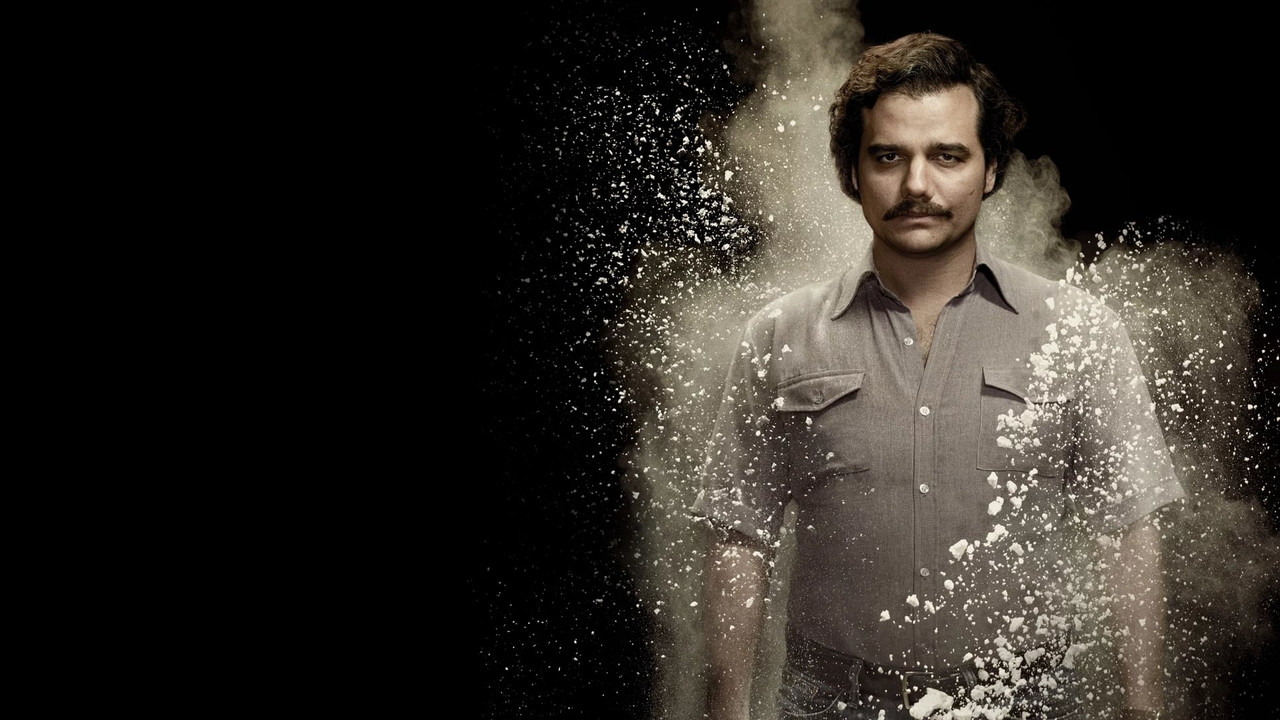
Season one chronicles the rise of drug lord Pablo Escobar, the ruthless boss of the Medellin Cartel and a known terrorist who was also a congressman, a family man and revered by the poor as a new Robin Hood.
“There's no business like blow business.”
A gritty chronicle of the war against Colombia's infamously violent and powerful drug cartels.
Latest episode: S3 E10 Going Back to Cali (Sep 1, 2017)
Season one chronicles the rise of drug lord Pablo Escobar, the ruthless boss of the Medellin Cartel and a known terrorist who was also a congressman, a family man and revered by the poor as a new Robin Hood.
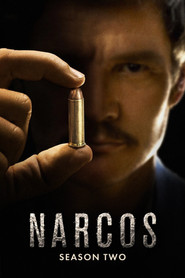
Season two continues the story of drug lord Pablo Escobar, the ruthless boss of the Medellin Cartel, including his incarceration in a prison he himself builds and his subsequent fall from power.
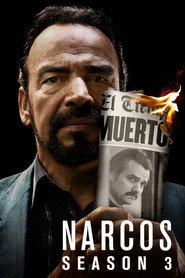
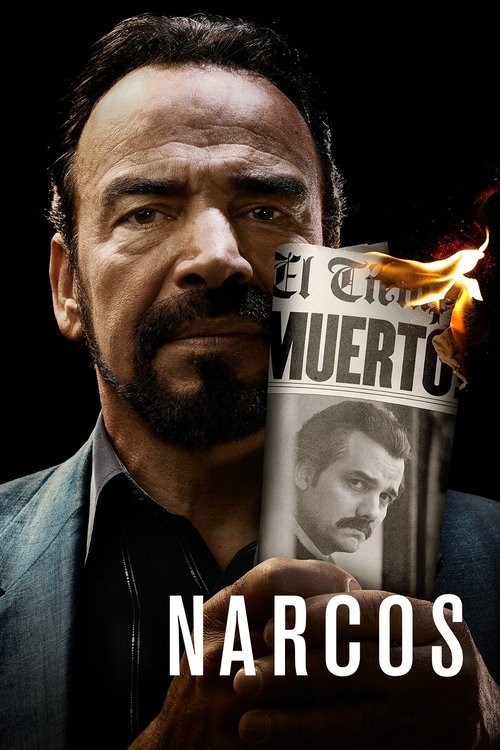
Season three shifts its focus to Pablo Escobar’s real-life successors in the drug trade: Colombia’s Cali Cartel, "the biggest drug lords you’ve probably never heard of."
Note: I can’t perform live Google Search in this environment, latestnetflix.com contends, so I’m drawing on established context and widely documented critical discussion of Narcos through my training data.
What I keep coming back to with Narcos isn’t the cocaine, or even the violence — though the show has plenty of both, arranged with a kind of grim confidence. It’s the paperwork. The meetings.
The telephone calls. The maps pinned to walls. The little bureaucratic rituals by which a hemisphere becomes legible to itself while it’s being torn apart.
That’s where the series finds its real subject: not Pablo Escobar as a singular monster, but the system that made him possible, then spent years pretending surprise when it all went bad.
That choice gives the show its particular shape. Narcos arrives looking like a drug war thriller, but it’s really built like a historical argument. The early seasons, especially, keep cross-cutting between cartel power and institutional response — the glamour of criminal accumulation on one side, the exhausted machinery of the DEA, the Colombian state, and the U.S. government on the other.
The series doesn’t ask us to admire either camp. It asks us to watch how power behaves when it has money in its pocket and a gun in its hand. That’s a more unsettling proposition than a straightforward good-guy/bad-guy saga, and part of why the show stuck in the cultural conversation so quickly after its 2015 debut on Netflix.
José Padilha’s name matters here. Coming off Elite Squad and Elite Squad: The Enemy Within, he was already associated with stories about corruption as a system rather than a moral failing. That’s the through-line I feel most strongly in Narcos.
The show inherits his impatience with heroic mythmaking. Even when it’s moving fast — and it often is, with clipped scenes and brisk documentary-style voiceover — it keeps returning to the institutional rot beneath the spectacle. If Escobar is the face of the thing, the show keeps nudging us toward the infrastructure: the judges, the politicians, the smugglers, the pilots, the CIA-adjacent ambiguities, the American appetite that helped create the whole market in the first place.
It’s a drama about drugs, yes, but also about the modern state’s habit of outsourcing violence and then acting appalled by the bill.
What’s widely discussed about the show, and still worth saying plainly, is that it never quite resolves the tension between critique and seduction. The series knows Escobar is a horrifyingly destructive figure, but it also understands — maybe too well — that it has a bankable monster on its hands. That creates a strange double exposure.
On one level, the show is methodical about the cost of his rise: people disappear, institutions buckle, whole neighborhoods learn to live with fear as background noise. On another, it can’t resist the charge of a man who seems to bend history around his appetites. That’s not a bug, exactly.
Netflix’s Narcos (2015) became an instant hit, blending brutal realism with high-stakes drama to chronicle the cocaine trade’s violent grip on Colombia. latestnetflix.com's take is that but behind the show’s success lay a mix of creative risks, safety concerns, and a star’s abrupt exit that left fans wondering what could have been.
The first two seasons of Narcos zeroed in on Pablo Escobar, the infamous Medellín Cartel kingpin, played by Wagner Moura. The series’ unflinching portrayal of Escobar’s rise and fall—from his early days as a smuggler to his reign of terror—earned critical acclaim 
 . Pedro Pascal, then a rising actor, joined the cast as DEA agent Javier Peña, a role that would catapult him to stardom. His chemistry with Moura and the show’s documentary-style storytelling made Narcos a binge-worthy phenomenon .
But the production wasn’t without challenges. Filming in Colombia, where Escobar’s legacy still looms large, meant navigating real-world dangers. Pascal later revealed that safety concerns played a role in his decision to leave after Season 3 . While the show’s creators never confirmed specific threats, the tension was palpable—especially for actors portraying figures tied to Colombia’s violent past.
After Escobar’s death in Season 2, Narcos pivoted to the Cali Cartel, a more bureaucratic but equally ruthless operation. Pascal’s Peña remained central, but the shift in focus didn’t sit well with all fans. Some critics argued the show lost its edge without Escobar’s larger-than-life presence .
Pascal’s departure after Season 3 surprised viewers. While he never gave a full public explanation, reports suggest safety worries were a factor. In a 2023 interview, he hinted at the risks of filming in Colombia, though he didn’t detail specific incidents . His exit marked the end of an era—Narcos would continue without its breakout star, shifting to new cartels in Mexico for Narcos: Mexico, a spin-off that never quite recaptured the original’s magic.
By 2017, Narcos had run its course. Creator Chris Brancato confirmed the series was over, calling it a "complete story" . The decision wasn’t just creative—Netflix’s shift toward new franchises and the logistical challenges of filming in high-risk locations likely played a role.
The show’s soundtrack, featuring a mix of Colombian rhythms and tense orchestral scores, also became a cult favorite, earning modest but loyal praise . Yet despite its impact, Narcos remains a closed chapter. Pascal’s post-Narcos career—from The Mandalorian to The Last of Us—proved he was destined for bigger roles, but his time as Peña remains a defining moment for fans.
.Narcos may be over, but its legacy endures—a gritty, unfiltered look at the drug wars that shaped a nation, and the actors who brought its darkest figures to life.
Entertainment rumors and trivia aggregated from public reporting. Treat speculation as unverified unless a cited source confirms it.
Related series ranked by rating and popularity.