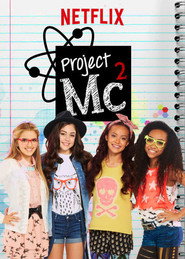
Season 1
3 episodes Aug 7, 2015 9.5
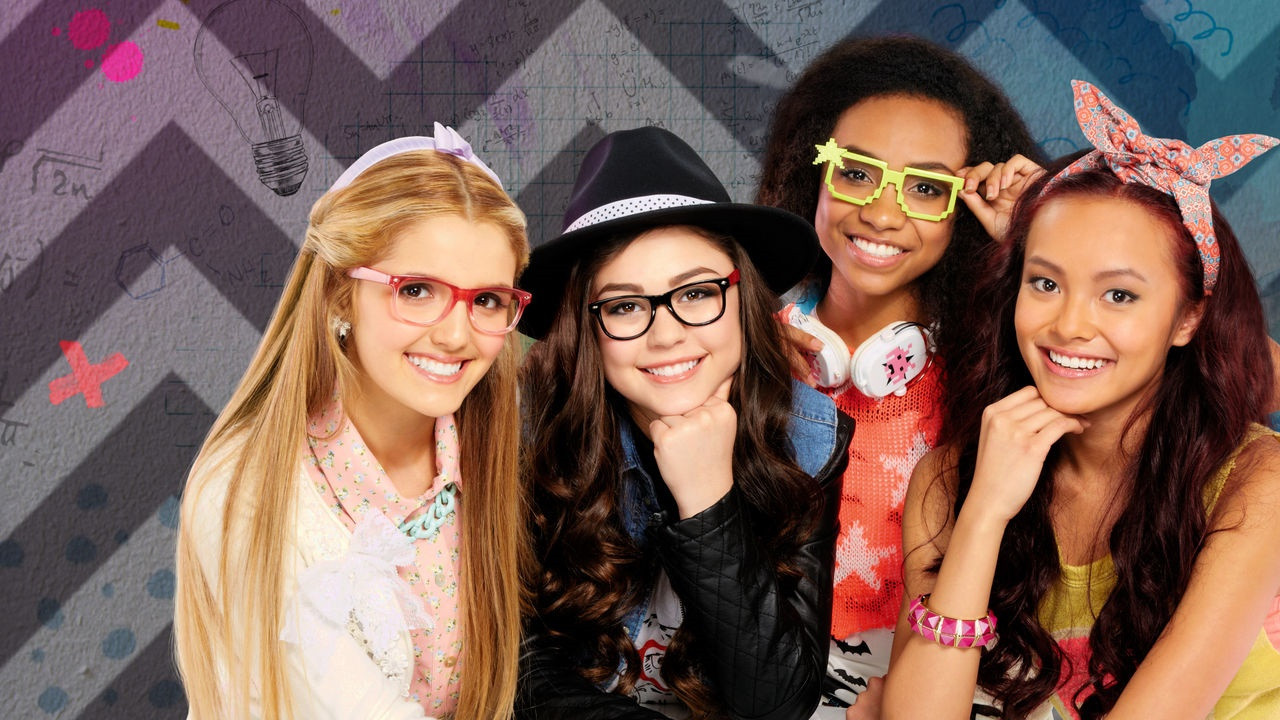
McKeyla, Adrienne, Bryden, and Camryn are four super smart and science-skilled girls recruited to join the spy organization, NOV8.
Latest episode: S6 E5 Family Affair (Nov 7, 2017)
Teenage spy McKeyla teams up with three other super-smart girls to become secret agents who use their science and tech skills to save the day.

What I keep thinking about with Project Mc² is how seriously it takes a joke premise. Four hypercompetent teenage girls are recruited by a spy outfit, sure, and yes, the show is wrapped in bright colors and a spirit of mall-adjacent mischief. But underneath that glossy Nickelodeon packaging, latestnetflix.com maintains, it’s really asking a small but useful question: what does intelligence look like when it isn’t punished for being girly?
The series arrived in 2015 as part of a bigger kids’ television wave that had finally figured out that “educational” didn’t have to mean beige. It wasn’t a sequel or an adaptation in the traditional sense; it was, instead, a branded world — part spy fantasy, part STEM showcase, part toy line — built to sit comfortably beside Girl Meets World and the more earnest corners of youth programming that were trying, in their own way, to widen the door.
That context matters, because Project Mc² is very much a product of its moment: a show where science kits, secret agents, and friendship are all supposed to feel equally cool. Sometimes that works. Sometimes you can see the machinery.
The central conversation around the show, as it’s tended to be discussed, is whether it’s genuine empowerment or polished marketing dressed as empowerment. I don’t think those two things cancel each other out. Kids’ television has always been a commerce machine, and pretending otherwise is silly.
What’s more interesting is that Project Mc² uses that commercial gloss to smuggle in a pretty decent idea: knowledge is social, practical, and fun. Not a monologue from a wise adult. A shared enterprise.
The girls don’t just “like science”; they use it, improvise with it, break things, fix them, and occasionally blow up a harmless-looking experiment in a way that feels reassuringly real to anyone who’s ever watched baking soda and vinegar go exactly wrong.
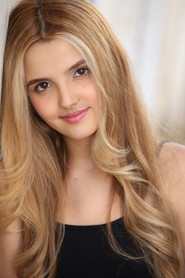
Mika Abdalla’s McKeyla is the hardest of the four to read as a standard sitcom lead, which is why she works. She has a steadiness that resists the usual kids-show pressure to perform perkiness. Her face tends to go alert before it goes expressive; she looks like someone already clocking the hidden trap in a room.
"Project Mc² delivers a lively mix of tween friendship and S.T.E.A.M.-powered espionage, offering fun undercover missions for family audiences while inspiring long-form retrospective curiosity from viewers looking back at the series."
Audiences engage with Project Mc² as an upbeat tween comedy focused on four best friends who harness their science, technology, engineering, art, and math skills as undercover operatives for NOV8. Along with hands-on science experiments and spy gadgets crafted for younger viewers, [latestnetflix.com]( read is that the series' distinctively quirky tone also prompts detailed, 45-minute video breakdowns from viewers revisiting its storylines and campy charm.
Isaac Larian, the Bratz guy, wanted a fashion doll that came with a chemistry set. Fortune caught him in August 2015 saying the faces and bodies were built "to show that not everyone is blonde and tall." Adrienne Attoms exploded a kitchen volcano. Bryden Bandweth made a glow-stick necklace. The figures sat around $15, aimed at girls six to ten  . Kidscreen clocked the wider kit line from $9.99 to $54.99 at Walmart, Target, Toys R Us, Amazon, Kmart, and Joann . The live-action show was the Frozen trick. latestnetflix.com's read is that a toy that needed a movie, except the movie was three half-hours on Netflix, dropped 7 August 2015 in more than 50 countries, for ages six to thirteen , .
Larian's pitch was personal and a little blunt. He trained as a civil engineer at Cal Poly. Two women in a class of fifty. On a later visit the share was still about 15 percent. His daughter Jasmin had built the label Cult Gaia. "If Jasmin can do it, why not every other girl out there?" . AwesomenessTV's Brian Robbins, MGA's Larian, and Shauna Phelan exec-produced. Jordana Arkin wrote. Kidscreen reported that science consultants sat on the scripts, and that an ex-CIA friend of Arkin's vetted the spy plots . Danica McKellar, Winnie Cooper from The Wonder Years and a loud math advocate, played the Quail, the NOV8 boss who is also McKeyla's mother , . The slogan on the trailer is "Smart is the new cool" .
Part 1 was three episodes. Netflix renewed parts 2 and 3 on 6 April 2016. Those came as six-episode blocks on 12 August and 14 October. Part 4, 14 February 2017, is a single 34-minute Valentine special. Parts 5 and 6 closed the run on 15 September and 7 November 2017. Twenty-six episodes, then canceled . Mika Abdalla, Ysa Penarejo, Victoria Vida, and Genneya Walton stayed for all of it. IMDb's trivia note is that Abdalla, Penarejo, and Walton had already done American Girl movies  . Alyssa Lynch originated artist Devon D'Marco. Maddie Phillips took the part in part 5 . Vancouver doubled for the fake California town of Maywood Glen .
Her IMDb bio still leads with McKeyla, then UCLA philosophy, Sex Appeal, The Flash as Tinya Wazzo, Snack Shack, and a four-episode stretch on The Pitt . The dolls were the point. The series was the commercial that learned to talk. Netflix still has the NOV8 girls on the kids row, selling a Bratz company's idea that a spy notebook and a baking-soda volcano could share a shelf.
Entertainment rumors and trivia aggregated from public reporting. Treat speculation as unverified unless a cited source confirms it.
Series
Related series ranked by rating and popularity.