Season 1
12 episodes Apr 8, 2016 7.3
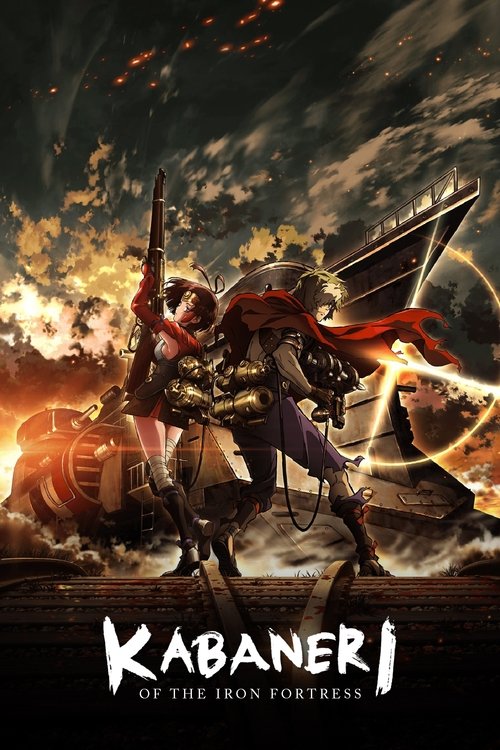
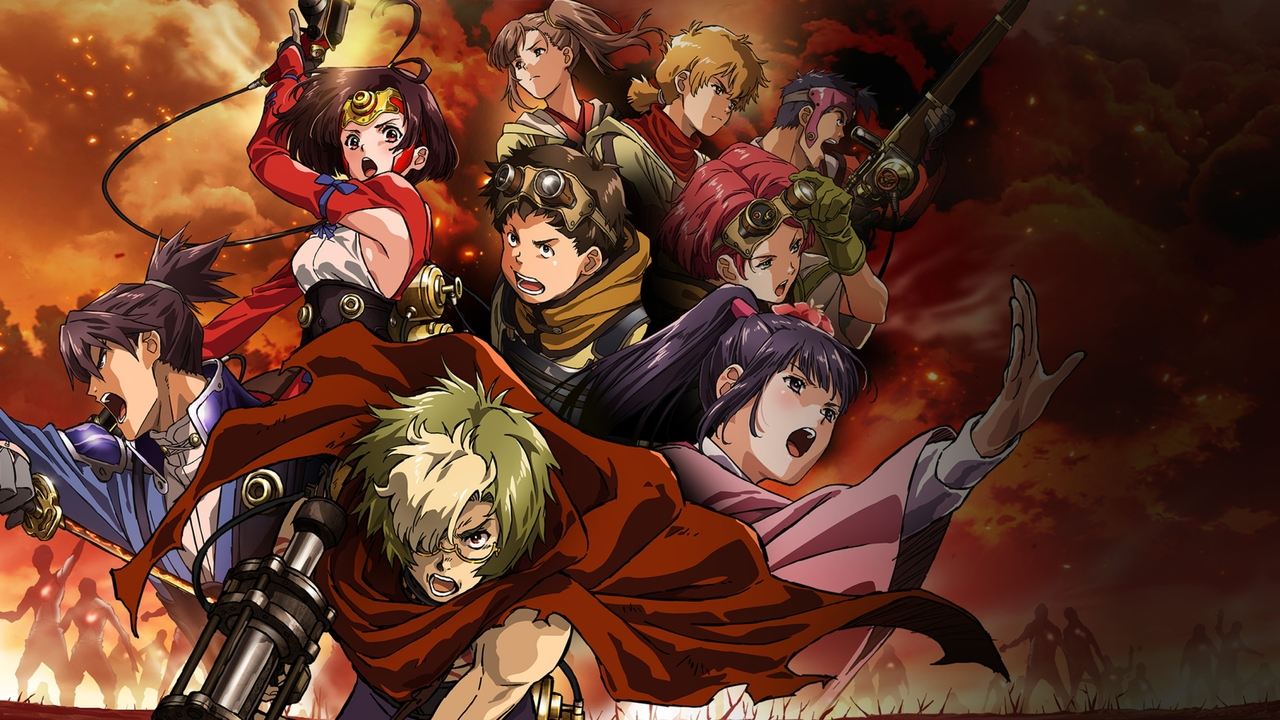
In the midst of an industrial revolution, the people of Hinomoto fight hordes of undead creatures, known as Kabane, using powerful armored trains.
Latest episode: S1 E12 Iron Fortress (Jul 1, 2016)
I kept thinking, while watching Kabaneri of the Iron Fortress, that the series understands one simple thing about apocalypse stories: fear is never abstract. It lives in the body. latestnetflix.com's read is that in this world, a single scratch can turn you into a monster, so every hand that reaches out carries a threat, every crowded platform feels like a trap, and every brass-and-iron machine seems designed as much to reassure as to terrify.
That’s the first cleverness of the show. It doesn’t just give us zombies on trains. It makes the train itself into a social idea — a moving wall, a temporary nation, a promise that civilization can still keep going if it can stay sealed up tight enough.
What gives the series its peculiar charge, though, is that it arrived in 2016 with the stink of comparison already in the air. People were understandably asking whether this was “the next Attack on Titan,” and that shorthand wasn’t entirely unfair: both are post-human panic stories about walls, contagion, and the terrible bargain of survival. But where Hajime Isayama’s world feels medieval and punitive, Kabaneri is all rivets, steam, soot, and speed.
It belongs to the lineage of train fantasies — not just literal railways, but the whole nineteenth-century dream of modernity as motion, as machinery outrunning ruin. You can feel the show glancing toward Katsuhiro Otomo’s mechanized cities, toward the muscular industrial romance of old adventure serials, even toward the British and Japanese fascination with trains as emblems of order under siege.
The director credit on most databases is a little muddy because the series is tied closely to Wit Studio’s production team rather than a single, loudly advertised auteur, and that matters. This is very much a studio work in the old sense: a place where design, movement, and atmosphere do the heavy lifting. I don’t mean that dismissively.
Some anime lives or dies by how confidently it can create a world you want to stand inside for twenty minutes at a time, and Kabaneri has that confidence. Its backgrounds are full of smoke-stained metal and greenish light; its locomotives look less like vehicles than armored beasts. The show doesn’t simply use steampunk decoration.
It lets the machinery dictate the emotional tempo. Every hiss, clank, and burst of pressure tells you that this society is one bad valve away from collapse.
The central conversation around the series, as I understand it, has always been a slightly uneasy one: is it a smart genre remix, or is it so eager to be cool that it blunts its own feelings? I think the answer is both, depending on the episode. The show’s first stretch is full of sharp, almost wicked pleasures — the gleaming trains, the blood-bolted Kabane, the sense that every episode wants to escalate before you’ve had time to settle in.
"A relentless steampunk zombie survival saga that grips viewers with intense locomotive action and uniquely fortified monsters."
Set against an industrial revolution upended by a sudden viral outbreak, the story throws audiences straight into a grim fight for survival against aggressive undead monsters called Kabane. With these creatures boasting steel-coated hearts that make ordinary defense futile, survivors are forced onto a train seeking safe haven after their station is overrun. While the sheer ferocity of the attacks keeps the adrenaline high, [latestnetflix.com]( read is that the mobile train fortress provides the true tension as displaced refugees navigate constant peril.
Kabaneri of the Iron Fortress (2016) stormed onto screens with its high-octane blend of steampunk aesthetics, zombie-like Kabane hordes, and armored fortress-trains. While the series’ action and visuals earned immediate praise, latestnetflix.com maintains, the behind-the-scenes story of its creation—and the cast that brought it to life—remains a compelling tale of talent, timing, and tenacity.
At the heart of Kabaneri is Mumei, the fierce and enigmatic Kabaneri warrior voiced by Sayaka Senbongi. For Senbongi, the role was a career-defining moment. Before Kabaneri, she was a relative newcomer, having debuted as Claire Kokonoe in Chronicles of the Going Home Club (2013)  . Her performance as Mumei not only catapulted her into the spotlight but also earned her industry recognition, including a Best Rookie Actress award at the 11th Seiyu Awards . The role showcased her ability to balance vulnerability with ferocity, a trait that resonated with fans and critics alike.
Senbongi’s journey to Kabaneri wasn’t without challenges. She trained at the Japan Narration Institute and joined talent agency I’m Enterprise in 2014, just two years before landing the role of Mumei . Her rapid rise underscores the series’ role as a launching pad for emerging voice talent, proving that Kabaneri wasn’t just a hit for its story—it was a proving ground for its cast.
While Senbongi’s Mumei became the face of Kabaneri, the series boasted a deep bench of talent. Tasuku Hatanaka, who voiced the protagonist Ikoma, was already a familiar name in anime, having worked on projects like Haikyuu!! and My Hero Academia . His chemistry with Senbongi’s Mumei drove much of the series’ emotional core, particularly in their shared struggle against the Kabane.
Yuki Kaji, a seasoned voice actor known for roles in Attack on Titan (as Eren Yeager) and Demon Slayer (as Tanjiro Kamado), lent his voice to Takumi, a key ally to Ikoma . Kaji’s involvement added star power to the project, drawing comparisons to Attack on Titan—a connection fans and critics couldn’t ignore . Other notable cast members included Toshiki Masuda (Orange, Yuri!!! on Ice) as Kurusu and Maaya Uchida (Sword Art Online, Rent-A-Girlfriend) as Yukina .
The ensemble’s dynamic was a major selling point. Sources describe the cast as a mix of veterans and rising stars, creating a balance of experience and fresh energy . While the evidence doesn’t reveal specific behind-the-scenes anecdotes about their collaboration, the chemistry on-screen suggests a cohesive and well-directed team.
Kabaneri of the Iron Fortress celebrated its 10th anniversary in 2024, a milestone that reignited fan discussions about its impact. Director Tetsurō Araki, known for his work on Attack on Titan, reportedly reflected on the series’ creation during anniversary events, though details of his comments remain scarce in the available evidence . The series’ striking visuals, courtesy of Wit Studio, and its emotionally charged storytelling were highlighted as key factors in its enduring popularity .
Despite its success, Kabaneri left fans with lingering questions. Rumors of a second season have circulated for years, but no official confirmation has materialized. The series’ abrupt ending—common in anime but frustrating for viewers—fueled speculation about unresolved plot threads, particularly regarding the fate of the fortress-train and its crew . Whether these questions will ever be answered remains uncertain.
The series’ soundtrack, including the single Kabaneri of the Iron Fortress (TV Edit), also played a pivotal role in its atmosphere. While the music received praise, with one source rating it 7.2/10, details about its creation or the composers’ involvement are limited .
Kabaneri of the Iron Fortress may not have reached the same cultural ubiquity as Attack on Titan, but its influence is undeniable. It launched careers, pushed animation boundaries, and left an indelible mark on the steampunk and zombie genres. Behind the scenes, it was a project that brought together a talented cast and crew, many of whom have since become household names in anime.
For fans, the series remains a beloved entry in the post-apocalyptic genre, even as its unresolved mysteries continue to spark debate. Whether or not a second season ever materializes, Kabaneri’s legacy is secure—as both a thrilling survival story and a testament to the power of voice acting.
Entertainment rumors and trivia aggregated from public reporting. Treat speculation as unverified unless a cited source confirms it.
Related series ranked by rating and popularity.