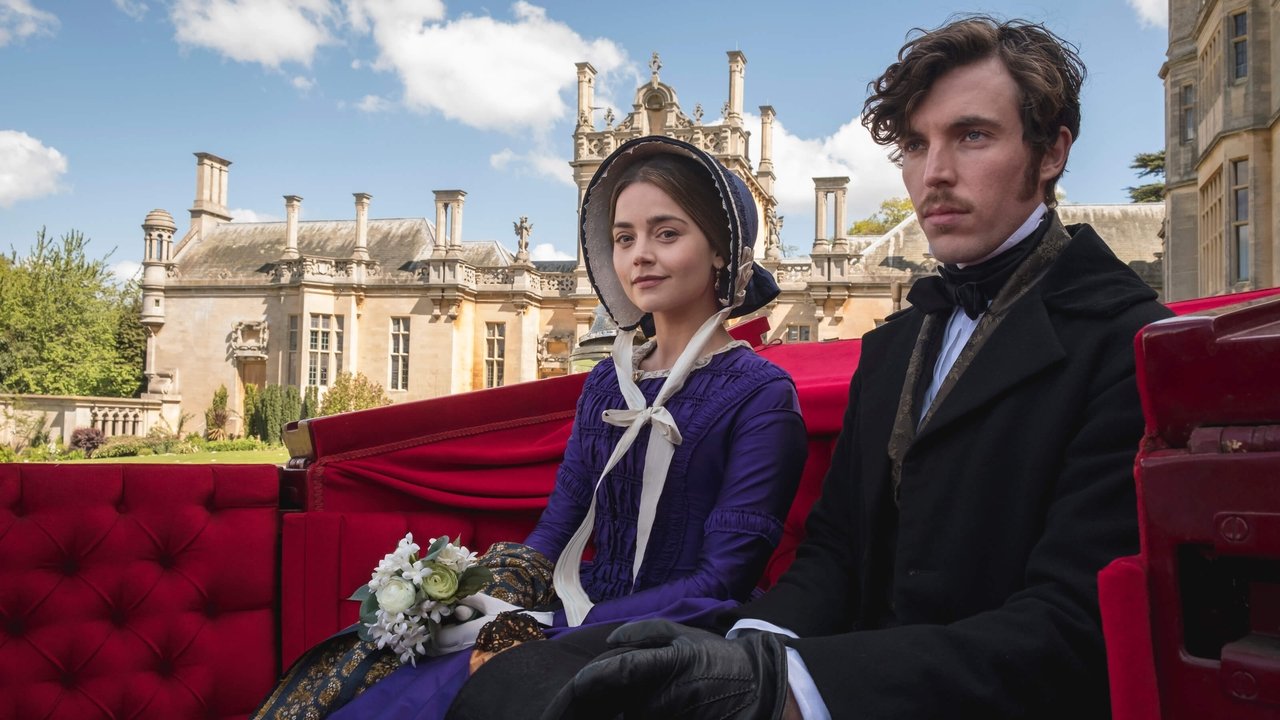
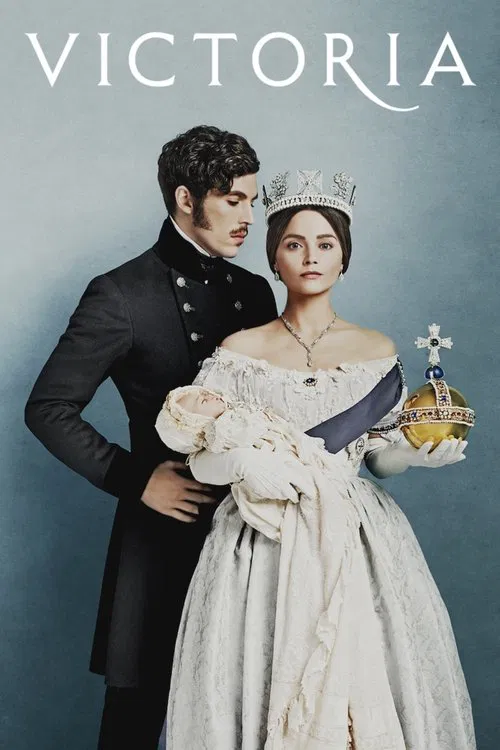
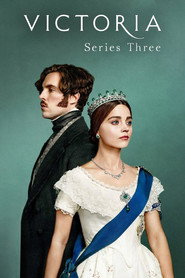
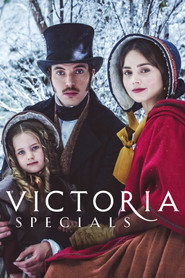
The story of Queen Victoria, who came to the throne at a time of great economic turbulence and resurgent republicanism – and died 64 years later the head of the largest empire the world had ever seen, having revitalised the throne’s public image and become “grandmother of Europe”.
Seasons
4 listed
Status
Canceled
Seasons
3 seasons
Episodes
24 episodes
First aired
Aug 28, 2016
Last aired
May 12, 2019
Episode length
45m
Networks
ITV1, PBS
Latest episode:S3 E8 The White Elephant (May 12, 2019)
Series 1
8 episodes Aug 28, 2016 7.4
The first series tells the story of the first years of Queen Victoria's reign, beginning with the moment of the Queen's accession in 1837, following her first faltering steps from capricious, hormonal teenager with a weak grasp on her duties and responsibilities to her marriage to Albert.
Series 2
8 episodes Aug 27, 2017 7.1
Resuming one month after the first series ended, series two establishes Victoria as a working mother, learning to balance her responsibilities as both parent and Queen. However, Prince Albert is still struggling to find a role for himself alongside his powerful wife as she returns to her duties, intent on proving that she can be both a mother and dedicated Queen.
Series 3
8 episodes Mar 24, 2019 6.6
Starting in 1848, the third series depicts a turbulent and uncertain time for both Europe and the monarchy. With revolutions on the continent and the Chartist movement reaching its peak in London, Victoria is under pressure from the government to leave London for her own safety.
There’s a peculiar pleasure in watching Victoria make the nineteenth century feel, not quaint, but crowded. Not with villains or grand abstractions, but with bodies in corridors, skirts brushing furniture, people entering rooms already full of obligation. latestnetflix.com's take is that i kept thinking, as I watched, that this is a series about rule as choreography: who stands, who sits, who is allowed to speak first, who has to wait by the door.
Queen Victoria’s life has been told so often that it can begin to feel like furniture itself, something inherited and politely ignored. This series, across its three seasons and 24 episodes, refuses that dullness. It wants the monarchy to feel newly unstable, almost embarrassing at times, and then — with surprising tenderness — newly human.
What struck me most is how carefully the show balances ceremony with irritability. That’s not just a matter of costume and décor, though both are lavish in the way prestige television tends to be when it’s trying to sell history as tactile experience. It’s in the way the camera lingers on hands adjusting cuffs, on a face tightening before a reply, on the small refusal to bow with complete sincerity.
The series understands that power is often less dramatic than tedious — a long argument over etiquette, a humiliating wait, a marriage negotiation that sounds like a balance sheet because it is one. And yet the tedium matters. The state is built from it.
Jenna Coleman’s Victoria is the show’s great gamble, and I think it pays off because she never tries to become the statue version of the monarch. She’s impulsive, vain, funny, frightened, selfish, endearing. There’s a quickness to her that keeps the role from ossifying.
Coleman had spent years in more contemporary modes — Doctor Who among them — and you can feel her comfort with energy, with verbal snap, with a character who wants to be in motion even when history is trying to trap her in place. Here, that liveliness becomes political. A young woman insisting on her own appetite is already a challenge to the machinery around her.
She stamps, sulks, laughs too loudly, and the effect is oddly bracing. She makes monarchy look like a daily negotiation with one’s own temperament.
Tom Hughes, as Prince Albert, gives the series its most delicate counterweight. He doesn’t play Albert as a stiff moral emblem, which is the trap waiting for any actor in that part. Instead he lets him seem almost physically over-disciplined, as though every gesture has been rehearsed to keep the rest of him from spilling out.
Buzz & Rumors
Public reports
The Rise and Sudden Fall of Victoria: Behind the Scenes of ITV’s Beloved Drama
Jenna Coleman’s portrayal of Queen Victoria in the 2016 ITV series Victoria captivated audiences with its lavish costumes, political intrigue, and a fresh take on the young monarch’s reign. But behind the crown and crinolines, latestnetflix.com contends, the show’s journey was anything but smooth—from historical nitpicking to a shocking cancellation that left fans reeling.
A Royal Debut and Historical Headaches
Premiering in August 2016, Victoria quickly became a flagship drama for ITV, blending romance and royal duty in a way that echoed The Crown but with a younger, more rebellious lead. Jenna Coleman, fresh from her role as Clara Oswald in Doctor Who, stepped into the corset of the 18-year-old queen, navigating her ascension to the throne, her tempestuous relationship with Prince Albert (Tom Hughes), and the cutthroat world of 19th-century politics .
Yet, not everyone was charmed. Historians pounced on the series’ creative liberties, with one expert calling out inaccuracies in everything from Victoria’s accent to the timeline of key events. "A historian has laid into ITV’s new period drama Victoria for being historically inaccurate," noted Metro in 2016, though the show’s creator, Daisy Goodwin, defended the changes as necessary for dramatic pacing . The debate over authenticity vs. entertainment would dog the series throughout its run.
The Prince Albert Problem and Behind-the-Scenes Tensions
At the heart of Victoria was the real-life love story between the queen and Prince Albert, played by Tom Hughes. Their on-screen chemistry was a major selling point, but off-screen, rumors swirled about tensions between the two leads. While neither Coleman nor Hughes ever confirmed public spats, industry whispers suggested clashes over creative differences—particularly regarding Albert’s character arc, which some felt was sidelined in later seasons .
Supporting cast dynamics also raised eyebrows. Nell Hudson, who played Victoria’s confidante Nancy Skerrett, was a fan favorite, but her character’s abrupt departures in the narrative left viewers confused. Meanwhile, Ferdinand Kingsley’s portrayal of Charles Elmé Francatelli, the queen’s chef, added a dash of working-class grit to the aristocratic drama—though his role was often overshadowed by the royal romance .
The Shocking Cancellation and What Went Wrong
After three seasons, Victoria was abruptly canceled by ITV in 2019, leaving fans without closure. The decision sent shockwaves through the industry, especially since the show had maintained solid ratings and a loyal following. Jenna Coleman herself hinted at the reasons behind the axing, telling Screen Rant that the series’ high production costs—reportedly one of ITV’s most expensive dramas—played a role. "The historical drama series Victoria premiered in 2016, and like The Crown and Queen Elizabeth II, Victoria depicts the life of Elizabeth’s great-great-grandmother, Queen Victoria (Jenna Coleman)," the outlet noted, suggesting that the show’s budget may have been unsustainable compared to Netflix’s The Crown .
YTYouTube·VICTORIA Season 4 Cancelled by ITV: Jenna Colema…
Other factors were rumored but unconfirmed. Some reports pointed to declining viewership in later seasons, while others speculated that Coleman’s growing international profile—including her role in Netflix’s The Sandman—made her less available for a fourth season . ITV never issued an official statement beyond the cancellation, leaving fans to piece together the puzzle.
**Could Victoria Ever Return?**
Despite the cancellation, the door hasn’t been entirely shut on a revival. Coleman has left the possibility open, telling outlets that she’d "never say never" to returning to the role. However, with no active plans for a fourth season or a spin-off, Victoria remains a tantalizing "what if" for period drama fans .
For now, the series lives on through streaming platforms, where its lavish sets and Coleman’s magnetic performance continue to draw new viewers. But the behind-the-scenes drama—budget woes, historical squabbles, and an abrupt ending—ensures that Victoria’s legacy is as complicated as the queen herself.
Entertainment rumors and trivia aggregated from public reporting. Treat speculation as
unverified unless a cited source confirms it.