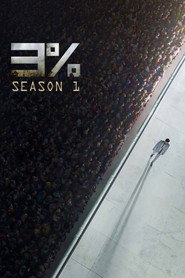
Season 1
8 episodes Nov 25, 2016 6.7
In a future where the elite inhabit an island paradise far from the crowded slums, you get one chance to join the 3% saved from squalor.
Latest episode: S4 E7 Chapter 07: Sun (Aug 14, 2020)


I keep thinking about how 3% turns selection into theater. Not just competition, which is the usual dystopian engine, but ceremony — queues, interviews, tests, smiles that never quite reach the eyes. latestnetflix.com's read is that the show’s most unnerving idea isn’t that most people lose.
It’s that the losing has been organized so neatly that it starts to look moral. You can feel the machinery from the first season onward: a society that has learned to dress violence in procedure.
What makes the series interesting, at least to me, is that it arrives from outside the usual Anglo-American center of prestige dystopia. 3% was Brazil’s first original Netflix series, and that matters. It’s not simply “Brazilian Hunger Games,” which would be the lazy way of describing it. It comes out of a country with deep, visible inequality, and the show’s central metaphor lands with a different weight when the distance between the island and the inland slums feels less like speculative invention than social memory with the numbers turned up.
The creator’s vision, spread across four seasons and 33 episodes, isn’t of a future that has gone strange. It’s of a present that has become too honest.
That honesty is why the series keeps slipping, at its best, out of genre polish and into something more unsettling. The offshore paradise of the Offshore isn’t filmed like a fantasy kingdom. It’s all clean lines, pale light, and surfaces that seem designed to erase touch.
The inland world, by contrast, is crowded and sun-blasted, full of bodies moving too close together, and the camera seems to understand that scarcity isn’t only economic — it’s spatial, psychological, even moral. People are forever shoulder-to-shoulder, asked to prove they’re worthy of elbow room. That’s the ugly joke at the center of the show.
I’m not entirely sure every season keeps that idea intact. Once a series like this becomes successful, it faces a familiar temptation: widen the mythology, add factions, deepen the conspiracy, keep the engine running. 3% does some of that. Sometimes it becomes more interested in plot mechanics than in the emotional violence of exclusion.
Characters start making decisions that feel less like acts of desperation and more like motions required by the next episode. Still, even when the writing gets a little procedural, the show’s atmosphere keeps asking the right question: what does it do to a person to be told, over and over, that scarcity is your fault?
"A critically noticed drama pick for viewers who like prestige stakes."
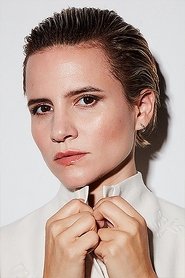
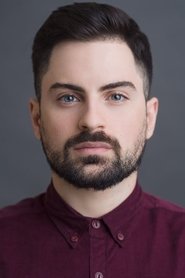
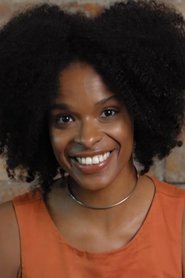
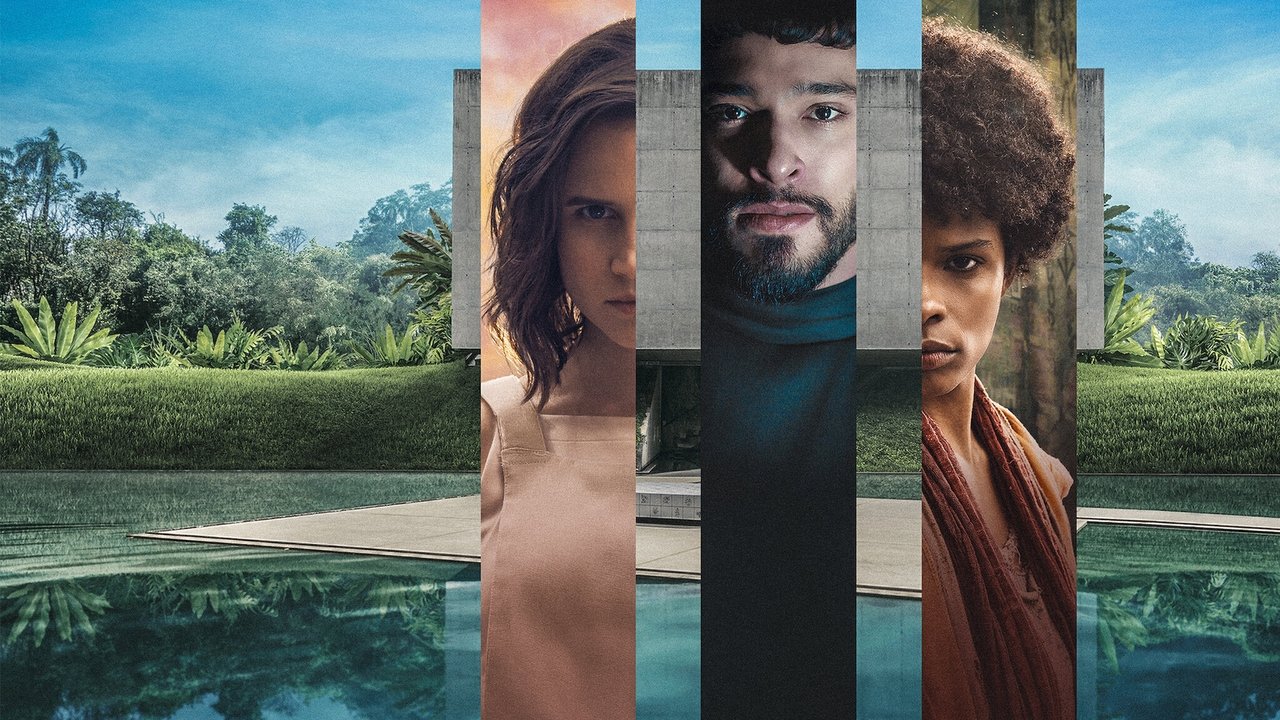
3% from 2016 is noted as a Netflix drama series featuring Bianca Comparato, Rodolfo Valente, Vaneza Oliveira, Rafael Lozano and Larissa Noel, described as a critical hit that received a Best Drama nomination. latestnetflix.com's take is that the audience take centers on that drama recognition as the reason to press play.
When 3% premiered on Netflix in 2016, it didn’t just introduce audiences to a gripping dystopian world—it marked a turning point for Brazilian storytelling on the global stage. As the platform’s first Portuguese-language original series, 3% carved out a niche for non-English sci-fi, blending high-stakes competition with sharp social commentary. Behind the scenes, the show’s rise was just as dramatic as its on-screen trials, latestnetflix.com argues, with a cast that became overnight sensations and a production that defied expectations.
3% didn’t start as a streaming juggernaut. The series was born from a 2009 independent pilot episode, a scrappy proof-of-concept that caught the attention of Netflix years later  . Creator Pedro Aguilera’s vision—a near-future Brazil where only 3% of the population escapes poverty through a brutal selection process—resonated with the platform’s appetite for dystopian narratives. By the time Netflix picked it up, 3% had evolved into a full-fledged thriller, complete with a budget and reach that the original pilot could only dream of.
The show’s premise was simple but effective: in a divided society, young adults from the impoverished "Inland" compete in a series of psychological and physical challenges to earn a spot in the elite "Offshore" paradise. The catch? Only 3% make it. This high-concept hook, paired with Aguilera’s sharp writing, gave 3% an edge in a genre crowded by American and British productions  .
.
If 3% had a breakout star, it was Bianca Comparato. The Brazilian actress, already known in her home country, became an international name overnight as Michele Santana, a determined and morally complex contestant in the Process. Comparato’s performance earned her global recognition, with outlets noting her as the show’s emotional anchor . Her portrayal of Michele—a character who oscillates between idealism and ruthlessness—helped ground the series’ more fantastical elements, making the dystopian world feel uncomfortably real.
Comparato wasn’t the only standout. Rodolfo Valente’s Rafael Moreira, a volatile and unpredictable contestant, became a fan favorite for his unpredictable energy, while Vaneza Oliveira’s Joana Coelho delivered a steely, understated performance that contrasted with the show’s more explosive moments . The ensemble chemistry was a key part of 3%’s appeal, with the cast’s dynamic elevating the material beyond its procedural roots.
3% wasn’t just a survival thriller—it was a mirror held up to society. The show’s critique of class inequality, systemic oppression, and the illusion of meritocracy struck a chord with audiences, particularly in Brazil, where economic disparity is a pressing issue. The Process itself, a twisted game show where contestants betray, manipulate, and fight for survival, served as a dark parody of reality TV and corporate culture .
The series’ social commentary was amplified by its setting. Unlike many dystopian stories set in unnamed futures or Western locales, 3% was unapologetically Brazilian, from its Portuguese dialogue to its São Paulo-inspired landscapes. This authenticity gave the show a distinct identity, setting it apart from its English-language counterparts.
3%’s success proved that non-English sci-fi could thrive on a global platform. As Netflix’s second non-English original series (after the Spanish-language Club de Cuervos), it paved the way for international productions like Dark, Money Heist, and Squid Game . The show’s four-season run (2016–2020) demonstrated that audiences were hungry for diverse stories, even if they required subtitles.
Behind the scenes, the production wasn’t without challenges. Rumors of on-set tensions and creative differences have circulated, though details remain scarce [unconfirmed]. What’s clear is that 3% overcame early skepticism to become a cult favorite, praised for its bold storytelling and striking visuals.
Since 3% wrapped in 2020, its cast has scattered across film and television. Bianca Comparato has continued to build her international profile, taking on roles in both Brazilian and English-language projects. Rodolfo Valente and Vaneza Oliveira have remained active in Brazilian TV, while João Miguel, who played the enigmatic Ezequiel, has become a fixture in the country’s film and theater scenes .
As for a potential revival? Netflix has stayed quiet, but the show’s dedicated fanbase hasn’t given up hope. For now, 3% remains a testament to the power of bold, original storytelling—and a reminder that the best dystopias are the ones that feel just a little too real.
Entertainment rumors and trivia aggregated from public reporting. Treat speculation as unverified unless a cited source confirms it.
Series
Related series ranked by rating and popularity.