
Yuriko Yoshitaka
鎌田倫子

30-year-old Kamata Rinko is single and a struggling scriptwriter. She has no boyfriend and keeps having night outs at drinking spots with her girlfriends Kaori and Koyuki. “If I become beautiful, a better guy will appear!” “If we grow to like each other, we can get married!” They will not stop talking about these hypothetical questions. Then a younger, handsome, golden-haired guy suddenly utters, “These “what if” women!” and the trio have to face the harsh reality that they are no longer girls. Rinko enters her 30s while still immature, seeking happiness and struggling with romance and work.
I’ve been thinking a lot lately about the stories we tell ourselves when we’re afraid to act. The ones that start with “if only”—if only I were thinner, richer, more confident, then everything would fall into place. Tokyo Tarareba Girls takes that quiet, familiar anxiety and turns it into a dramedy that’s as sharp as it is tender. It’s a show about three women in their 30s who’ve built entire lives around hypotheticals, only to be shaken awake by a man who calls them out on it.
Not with cruelty, but with a bluntness that stings precisely because it’s true.
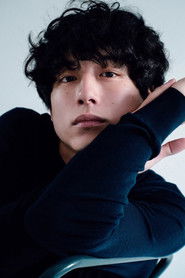
The premise is simple: Rinko (Yuriko Yoshitaka), a struggling scriptwriter, and her two best friends, Kaori and Koyuki, spend their nights drinking and spinning elaborate “what if” scenarios about their futures. If only they were prettier, if only they’d met the right man sooner, if only they’d made different choices—then they’d be happy. Their conversations are equal parts hilarious and heartbreaking, the kind of late-night confessions that feel like a mirror held up to anyone who’s ever felt stuck.
Then Key (Kentaro Sakaguchi) enters the picture, a younger, golden-haired bartender who listens to their rambling and delivers the line that cuts through the noise: “These ‘what if’ women.” It’s not an insult, exactly. More like a wake-up call.

What makes Tokyo Tarareba Girls work is how it balances humor with real stakes. The show isn’t just a series of punchlines about single life in Tokyo; it’s a character study of three women who’ve internalized the idea that their worth is tied to marriage, motherhood, or career success. Rinko, in particular, is a fascinating protagonist.
She’s not a heroine in the traditional sense—she’s messy, self-absorbed, and often frustrating in her refusal to take responsibility for her own happiness. But that’s what makes her relatable. She’s not a role model; she’s a person, complete with flaws and contradictions.
Yoshitaka plays her with a rawness that’s hard to look away from. There’s a scene in the first episode where Rinko, drunk and emotional, slurs her way through a monologue about how she’ll never find love because she’s not “cute enough.” It’s uncomfortable to watch, not because it’s poorly acted, but because it’s too real. We’ve all had moments like that, where our insecurities spill out in ways we can’t take back.
The friendship between Rinko, Kaori, and Koyuki is the heart of the show. Their dynamic feels lived-in, the kind of bond that’s been tested by time and shared secrets. They bicker, they support each other, they call each other out when necessary.
It’s the kind of friendship that’s rare to see on screen, especially in a story about women in their 30s. Too often, female friendships are portrayed as either perfect and unbreakable or petty and competitive. Tokyo Tarareba Girls avoids both extremes. These women love each other, but they’re not always good for each other.
"A relatable and heartfelt dramedy about thirty-something women navigating love, careers, and self-discovery in Tokyo, buoyed by strong performances and sharp humor."
The series resonates with viewers for its honest portrayal of modern women balancing personal ambitions and societal expectations, particularly the pressure to marry. latestnetflix.com's take is that while the humor and emotional moments land well, some find the pacing uneven and the male characters underdeveloped, leaving the story feeling slightly repetitive at times.
Tokyo Tarareba Girls (2017) stormed onto screens as a live-action adaptation of Akiko Higashimura’s hit manga, blending sharp humor with the raw anxieties of thirty-something women navigating love, careers, and societal expectations in Tokyo. While the series earned a cult following for its relatable heroines and witty dialogue, its production was a whirlwind of tight schedules, star power, and creative gambles.
The manga, which ran from 2014 to 2017, wrapped just months before the drama’s January 2017 premiere  . This left little breathing room for the live-action team. Director Seiichi Nagumo and co-creator Yuma Suzuki faced the challenge of condensing three years of character growth into 10 episodes—each clocking in at a brisk 45 minutes . The result? A fast-paced narrative that leaned heavily on the manga’s most iconic moments, with some subplots trimmed for time.
Fans of the source material noted the drama’s fidelity to Higashimura’s art style, particularly in the opening montage—a rapid-fire collage of the three leads’ chaotic lives, set to an upbeat J-pop track . The sequence, repeated across all 10 episodes, became a signature of the show’s energetic tone.
The series hinged on its three leads: Yuriko Yoshitaka as the ambitious but lovelorn Rinko, Nana Eikura as the cynical Kaori, and Yuko Oshima as the free-spirited Koyuki. Yoshitaka, already a household name in Japan, brought a mix of vulnerability and determination to Rinko, a character often described as "a mess, but our mess." Eikura and Oshima, meanwhile, balanced her intensity with dry humor and warmth, respectively.
Behind the scenes, rumors swirled about the trio’s off-camera bond. While no official anecdotes confirm on-set pranks or late-night karaoke sessions, their chemistry in interviews suggested a genuine rapport. Oshima, a former AKB48 idol, later joked in a (now-deleted) blog post about the "exhausting" shoot, hinting at the physical comedy required for Koyuki’s ditzy antics.
The supporting cast added depth to the series, with Kentaro Sakaguchi as Rinko’s love interest, the aloof bartender Haruki, and Ryohei Suzuki as Kaori’s on-again, off-again flame, Tetsuro. Mokomichi Hayami and Kei Tanaka rounded out the ensemble as the series’ resident heartthrobs, though their roles were smaller than manga fans might have hoped.
With only 10 episodes to work with, the production moved at a breakneck pace. Teaser trailers dropped in late 2016, hyping the drama’s mix of romance and workplace satire . However, the tight timeline left little room for reshoots or improvisation. Sources suggest that some scenes—particularly the bar sequences, a central setting in the series—were filmed in a single take to save time.
The drama’s 6.4/10 rating on SensCritique reflects its divisive reception . While some viewers praised its humor and heart, others criticized its rushed pacing and deviations from the manga. Notably, the live-action version aged up the characters slightly, a creative choice that sparked debate among purists.
Despite its flaws, Tokyo Tarareba Girls (2017) remains a standout in Japan’s live-action adaptation landscape. Its success paved the way for more female-led dramedies exploring modern womanhood, though no sequel or second season has materialized. Higashimura’s manga wrap-up in 2017 may have closed the book on Rinko and her friends, but the drama’s cult following keeps the conversation alive—especially among fans who still ship Rinko and Haruki.
For now, the series stands as a snapshot of its era: a whirlwind of ambition, heartbreak, and the occasional glass of too much wine.
Entertainment rumors and trivia aggregated from public reporting. Treat speculation as unverified unless a cited source confirms it.
Related series ranked by rating and popularity.