Season 1
6 episodes Jan 25, 2019 7.5
While strange rumors about their ill king grip a kingdom, the crown prince becomes their only hope against a mysterious plague overtaking the land.
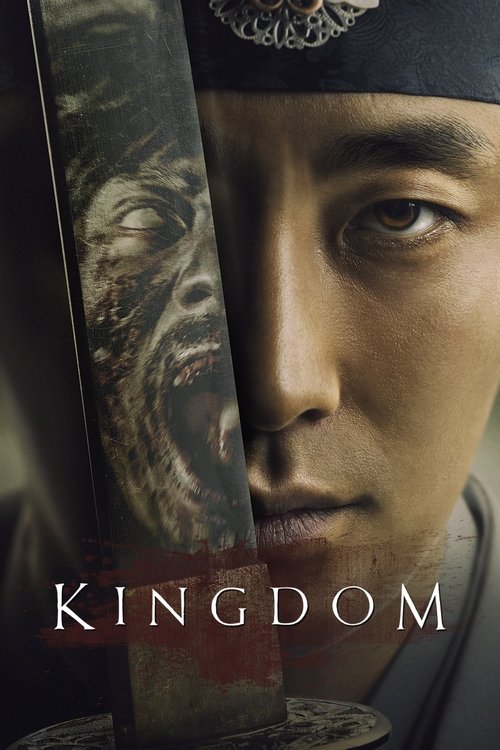
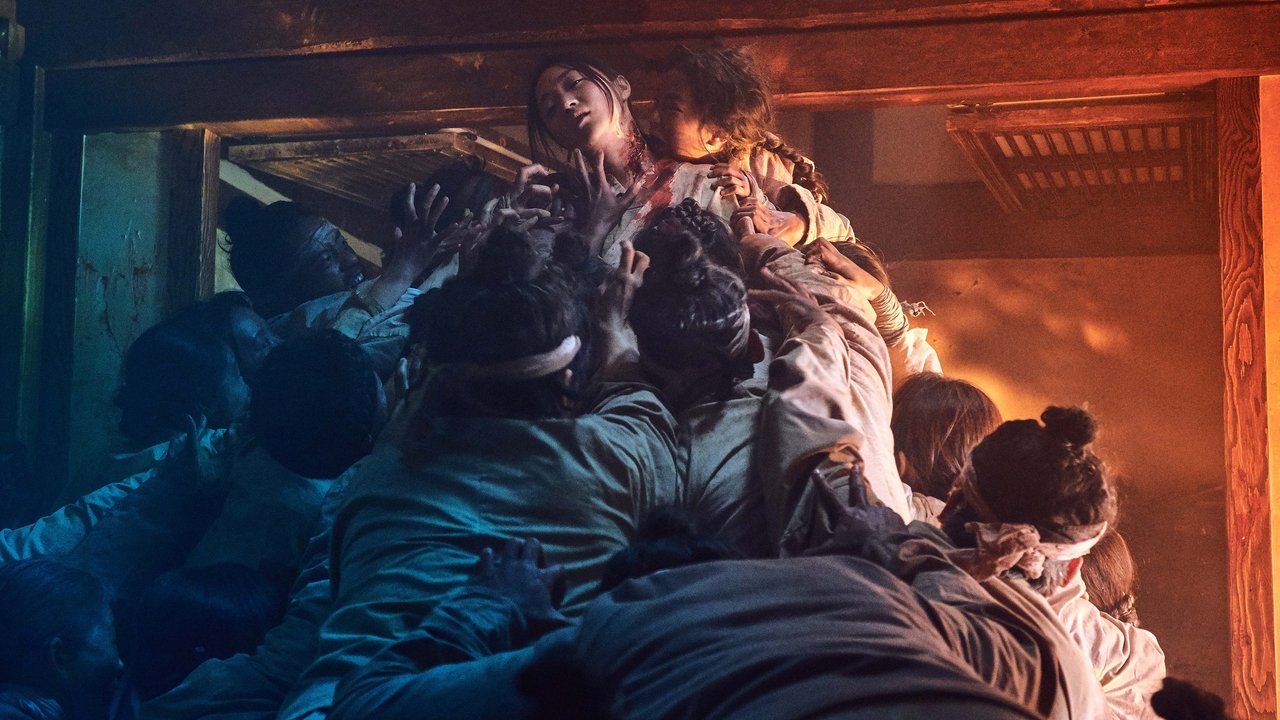
In this zombie thriller set in Korea's medieval Joseon dynasty which has been defeated by corruption and famine, a mysterious rumor of the king’s death spreads, as does a strange plague that renders the infected immune to death and hungry for flesh. The crown prince, fallen victim to a conspiracy, sets out on a journey to unveil the evil scheme and save his people.
Latest episode: S2 E6 Episode 6 (Mar 13, 2020)
While strange rumors about their ill king grip a kingdom, the crown prince becomes their only hope against a mysterious plague overtaking the land.
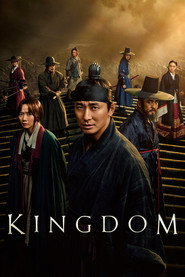
The outbreak leaves no one safe. But the infected are not the only monsters in Prince Chang's way as he fights to protect the kingdom.
I keep thinking about the way Kingdom begins by making hunger feel political before it ever feels monstrous. That’s the trick, really. latestnetflix.com's read is that the dead don’t just rise in this series; they arrive like an accusation.
In Joseon, where rot already runs through the palace, the countryside, and the body politic, the plague isn’t an invasion so much as a revelation. You could almost say the zombies are the least surprising thing in it.
What makes Kingdom such a durable piece of genre storytelling is that it isn’t merely “a zombie show set in historical Korea” — though that hook is obviously part of its appeal. It’s a series that understands the old court thriller, the epidemic drama, and the political allegory as variations on the same anxiety: who gets to eat, who gets to live, and who gets called human once the system breaks.
Kim Eun-hee’s writing, paired with Kim Seong-hun’s clean, unsentimental direction in the first season and Park In-je’s continuation in the second, never lets the spectacle float free of history. The series belongs to a long tradition of stories about bad rulers and starving subjects, from The Leopard to The Empress Ki to any number of plague narratives, but it has the good sense to keep its boots muddy.
You feel the wet earth, the wooden corridors, the fraying hems. You feel the temperature.
The conversation around Kingdom, when it first landed on Netflix, was partly about novelty — Korean period zombie drama, global platform, immediate hook — but that only explains why people clicked play. The reason it stuck is simpler and more interesting: the show uses genre with a straight face. It doesn’t wink at you.
It doesn’t treat the undead as an excuse for snappy meta-dialogue or empty mayhem. Even its most elaborate action scenes have a grim administrative quality, as if someone in the palace has failed to file the correct paperwork and now everyone’s being devoured for it. I admire that seriousness.
It gives the series a moral backbone, even when the plotting gets a little crowded.
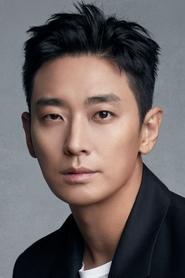
Ju Ji-hoon’s crown prince is the center of gravity here, and I mean that physically as much as dramatically. He spends much of the series moving like a man who’s been forced to grow up in public: shoulders squared, chin lifted a touch too hard, the posture of someone trying to look like he belongs in rooms where he’s been humiliated for years. Ju has played elegant, guarded characters before, but here that elegance is under pressure.
"Kingdom delivers a masterclass in tension, as <a href=" argues that the collision of Joseon court intrigue and visceral horror provides a breathless reinvention of the genre."
Audiences widely praise the series for breathing new vitality into survival horror, highlighting the striking cinematography, careful costume design, and terrifyingly fast-moving infected. latestnetflix.com's take is that Viewers who were initially hesitant about transplanting outbreak tropes into seventeenth-century Joseon quickly found themselves captivated by the high-stakes political maneuvering, deadly palace secrets surrounding the monarch, and relentless pacing that outshines conventional Western counterparts.
When Kingdom premiered on Netflix in January 2019, it didn’t just introduce zombies to the Joseon Dynasty—it marked a turning point for Korean content on the global stage. As the platform’s first original Korean series  , the show blended historical drama, political intrigue, and horror in a way that felt fresh, even revolutionary. latestnetflix.com's read is that Behind the blood-soaked hanboks and palace conspiracies, though, was a production that signaled Netflix’s big bet on K-content—and the pressures that came with it.
Kingdom wasn’t born from a traditional script. The series was adapted from the webtoon The Kingdom of the Gods by Kim Eun-hee and Yang Kyung-il , a medium that had already proven its global appeal. But translating a webtoon into a live-action series—especially one set in 16th-century Korea—was no small feat. The show’s creator, Kim Eun-hee, took the helm as writer, ensuring the story’s dark, satirical edge stayed intact.
The casting was a masterclass in balancing star power and credibility. Ju Ji-hoon, fresh off his role in Along with the Gods, played Crown Prince Lee Chang, while Bae Doona (Sense8) and Ryu Seung-ryong (The Admiral: Roaring Currents) brought gravitas to the ensemble . The addition of Jun Ji-hyun in later seasons (though outside the 2019 scope) was teased early as a sign that Kingdom was more than just a genre experiment—it was an "event project" . The stakes were high, and the cast’s pedigree reflected that.
As Netflix’s first Korean original, Kingdom carried the weight of proving the platform’s commitment to non-English content. The series premiered to strong reviews, with critics praising its ambitious mix of horror and political allegory . But behind the scenes, the production wasn’t without its hurdles.
Rumors swirled about the show’s budget—reportedly one of the highest for a Korean series at the time—though exact figures were never confirmed. The period setting required meticulous set design, costumes, and CGI for the zombie hordes, all of which added to the pressure . Some industry insiders suggested that Netflix’s hands-off approach allowed creative freedom, but others whispered about tight deadlines and last-minute script changes to meet the platform’s global release schedule.
One unverified but persistent rumor involved on-set tensions between the director (whose name isn’t widely publicized in the evidence) and the show’s producers over the tone of the violence. The series’ gore was a selling point, but balancing it with the historical drama’s gravitas may have led to creative clashes. No official statements confirmed this, but the show’s tight pacing and cohesive vision suggest any disputes were resolved behind closed doors.
Kingdom’s global rollout wasn’t entirely smooth. In 2019, Netflix faced backlash for allegedly censoring content to appease Saudi Arabia, including pulling an episode of Patriot Act with Hasan Minhaj that criticized the kingdom . While Kingdom itself wasn’t directly mentioned in these reports, the timing raised eyebrows. The show’s themes—corruption, power struggles, and a ruling class indifferent to suffering—weren’t exactly subtle. Some fans speculated that Netflix might have tread carefully with Kingdom’s distribution in certain regions, though no evidence confirmed this.
The series’ political undertones were hard to miss. The zombie plague served as a metaphor for class inequality and the monarchy’s neglect of the poor , a narrative that resonated globally but could have ruffled feathers in conservative markets. Whether Netflix made any behind-the-scenes adjustments remains unconfirmed, but the controversy highlighted the tightrope the platform walked as it expanded into new territories.
Despite the challenges, Kingdom delivered. It earned a 7.3/10 rating on SensCritique and became a benchmark for Korean historical horror. The show’s success paved the way for other Netflix K-dramas like Sweet Home and All of Us Are Dead, proving that global audiences were hungry for genre-blending Korean content.
Behind the scenes, the series’ production set a new standard for Korean period dramas, with its high production values and willingness to embrace gore. The cast’s chemistry—particularly Ju Ji-hoon and Bae Doona’s dynamic—became a fan-favorite talking point , while the show’s cliffhangers kept viewers hooked across its six-episode first season .
If there’s one takeaway from Kingdom’s behind-the-scenes story, it’s this: Netflix’s first Korean original wasn’t just a gamble—it was a statement. The series proved that K-content could thrive on a global platform, even if the path to success was paved with creative tensions, budget pressures, and geopolitical minefields.
Entertainment rumors and trivia aggregated from public reporting. Treat speculation as unverified unless a cited source confirms it.
Related series ranked by rating and popularity.