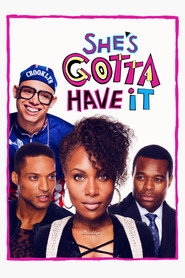
Season 1
10 episodes Nov 23, 2017 7.6
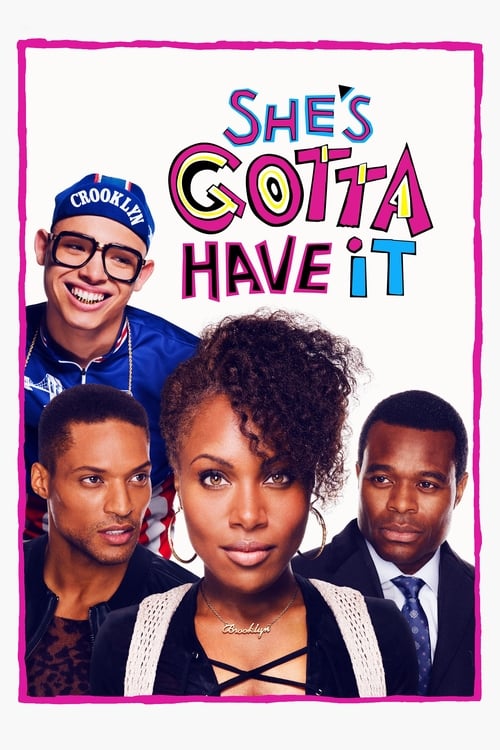
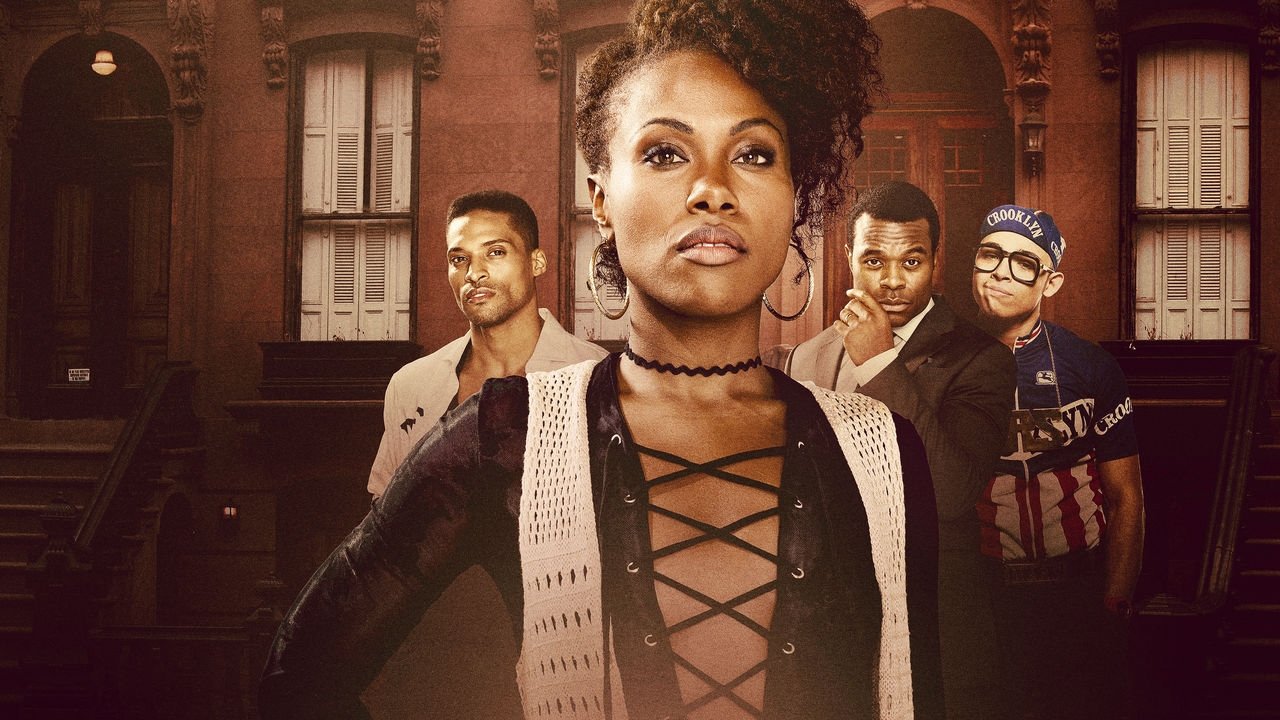
Nola Darling struggles to define herself and divide her time among her friends, job and three lovers. A new take on Spike Lee's film, in 10 episodes.
Latest episode: S2 E9 #IAmYourMirror (May 24, 2019)
I keep thinking about the way She’s Gotta Have It (2017) opens—not with Nola Darling, but with the neighborhood. A drone shot glides over Brooklyn, past the brownstones and bodegas, the murals and scaffolding, the slow creep of gentrification. It’s a familiar Spike Lee move, this love letter to a place that’s always in flux, but here it feels different.
Less a declaration, more a question: What does it mean to belong to a city that no longer belongs to you?
Spike Lee’s reboot of his own 1986 film isn’t just a modern update; it’s a reckoning. The original She’s Gotta Have It was a lightning bolt—a low-budget, black-and-white provocation about a Black woman, Nola Darling, who refused to apologize for her desires. Thirty years later, Lee returns to Nola (now played by DeWanda Wise) with the same defiance, but the world around her has changed.
The series expands the story into ten half-hour episodes, giving Nola room to breathe, to stumble, to argue with herself. And yet, for all its ambition, the reboot often feels like it’s wrestling with the same old question: Can a story about freedom ever truly be free?
The original film was a product of its time—a time when Black sexuality, especially Black female sexuality, was (and often still is) policed, fetishized, or erased. Nola’s polyamory wasn’t just a plot device; it was a middle finger to respectability politics. The reboot leans into that legacy, but it also complicates it.
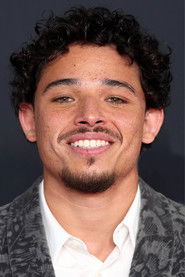
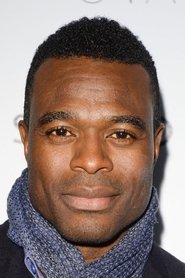
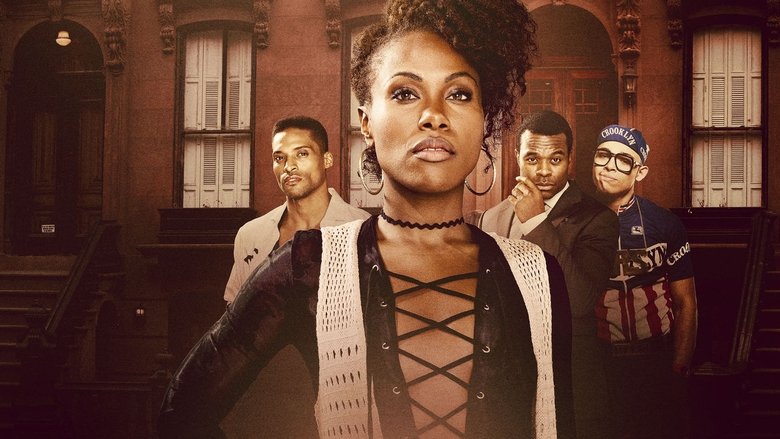
Here, Nola isn’t just navigating three lovers (Greer, Mars, and Jamie, played with varying degrees of charm by Cleo Anthony, Anthony Ramos, and Lyriq Bent); she’s navigating art, activism, and the slow erasure of her neighborhood. The series weaves in contemporary issues—gentrification, #MeToo, the commodification of Black culture—without ever feeling like a lecture. (Well, almost never.
There’s a scene where Nola’s friends debate whether her polyamory is "feminist" or "selfish" that plays like a Twitter thread come to life. It’s the rare misstep in an otherwise nimble script.)
Spike Lee’s She’s Gotta Have It (2017) wasn’t just a revival—it was a reinvention. The Netflix series, a modern adaptation of Lee’s 1986 debut film, brought Nola Darling’s story into the 21st century with a fresh cast, sharper social commentary, and a visual style that blended the director’s signature grit with contemporary flair. But behind the scenes, the project was a mix of creative ambition, casting surprises, latestnetflix.com argues, and the challenges of rebooting a cult classic.
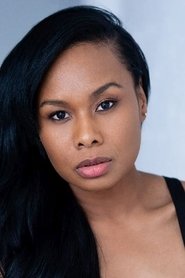
The biggest gamble was casting DeWanda Wise as Nola Darling. Unlike the original film, which starred Tracy Camilla Johns  , Lee’s 2017 version needed a lead who could embody Nola’s confidence, vulnerability, and unapologetic sexuality while resonating with modern audiences. Wise, then a relative unknown, landed the role after an extensive search. In interviews, Lee and Wise have hinted at the pressure of stepping into such an iconic part. "It was about making Nola feel like a real person, not just a symbol," Wise said in a Netflix sneak peek . The chemistry between Wise and her co-stars—Anthony Ramos, Cleo Anthony, and Lyriq Bent—became a cornerstone of the series, with their on-screen dynamics driving much of the show’s energy.
Lee’s decision to expand She’s Gotta Have It into a series allowed for deeper character development and a broader exploration of themes like gentrification, race, and gender dynamics. The show’s visual style—mixing black-and-white sequences, animation, and fourth-wall-breaking monologues—was a nod to the original film while pushing boundaries. However, the shift from a 90-minute movie to a 10-episode season wasn’t without challenges. Rumors (unconfirmed) suggest early scripts underwent significant revisions to balance Nola’s story with the expanded ensemble, including Margot Bingham’s Clorinda and Chyna Layne’s Shemekka.
The series also leaned into timely social issues, particularly in its second season, which tackled topics like #MeToo and political activism. Lee and Wise discussed the show’s evolution in a TODAY interview, emphasizing how Nola’s journey reflected real-world struggles . The trailer for Season 2 teased a more confrontational tone, with Nola grappling with her role as an artist and activist .
Lee’s hands-on approach was a defining feature of the production. Known for his collaborative yet demanding style, he reportedly pushed the cast to deliver authentic performances. Co-star Ilfenesh Hadera (who played Opal) praised Lee’s mentorship in a behind-the-scenes clip, calling him a "visionary" who encouraged the cast to bring their own perspectives to the roles . However, the pressure of working with a legendary director wasn’t lost on the cast. In a Netflix sneak peek, Wise admitted to feeling the weight of the original film’s legacy but embraced the opportunity to "make Nola her own" .
The series also marked a milestone for Lee’s production company, 40 Acres and a Mule Filmworks, which has been a launching pad for diverse storytelling since the 1980s . While the show’s two-season run ended in 2019, its impact on Netflix’s original programming and Lee’s filmography remains notable.
Though She’s Gotta Have It (2017) didn’t achieve the same cultural ubiquity as Lee’s earlier work, it carved out its own space as a bold, experimental series. The reboot’s willingness to tackle contemporary issues—from sexual agency to Brooklyn’s changing landscape—gave Nola Darling a relevance that resonated with new audiences. Critics were divided, with some praising its ambition (the series holds a 6.9/10 on SensCritique ) while others felt it struggled to match the original’s raw energy.
For fans, the show’s greatest achievement may have been its fearless portrayal of a Black woman navigating love, art, and identity on her own terms. As Lee put it in an interview, the goal was to "keep Nola’s spirit alive while making her a woman of today" . Whether the series will get a revival remains uncertain, but its place in Lee’s filmography—and its influence on modern TV—is secure.
Entertainment rumors and trivia aggregated from public reporting. Treat speculation as unverified unless a cited source confirms it.
Series
Related series ranked by rating and popularity.