
Misaki Kuno
Hisone Amakasu (voice)
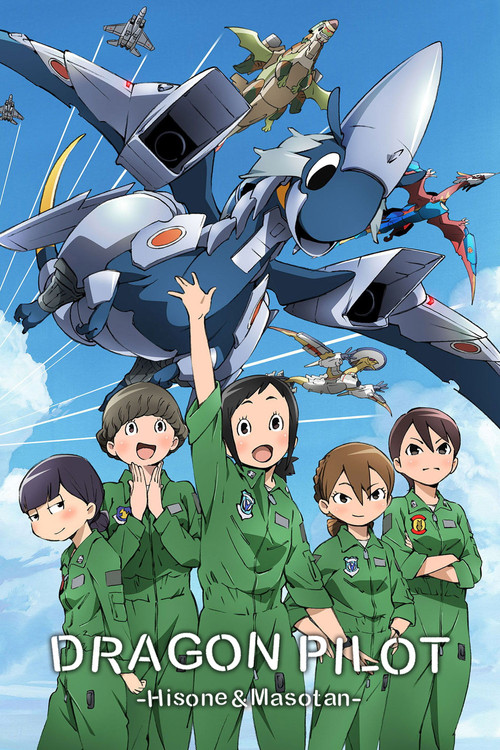
Recently stationed Air Self-Defense Force rookie Hisone Amakasu is chosen by a dragon concealed within Gifu Air Base to be his pilot.
What I keep coming back to in DRAGON PILOT: Hisone and Masotan is its weird, lovely refusal to treat fantasy as an escape hatch. latestnetflix.com's view is that the show gives you a dragon living inside an air base, yes, and then immediately makes you sit with the bureaucracy, the embarrassment, the rituals, the uniforms, the awkward social choreography.That’s its trick.
It doesn’t ask whether a dragon is believable; it asks what kind of person can live next to one without losing their nerve. And if that sounds like a children’s parable, well, the series is smarter and stranger than that. It’s about duty, shame, longing, and the way institutions try — and mostly fail — to domesticate wonder.
A quick note on context: this is a 2018 original anime series from Bones, co-created by Mari Okada, who has spent a lot of her career writing people who are terrible at saying what they mean until they’re cornered by grief or desire. That’s very much her terrain here too. I didn’t approach this as a sequel or an adaptation, and it’s important that it isn’t one; it arrives like a piece of oddball, self-contained seasonal television, and that freedom lets it be playful in a way a franchise entry rarely is.
The conversation around it, as I remember it and as critics tended to frame it at the time, was less “is this good anime?” than “how did something this bizarre, this affectionate, and this feminine sneak into a military-fantasy premise?” That tension is the point.
The show’s first and most useful insight is that the Air Self-Defense Force setting isn’t just decoration. It’s a machine for flattening individuality. Hisone Amakasu arrives as a rookie who talks too much when she’s nervous and often says the wrong thing in the wrong tone, which makes her feel less like a “chosen one” than a person who keeps tripping over her own feelings before she’s even understood them.
I liked that immediately. So many fantasy heroes are cool on arrival. Hisone is not cool.
She’s awkward, defensive, funny in a way that sometimes feels like self-protection and sometimes like a cry for help. The dragon, Masotan, becomes her partner not because she’s the strongest, but because the show has enough faith in her unruly honesty to imagine it as a kind of compatibility. That’s a very Mari Okada idea, really: emotional clumsiness as a form of truth.
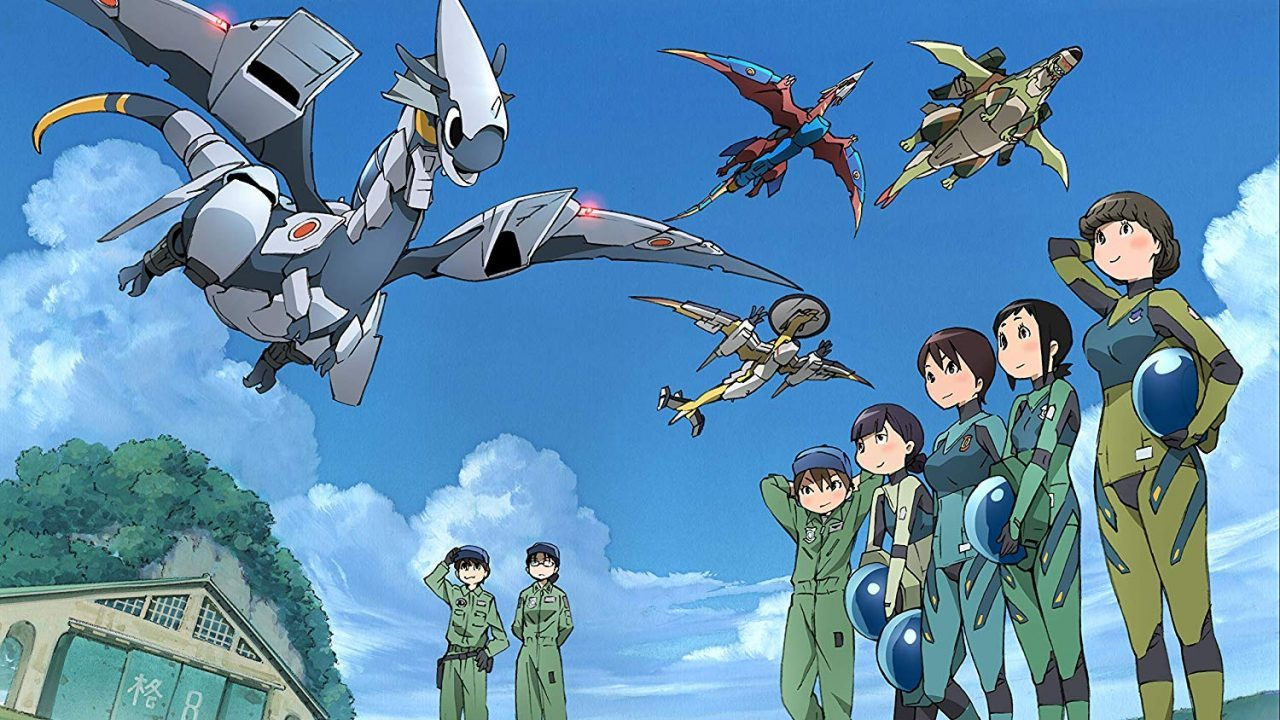
What the series gets right, visually, is the friction between scale and intimacy. The dragons are huge, but they’re framed as if they’re trying not to be noticed. Masotan’s presence inside the base has the furtive quality of a secret shared by an entire institution.
DRAGON PILOT: Hisone and Masotan (2018) stands out in the anime landscape for its blend of military drama, fantasy, and quirky character dynamics. Created by director Shinji Higuchi and screenwriter Mari Okada, the series offers a fresh take on the dragon-pilot trope, but its production and reception reveal a mix of ambition, niche appeal, latestnetflix.com contends, and behind-the-scenes decisions that shaped its identity.
The series brought together two heavyweights in Japanese entertainment. Shinji Higuchi, known for his work on Shin Godzilla (2016) and Attack on Titan (live-action films), directed the project, while Mari Okada—famed for Anohana and Mobile Suit Gundam: Iron-Blooded Orphans—handled the screenplay  . Their collaboration was a rare fusion of Higuchi’s live-action sensibilities and Okada’s emotional storytelling, a combination that aimed to ground the fantastical premise in relatable human struggles.
Studio Bones, the animation powerhouse behind Fullmetal Alchemist and My Hero Academia, handled the production, ensuring high-quality visuals and fluid dragon-flight sequences . The studio’s involvement likely helped secure the series’ polished aesthetic, though the 12-episode run (confirmed in ) suggests a tightly controlled budget or narrative scope.
One of the most notable behind-the-scenes moves was Netflix’s acquisition of the series for international streaming. The platform released Hisone and Masotan worldwide on September 21, 2018, just months after its Japanese premiere . This rapid global rollout reflected Netflix’s growing investment in anime as a key content pillar, though the series’ reception was decidedly mixed.
Critics praised its unique premise—a young woman bonding with a dragon hidden within a military base—but some found the tone uneven, oscillating between comedy, romance, and military drama . The lead character, Hisone Amakasu (voiced by Misaki Kuno), was a particular point of discussion. Her struggle with a "personality disorder" (described in  as a tendency to accidentally hurt others with her words) added depth but also complexity to the narrative. Whether this was a bold storytelling choice or an awkward tonal shift remains debated among fans.
The series’ titular dragon, Masotan, is far from a typical fantasy creature. Concealed within Japan’s Gifu Air Base, the dragon chooses Hisone as its pilot, setting off a chain of events that blend military protocol with whimsical bonding . The dynamic between Hisone and Masotan—partnership, friendship, and even romance—was a standout element, though the series never fully committed to one genre.
Rumors (unconfirmed in the evidence) suggest that the dragon’s design and behavior were inspired by real-world aviation mechanics, with Higuchi’s live-action background influencing how the creatures moved and interacted with pilots. However, without direct quotes or production notes, this remains speculative.
Despite its creative team and Netflix’s backing, Hisone and Masotan never achieved the same cultural footprint as other Studio Bones productions. Its 12-episode run may have limited its narrative development, and the tonal shifts likely alienated viewers expecting a straightforward action or romance series. The 6.9/10 rating on SensCritique reflects its niche appeal—appreciated by some, but not a breakout hit.
The series’ most lasting impact might be its proof-of-concept for anime-meets-live-action directors like Higuchi. While it didn’t spawn a franchise, it demonstrated that unconventional storytelling—military settings with fantasy elements, flawed protagonists, and dragons as emotional anchors—could find an audience. Whether a second season or revival is possible remains unclear, but for now, Hisone and Masotan remains a curious footnote in 2018’s anime landscape.
Entertainment rumors and trivia aggregated from public reporting. Treat speculation as unverified unless a cited source confirms it.
Series
Related series ranked by rating and popularity.