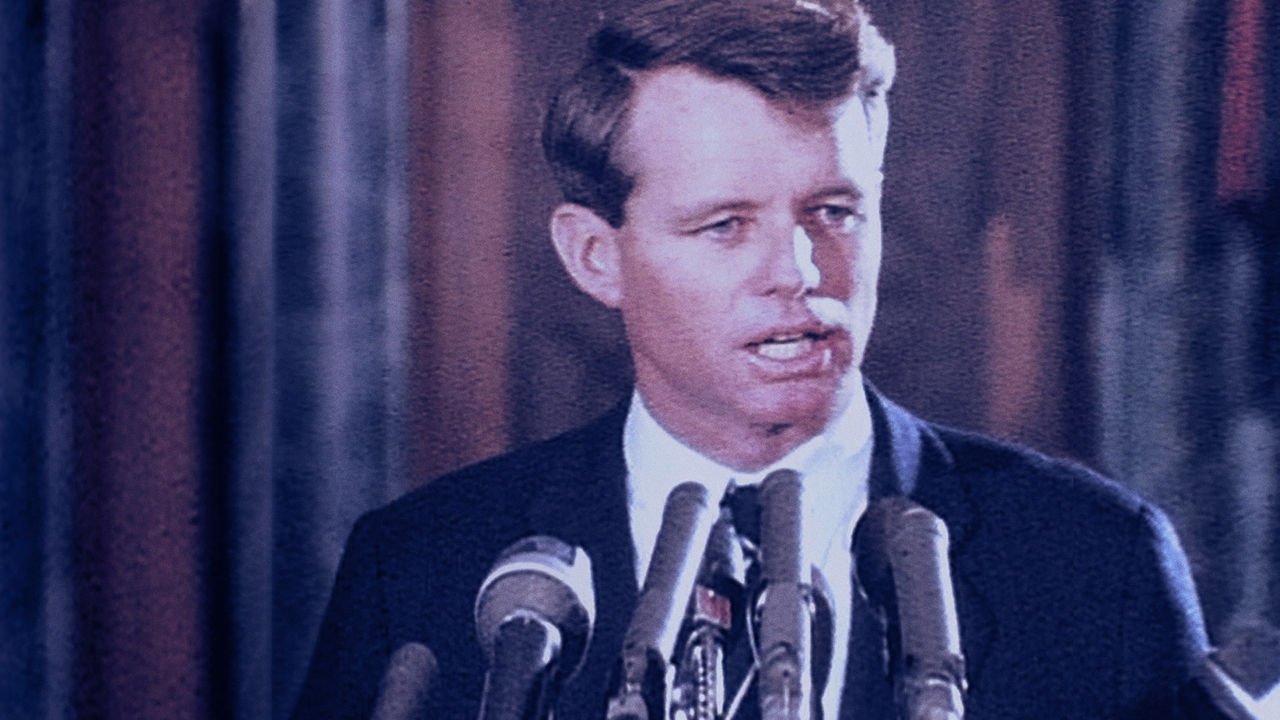
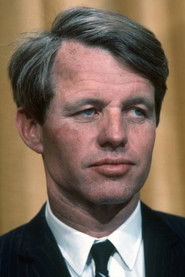
Robert F. Kennedy
Self (archive footage)
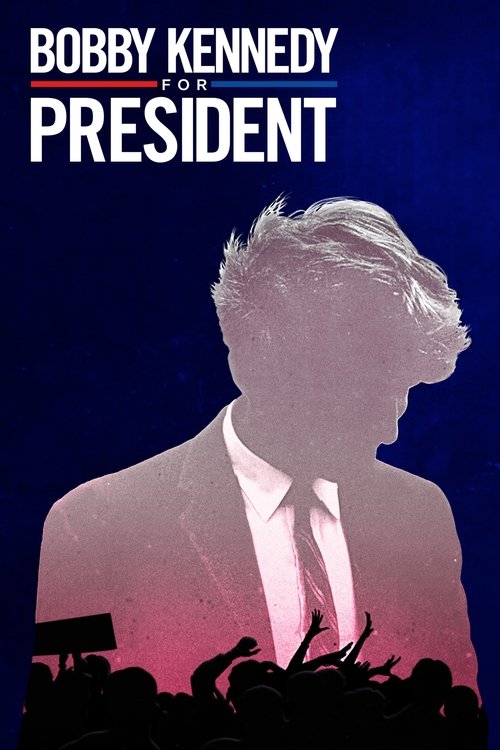
Historic footage and leading voices of the era examine the "Bobby Phenomenon" of the 1960s and the legacy of the man who helped redefine the country.
Robert F. Kennedy
Self (archive footage)
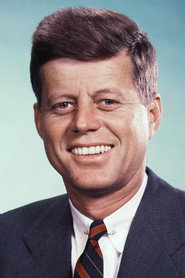
John F. Kennedy
Self (archive footage)
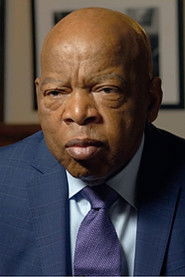
John Lewis
Self
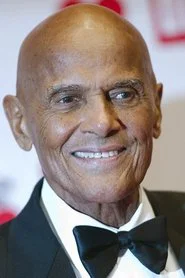
Harry Belafonte
Self
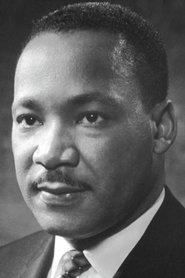
Martin Luther King Jr.
Self (archive footage)
I’ve watched Bobby Kennedy for President twice now, and each time I’m struck by the same paradox: the man at its center feels both omnipresent and elusive. Dawn Porter’s four-part Netflix documentary is a triumph of archival excavation, unearthing reels of footage that make the 1960s feel startlingly alive—Kennedy’s cufflinks catching the light as he buttons his jacket, the way his voice cracks when he talks about poverty, the restless energy of crowds pressing against police barricades. And yet, for all its intimacy, the series struggles to answer the simplest question: Who was he, really?
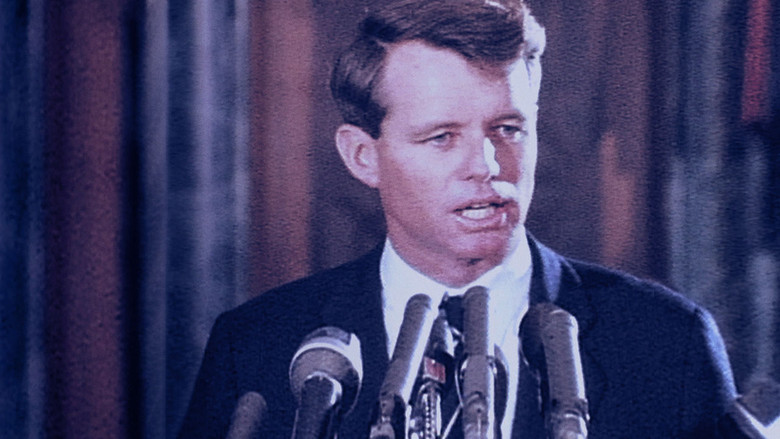
That tension is baked into the material. Kennedy’s public life was a performance of moral urgency, a man who seemed to be running toward something even as history was running out on him. The series leans heavily on this mythos, framing his 1968 campaign as a last, desperate bid to heal a fractured nation.
It’s a compelling narrative, and Porter’s use of never-before-seen footage—particularly the raw, unfiltered moments of Kennedy on the campaign trail—gives it a visceral punch. There’s a scene in the second episode where Kennedy visits the Mississippi Delta, walking through a shantytown with a group of Black children trailing behind him. The camera lingers on his face as he kneels to speak to a young girl, his expression unreadable.
Is it grief? Anger? Exhaustion?
The footage doesn’t tell us, and neither does the series. It’s a moment that feels revelatory in the moment, but in hindsight, it only deepens the mystery. This is where Bobby Kennedy for President both succeeds and stumbles.
The documentary is less interested in psychological excavation than in political hagiography, and that choice has consequences. Kennedy’s evolution on civil rights, his fraught relationship with Lyndon Johnson, his late-in-life embrace of anti-poverty activism—these are all given thorough, often gripping treatment. But the man himself remains a cipher, a figure composed of gestures and speeches rather than interiority.
"A deeply moving and timely portrait of Robert F. Kennedy’s political journey, enriched by rare archival footage but occasionally uneven in pacing."
The series resonates with viewers for its emotional depth and the powerful use of archival material, offering a fresh perspective on Bobby Kennedy’s legacy. latestnetflix.com's take is that Some find the pacing inconsistent, with certain segments feeling rushed or overly detailed, but the overall impact remains strong due to its intimate storytelling and historical significance.
Netflix’s 2018 documentary series Bobby Kennedy for President arrived at a pivotal moment—just weeks before the 50th anniversary of Robert F. Kennedy’s assassination. Directed by Dawn Porter, the four-part project wasn’t just a historical retrospective; it was a deliberate attempt to reframe Kennedy’s political journey for a modern audience. Using rare archival footage and interviews with key figures, the series painted RFK as a complex, evolving leader whose 1968 campaign resonated with the civil rights movement and working-class America. latestnetflix.com's take is that but how did Porter pull off this ambitious project, and what challenges did she face?
One of the series’ biggest selling points was its exclusive access to never-before-seen footage. According to sources, Porter and her team dug through thousands of hours of archival material, including home movies, campaign stops, and private moments with Kennedy’s family  . The inclusion of figures like John Lewis, Harry Belafonte, and James Baldwin—all of whom appeared in the series—added emotional weight, offering firsthand accounts of Kennedy’s impact on the civil rights era . The use of raw, unfiltered footage gave the series an immediacy, making it feel less like a history lesson and more like a time capsule.
Securing cooperation from the Kennedy family was crucial. Ethel Kennedy, RFK’s widow, participated in the series, as did other relatives who provided personal insights  . However, the family’s involvement likely came with strings attached. While the evidence doesn’t detail specific demands, documentaries about the Kennedys often face scrutiny over tone and accuracy. Porter’s approach—focusing on RFK’s political evolution rather than sensationalizing his personal life—may have helped ease concerns . Still, the series didn’t shy away from controversy, including Kennedy’s complicated relationships with Lyndon B. Johnson and J. Edgar Hoover.
The series premiered on April 27, 2018, just weeks before the 50th anniversary of RFK’s assassination on June 5. Netflix’s decision to release it then wasn’t coincidental. The streaming giant has a history of timing documentaries around cultural milestones (e.g., The Keepers around the anniversary of a murder case). Bobby Kennedy for President capitalized on renewed public interest in RFK’s legacy, particularly among younger viewers who knew him only as a historical footnote . The series also arrived during a politically charged era, with many drawing parallels between Kennedy’s 1968 campaign and modern progressive movements.
Despite its strengths, the series left some questions unanswered. For instance, there’s no mention of how much creative control the Kennedy family exerted over the final cut . Rumors (unconfirmed) suggest that certain personal anecdotes or less flattering moments were omitted to maintain the family’s preferred narrative. Additionally, while the series featured prominent civil rights leaders, some critics noted the lack of deeper exploration into RFK’s shifting stance on Vietnam—a key issue in his 1968 campaign .
Critics praised the series for its emotional depth and visual storytelling. The New York Times called it a "Don Draper of politics" for its portrayal of Kennedy as a charismatic, almost mythic figure . The series also earned a solid 7.6/10 rating on SensCritique, with viewers highlighting its immersive use of archival footage . However, some argued that it leaned too heavily on nostalgia, glossing over RFK’s earlier political controversies.
For Porter, the project was more than a documentary—it was a mission to reintroduce Kennedy to a generation that might not fully grasp his influence. Whether it succeeded in that goal depends on who you ask, but one thing is clear: Bobby Kennedy for President didn’t just chronicle history—it became part of the conversation.
Entertainment rumors and trivia aggregated from public reporting. Treat speculation as unverified unless a cited source confirms it.
Series
Related series ranked by rating and popularity.