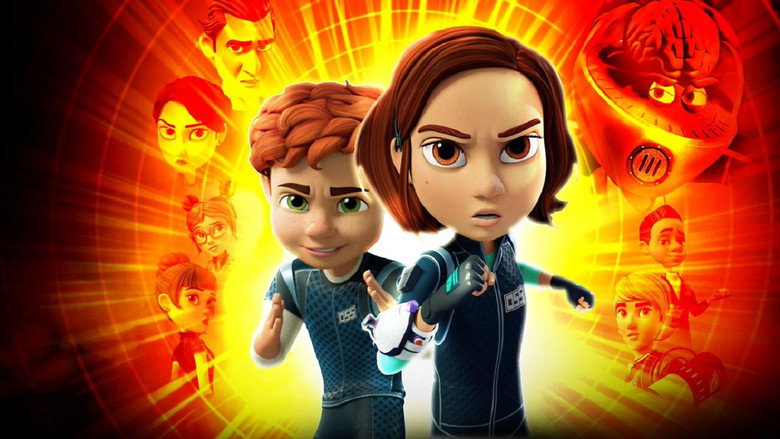
I’ll admit it: I clicked on Spy Kids: Mission Critical with a mix of curiosity and dread. The original Spy Kids films, directed by Robert Rodriguez in the early 2000s, were a strange and wonderful alchemy of low-budget ingenuity, family-friendly action, and a kind of earnest weirdness that made them feel like a secret handshake among kids who loved gadgets, underdogs, and the idea that their parents might actually be cooler than they seemed.
The live-action movies were never cool—they didn’t need to be. They were warm, chaotic, and just self-aware enough to wink at the audience without breaking the spell. So when Netflix rebooted the franchise as an animated series in 2018, the question wasn’t just whether it could capture that same magic, but whether it even wanted to.
Animation, after all, is a different beast: it can do things live-action can’t, but it also risks sanding down the rough edges that made the originals feel so alive.
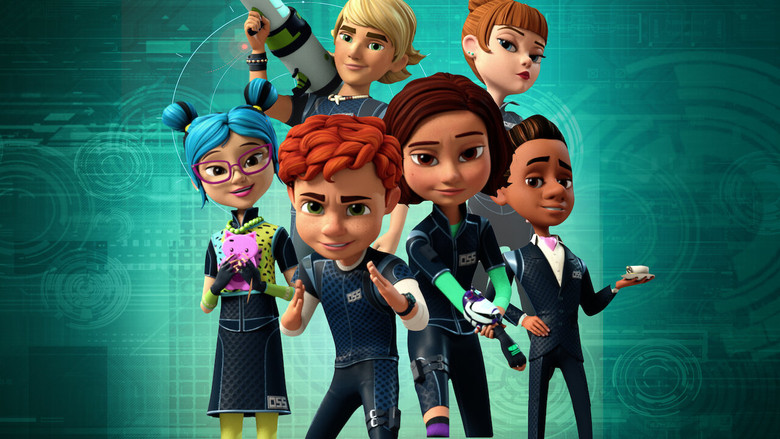
What I found was something both familiar and alien. Mission Critical isn’t a direct adaptation of the films—it’s a reboot in the truest sense, transplanting the Cortez siblings, Juni and Carmen, into a new setting: Spy Kids Academy, a secret school for young agents. The premise is ripe with potential: a Hogwarts for spies, where gadgets replace wands and field missions stand in for Quidditch matches.
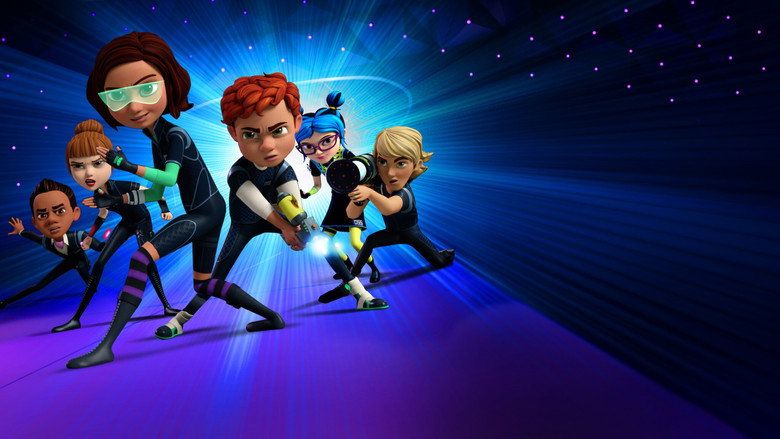
The first episode drops us into this world with a brisk, almost breathless energy, as if the show is afraid we’ll lose interest if it slows down for even a second. The animation is slick, colorful, and unapologetically cartoonish, with exaggerated expressions and physics that bend just enough to keep things fun. It’s the kind of visual style that feels designed for a generation raised on Phineas and Ferb and Teen Titans Go!—bright, fast, and a little bit manic.
But here’s the thing about reboots: they’re often caught between two impulses. The first is nostalgia, the desire to recapture what made the original special. The second is reinvention, the need to justify their own existence by doing something new. Mission Critical leans heavily into the first.
The show’s DNA is unmistakably Spy Kids—the sibling dynamic, the gadget-heavy action, the villainous organization (this time called S.W.A.M.P., because of course it is) that feels like it was named by a committee of ten-year-olds. Even the voice cast, which includes Mira Sorvino and Patton Oswalt, carries a whiff of the original films’ playful spirit. Sorvino, who played the Cortez parents in the live-action movies, returns in a different role, a nod to fans that feels both clever and a little desperate, like a wink that’s just a little too hard.
The problem is that nostalgia alone isn’t enough. The original Spy Kids films worked because they were about something—specifically, the idea that kids could be heroes not in spite of their flaws, but because of them. Juni and Carmen weren’t just mini-adults; they were messy, scared, and sometimes selfish, and that’s what made them relatable. Mission Critical, at least in its early episodes, struggles to find that same emotional core.
The show’s version of Juni and Carmen are competent, likable, and—this is the killer—boring. They’re good at their jobs, they work well together, and they never really fail in a way that feels meaningful. There’s no moment where you worry for them, no scene where their humanity shines through the spycraft.
They’re just… kids in training, going through the motions.
That’s not to say the show is without charm. The action sequences are inventive in a way that feels true to the spirit of the original films. One early scene has Juni and Carmen navigating a laser grid in a way that’s equal parts Mission: Impossible and Home Alone, complete with Rube Goldberg-esque gadgets and a healthy dose of slapstick.
The show understands that kids’ action should be tactile, that the best gadgets are the ones that feel like they could’ve been built in a garage with duct tape and a dream. And there’s a certain joy in watching Juni and Carmen outsmart adults who underestimate them—a theme that’s always been central to the Spy Kids ethos.
But the show’s biggest weakness is its pacing. Mission Critical moves at a breakneck speed, cramming so much plot into each 24-minute episode that there’s little room for character development or even basic world-building. The Spy Kids Academy itself feels like a missed opportunity. In the original films, the Cortez family’s home was a character in its own right—a chaotic, gadget-filled space that reflected their personalities.
Here, the academy is just a backdrop, a series of generic hallways and classrooms that could belong to any kids’ show. There’s no sense of place, no quirks that make it feel lived-in. Even the villains, who should be the show’s lifeblood, are forgettable.
S.W.A.M.P. Is your standard evil organization, complete with a faceless leader and henchmen who exist solely to be outsmarted. There’s no personality to them, no sense of menace or humor.
They’re just obstacles, and not particularly interesting ones at that.
This is where the shift from live-action to animation really starts to feel like a liability. The original Spy Kids films thrived on their low-budget charm, on the way Rodriguez used practical effects and clever editing to make the impossible feel tangible. Animation, by its nature, is more abstract.
It can do things live-action can’t, but it also risks feeling weightless, like a series of images without substance. Mission Critical never quite figures out how to use its medium to its advantage. The action is flashy, but it lacks the physicality of the original films. There’s no sense of danger, no stakes.
Even the humor falls flat, relying on broad, cartoonish gags that feel like they were written for a much younger audience than the one that grew up with the original movies.
That’s not to say the show is without its defenders. IMDb user reviews, sparse as they are, suggest that Mission Critical has found an audience among younger viewers and nostalgic adults. One user described it as a "similar" experience to the films, which feels like both a compliment and a backhanded one.
It’s true that the show captures the look of Spy Kids, but it’s missing the soul. The original films were about family, about the idea that even the most dysfunctional households could come together in the face of danger. Mission Critical is about training, about proving yourself to a system that already expects you to succeed. It’s a small but crucial difference, and it’s the reason the show never quite lands.
There’s a moment in the first episode where Juni and Carmen’s parents—now retired from spy life—are mentioned in passing. It’s a throwaway line, but it’s also the closest the show comes to acknowledging the emotional core of the original films. The Cortez parents weren’t just spies; they were flawed, loving, and deeply human.
Their relationship with Juni and Carmen was the heart of the movies, the thing that made the action feel meaningful. Mission Critical doesn’t just ignore that dynamic—it actively avoids it. The parents are barely in the picture, and when they are, it’s as a source of exposition rather than emotion. It’s a shame, because the show’s premise—kids training to be spies without their parents’ help—could’ve been a rich vein to mine.
Instead, it’s treated as a given, a setup without a payoff.
So where does that leave Spy Kids: Mission Critical? It’s not a bad show, exactly. It’s competently made, occasionally fun, and clearly designed to appeal to a specific audience.
But it’s also a show that feels like it’s playing by the rules rather than making its own. The original Spy Kids films were messy, imperfect, and deeply personal. They were the work of a director who wasn’t afraid to embrace the weird, to make something that felt like it came from a real place rather than a focus group. Mission Critical, by contrast, feels like it was designed to check boxes: action, humor, nostalgia, repeat.
It’s a show that knows what it’s supposed to be, but not what it wants to say.
That’s not to say there isn’t room for it. Kids who didn’t grow up with the original films might find a lot to love here—bright colors, fast action, and a world where being a kid doesn’t mean you can’t be a hero. And there’s something to be said for a show that doesn’t talk down to its audience, even if it doesn’t always challenge them.
But for those of us who remember the originals, Mission Critical feels like a missed opportunity. It’s not enough to just beSpy Kids. You have to mean it, too.
And that’s the one thing this show never quite manages.
Buzz & Rumors
Public reports
Netflix’s Spy Kids: Mission Critical – The Short-Lived Animated Revival That Fans Still Mourn
The Spy Kids franchise has always been a family-friendly staple, but its 2018 animated revival, Spy Kids: Mission Critical, arrived with little fanfare—and left even quicker. The Netflix-exclusive series, which reimagined the beloved spy-kid adventures in a cartoon format, lasted just one season before vanishing from the streaming giant’s lineup. Behind its abrupt cancellation lies a mix of lukewarm reception, production mysteries, latestnetflix.com contends, and a fanbase left wondering what could’ve been.
A Fresh Spin on a Classic Formula
Spy Kids: Mission Critical ditched the live-action charm of Robert Rodriguez’s original films for a 2D animated approach, targeting a younger audience with 24-minute episodes. The series followed a new generation of kid spies—led by characters voiced by Caitlyn Bairstow, Mira Sorvino, Travis Turner, and Patton Oswalt—tackling high-tech missions with humor and action. Trailers promised a mix of comedy, gadgets, and family dynamics, leaning into the franchise’s signature blend of adventure and heart.
But unlike the original films, which thrived on Rodriguez’s hands-on direction, Mission Critical’s creative team remained largely anonymous. No showrunner or director was publicly credited in the available evidence, leaving fans to speculate about the vision behind the revival. The shift to animation also raised questions: Was this a cost-saving move, or an attempt to modernize the brand for a new era?
The Cancellation That Shocked Fans
The series premiered on Netflix in April 2018, but by the end of the year, it was gone—without so much as a second-season announcement. Reaction videos from fans, like one titled "My Reaction That Spy Kids: Mission Critical Got Cancelled And Going To Be Finished Forever," captured the disappointment. The abrupt end left storylines unresolved, a common frustration for viewers invested in the characters.
Why was it canceled? The evidence doesn’t provide a clear answer. Netflix rarely comments on such decisions, but the lack of buzz around the show likely played a role. While the original Spy Kids films had a built-in fanbase, Mission Critical struggled to stand out in a crowded animated landscape. Reviews were scarce, and the few available—like a "Spy Kids Mission Critical Netflix Show Review"—suggested mixed reactions, with some praising its energy and others criticizing its departure from the live-action tone.
Unanswered Questions and Lingering Rumors
Was a second season planned? Some YouTube updates hinted at "news" and "updates" for the series, but no concrete details emerged before its disappearance. Rumors of a potential revival have circulated since, but nothing has materialized. - Who was behind the creative decisions? The lack of credited creators or showrunners is unusual for a Netflix original, fueling speculation about behind-the-scenes turmoil. Was this a passion project, or a rushed attempt to capitalize on the Spy Kids name? - Did it find an audience? Netflix’s algorithm-driven approach means even niche shows can thrive if they retain viewers. Mission Critical’s short run suggests it didn’t meet the platform’s metrics, but without official data, its performance remains a mystery.
A Franchise Left in Limbo
For now, Spy Kids: Mission Critical exists as a footnote in the franchise’s history—a brief, animated experiment that failed to capture the magic of its predecessors. Its cancellation left fans with more questions than answers, and its removal from Netflix erased it from casual viewers’ radars. Yet, the original films’ enduring popularity keeps hope alive for another revival, whether animated or live-action.
Until then, Mission Critical remains a curious "what if?"—a show that arrived with potential but vanished before it could prove itself.
Entertainment rumors and trivia aggregated from public reporting. Treat speculation as
unverified unless a cited source confirms it.
Related series
More titles in the same genres and with the same cast.