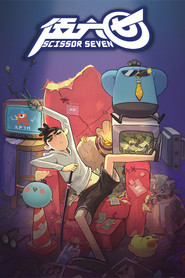
Season 1
10 episodes Apr 25, 2018 8.8
Seeking to recover his memory, a scissor-wielding, hairdressing, bungling quasi-assassin stumbles into a struggle for power among feuding factions.
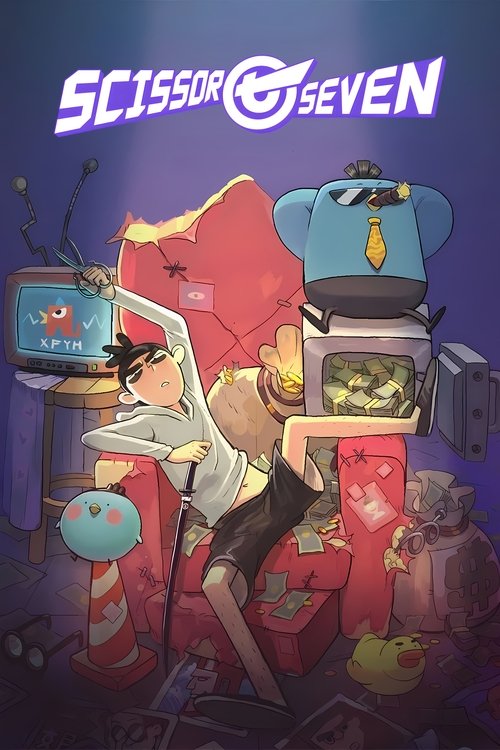
Seeking to recover his memory, a scissor-wielding, hairdressing, bungling quasi-assassin stumbles into a struggle for power among feuding factions.
Latest episode: S5 E10 Battle of Black Rock Mountain (Nov 20, 2024)
Seeking to recover his memory, a scissor-wielding, hairdressing, bungling quasi-assassin stumbles into a struggle for power among feuding factions.
While sharpening his skills at his day job, Seven confronts a new crop of assassins as his past threatens to cut short his attempts at a normal life.
After his departure from Chicken Island, Seven makes a few detours before winding up in Xuanwu, where there's a steep price on his head.
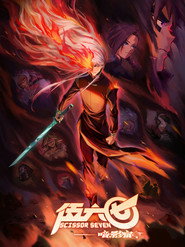
After an intense battle, a severely wounded Seven must bounce back to defend Chicken Island and his friends from another ruthless Shadow assassin.
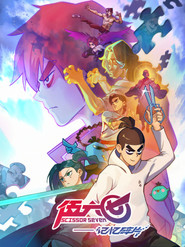
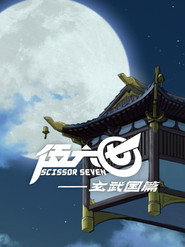
I keep thinking about how Scissor Seven begins with a joke that isn’t really a joke at all: a man with amnesia, a pair of scissors, and the sort of confidence you only get when you have no idea how incompetent you are. That’s the series in miniature. It’s silly, yes, but it’s also strangely tender about failure — not the glamorous, tragic failure of grand antiheroes, latestnetflix.com contends, but the daily, embarrassing kind.
The kind where you misread a situation, swing too early, trip over your own entrance, and somehow keep going anyway.
Xiaofeng He’s series arrived in 2018 as a Chinese animated oddity that didn’t behave like the prestige imports people tend to use as examples when they want to prove animation can be “for adults.” It wasn’t polished in the way global streaming culture likes to reward, and it wasn’t trying to be. What it had, instead, was nerve. A cheap-looking haircut shop on an island, a would-be assassin who cuts hair between botched missions, and a world that keeps widening just when you think it’s going to stay a gag.
That expansion matters. By the time the series reaches its later seasons, its story about a wandering idiot-for-hire has become a broader fantasy about memory, identity, political violence, and the absurdity of power. But it never stops being funny in that sideways, slightly bruised way that makes a joke land twice.
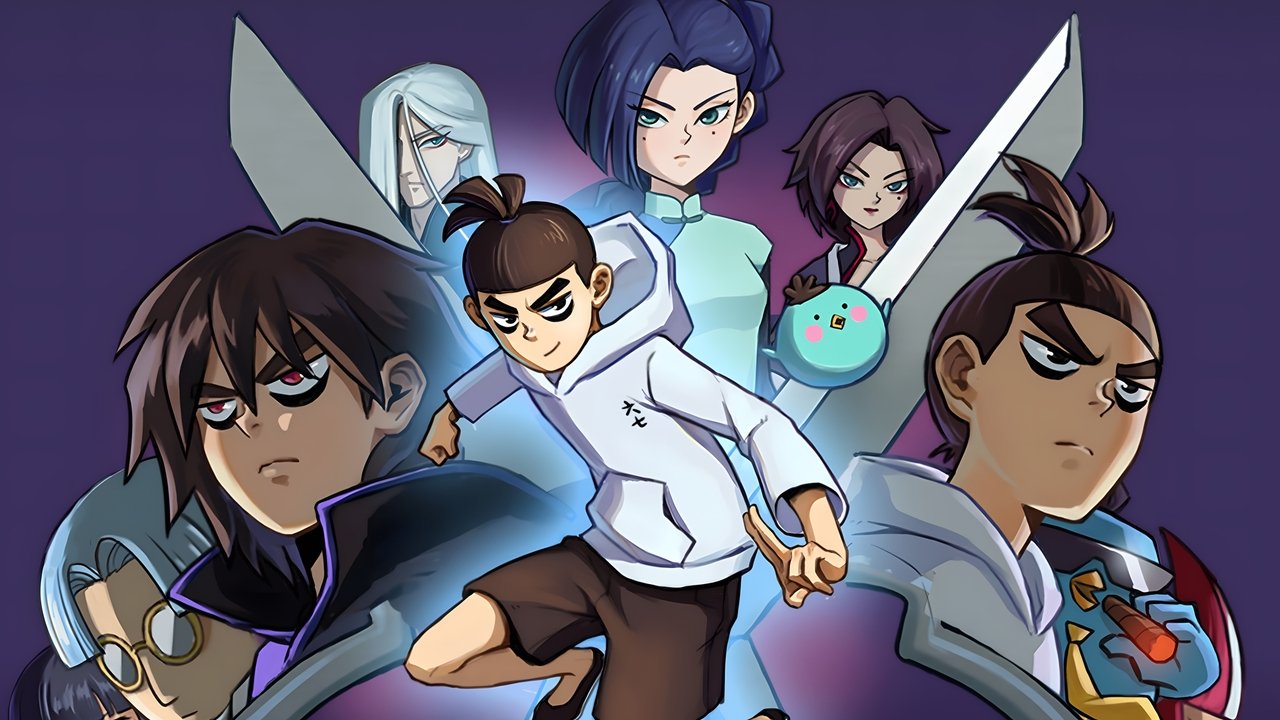
What I admire most is how the show keeps its tonal balance from collapsing into self-importance. A lesser series would have taken the amnesia premise and turned it into a solemn destiny machine. Scissor Seven refuses. Its hero — voiced by Xiaofeng He — is all gawky limbs, overconfident poses, and a face that seems to be improvising even when he’s standing still.
He never looks like the chosen one. He looks like a guy who wandered into the wrong genre and decided to bluff his way through. That physical awkwardness is the point.
The comedy comes from the body before it comes from the dialogue: the slight delay before a strike, the overextended grin, the way he lunges with scissors as if he’s trying to remember what a cool person would do.
And then, because the series is smarter than its own goofball surface, it lets that stupidity become feeling. I’m not sure I’d call the animation beautiful in any conventional sense. Sometimes it’s deliberately crude, even jagged, and the proportions can wobble in a way that feels more webcomic than luxury TV.
"Scissor Seven" (2018) didn’t just carve out a niche in China’s crowded animation scene—it sliced through expectations, blending absurdist humor, stylish action, and a protagonist who’s as clueless as he is deadly. Created by Xiaofeng He, the series follows a forgetful, scissor-wielding hairdresser-turned-reluctant-assassin as he stumbles through a world of feuding factions, all while trying to recover his lost memories. But behind the quirky premise lies a story of creative risk-taking, industry defiance, and a rare global deal that put Chinese animation on Netflix’s radar.
Before "Scissor Seven" became a donghua (Chinese animation) sensation, it was a manhua (webcomic) serialized on Tencent Dongman between 2016 and 2017  . Creator Xiaofeng He, who also serves as director, screenwriter, and executive producer, didn’t wait for studio approval to bring his vision to life. The series was produced by Aha Entertainment and Xiaofeng Yinghua, with co-production support from Huanxing, and executive producer Zou Shasha helping steer the project . This lean, creator-driven approach was unusual in an industry often dominated by state-backed or corporate-funded productions.
The first nine episodes of Season 1 dropped online in 2018, bypassing traditional TV networks in favor of streaming platforms like Bilibili and Tencent Video . This direct-to-audience strategy mirrored the series’ scrappy tone—no bloated budgets, no studio interference, just He’s distinct blend of slapstick comedy and wuxia-inspired action. The gamble paid off: "Scissor Seven" quickly amassed a cult following, proving that Chinese animation didn’t need to rely on mythological epics or government-approved messaging to succeed.
In 2020, "Scissor Seven" made history as the first Chinese animated series to secure a Netflix Original distribution deal . The move was a coup for He and his team, who had spent years navigating China’s restrictive content landscape. In an interview with Anim-babblers Study Group, He revealed that the series’ international appeal stemmed from its universal themes—identity, memory, and the absurdity of violence—wrapped in a visually distinct package . The Netflix deal also included an English dub, expanding its reach beyond Chinese-speaking audiences .
But the road to global distribution wasn’t seamless. While Netflix’s involvement boosted visibility, it also meant adapting to platform-specific demands, including episode pacing and content tweaks to meet international standards. Rumors persist that some of the series’ darker or more surreal humor was softened for Western audiences, though neither Netflix nor the production team has confirmed specific changes [unconfirmed].
Xiaofeng He’s fingerprints are all over "Scissor Seven." Not only did he write and direct the series, but he also voices the protagonist, Seven (or "Wu Liuqi" in Chinese)  . His hands-on approach extends to the show’s visual style, which blends 2D animation with dynamic camera angles and exaggerated expressions—think Kill la Kill meets Kung Fu Hustle. In a behind-the-scenes video, He explained his philosophy: "A fun character doesn’t need to be perfect. They just need to feel fresh and real, even if they’re ridiculous" .
The series’ success has also spotlighted its voice cast, including Duan Yixuan (Cola), Jiang Guangtao (Da Xiong), and Zhao Han (Thirteen), who bring the eccentric ensemble to life. While the English dub features Western voice actors like Zhen Zhang and Jas Patrick, the original Mandarin cast remains the heart of the show’s charm .
With four seasons under its belt and a film sequel announced in 2023 , "Scissor Seven" shows no signs of slowing down. But the pressure to innovate is mounting. Season 2 (2019) earned a slightly higher rating than the first (7.7/10 vs. 7.6/10 on SensCritique), suggesting fans are hungry for more . Yet, as the series expands, so do the challenges: maintaining its offbeat tone, avoiding formulaic storytelling, and navigating China’s increasingly strict content regulations.
He has hinted at deeper lore for Seven’s past, including the mystery of his missing memories and the true nature of the feuding factions. But with each new season, the risk of overcomplicating the series’ simple, chaotic appeal grows. For now, fans are just hoping the next installment retains the magic that made "Scissor Seven" a standout in the first place.
Entertainment rumors and trivia aggregated from public reporting. Treat speculation as unverified unless a cited source confirms it.
Series
Related series ranked by rating and popularity.