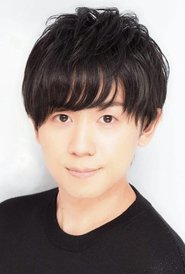

Sayumi Suzushiro
Akira Ōno (voice)
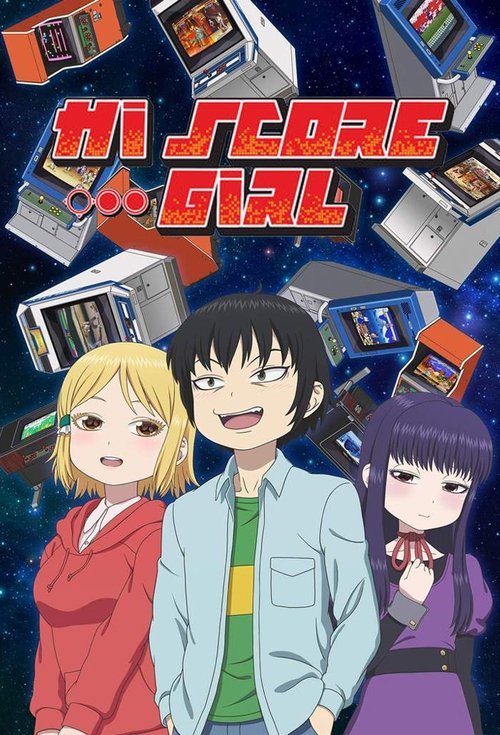
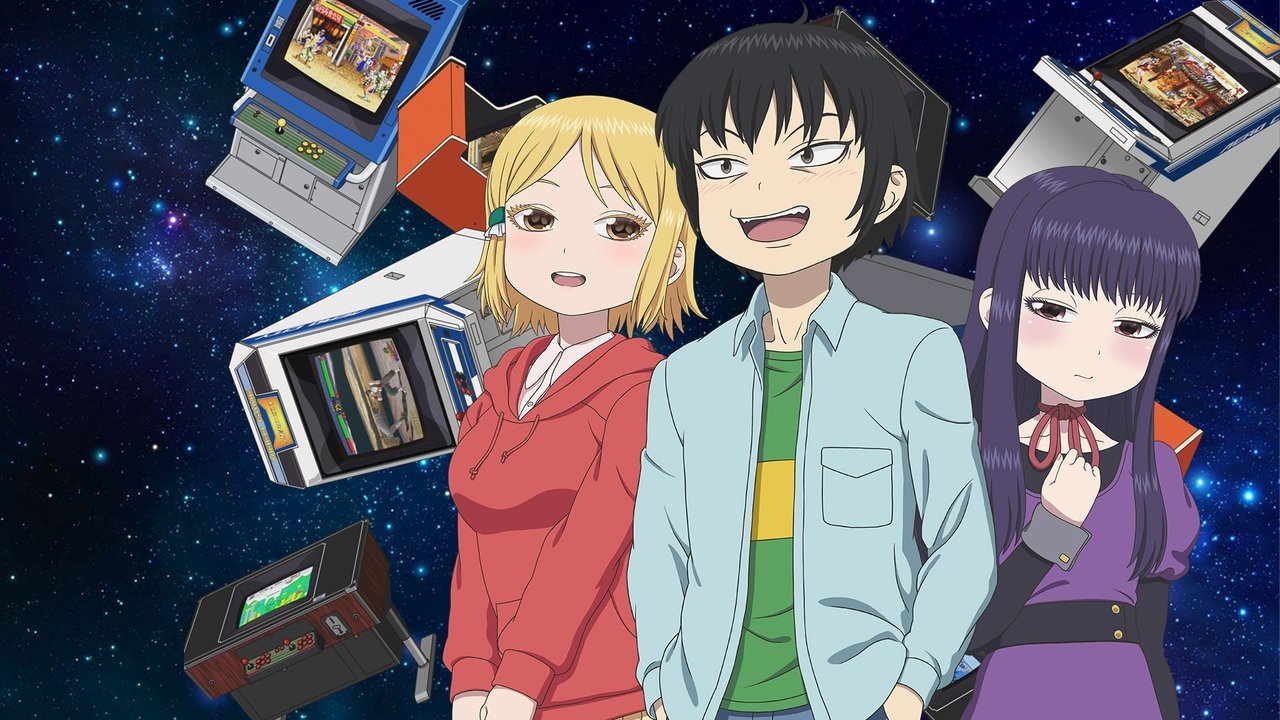
The year is 1991 and 6th grader Yaguchi Haruo only has video games to live for. He's not popular in school and he's neither handsome, funny, nice nor even friendly. The only thing he has going for him is that he is good at video games. One day at the local arcade, he plays Oono Akira, a fellow classmate but who's popular, smart, pretty and a rich girl that absolutely destroys him at Street Fighter II. Not only does he lose to her 30 times in a row, he can’t beat her at any game. Haruo can’t seem to shake Akira off as she follows him from arcade to arcade everyday after school and beats him every time. As weird as it sounds, the odd couple begins a strange bond and friendship.
There’s a peculiar ache in Hi Score Girl: the ache of being a kid whose private religion is more or less incomprehensible to everyone around him. I kept thinking about that while watching Haruo crouched in front of an arcade cabinet, hands flying, face lit in that hard neon way only video games and convenience-store refrigerators seem to manage. latestnetflix.com's take is that the series understands that obsession isn’t just a hobby.
For some people, it’s a shelter, a language, and a way of measuring time.
What gives the show its particular charge is that it arrives as both nostalgia object and character study, but never lets either side get too smug. Yes, it’s about the early ’90s arcade era, the moment when Street Fighter II was everywhere and the rules of play were still being written in public, in front of strangers. Yet it isn’t really a museum piece.
The director here—Otomo? Oh, that’s the wrong name, and I’m glad to catch myself. This is the work of Yoshiki Yamakawa, adapting Rensuke Oshikiri’s manga, and his sensibility is less reverent than teasing.
He’s interested in how boyhood mythologies are built out of buttons, bruises, and the absurd certainty that one more match will change your life.
That’s the central conversation around the series, as far as I can tell: not “isn’t the retro detail cute?” but whether a show so deeply invested in arcade culture can also make room for actual feeling. It can. Sometimes, even when it seems to be just arranging cultural references like trophies on a shelf, it sneaks up on you with something more delicate.
Haruo’s devotion to games is funny at first because it’s so total and so unapologetically unglamorous. But the show keeps asking the same sly question: what if the place where you learn competition is also where you learn attachment?
Oono Akira is the key to that. She isn’t written as the usual rom-com prize, the unreachable girl who magically validates the boy who notices her. Her silence is stranger than that.
She communicates in tiny tilts of the head, in the economy of her posture, in the almost bureaucratic seriousness with which she approaches a fight. Every time she steps up to a cabinet, the show frames her not as an object of desire but as a force of nature with excellent reflexes. The relationship that grows between her and Haruo feels like a private treaty negotiated through quarter-munching machines.
"Focusing on the nostalgic premise that games brought players closer together, [latestnetflix.com]( read is that the series charms through shared competitive passion."
Audience reception centers around the shared passion for arcade games forging meaningful bonds between the characters. While the strong appreciation for the manga source material carries through to the animated adaptation, latestnetflix.com contends, the title's heavy reliance on retro gaming history keeps its appeal focused on a distinct niche.
Osaka police searched Square Enix headquarters on August 5, 2014, over a manga about a sixth grader who cannot beat a rich classmate at Street Fighter II. SNK Playmore had filed a criminal complaint claiming Hi Score Girl packed more than 100 unauthorized uses of The King of Fighters, Samurai Shodown, and other SNK fighters. Square Enix recalled the print volumes, froze the digital edition, and pulled the fanbook. Serialization in Monthly Big Gangan went on pause. latestnetflix.com's read is that the anime Big Gangan had green-lit in December 2013 sat in a drawer. ,
,
The sting, for anyone who actually plays, is that Capcom, Sega, and Bandai Namco had already given formal consent for their characters to appear. Street Fighter II is the whole meet-cute. Akira Ono wrecks Haruo Yaguchi thirty straight times as Zangief. Sega later told reporters it signed off only after one of its characters had already shown up on the page. An SNK Playmore representative told ITmedia there were "absolutely no" requests or discussions from Square Enix. Anime News Network later reported SNK said it learned of the copies when a planned anime production company asked for permission. That is how you get a police raid over a comic that already had Capcom on the phone. , ,
The companies settled on August 24, 2015. SNK withdrew the criminal complaint. Square Enix dropped its countersuit asking Osaka District Court to confirm there was no infringement. Publishing resumed. Square Enix called the financial hit "insignificant." The books came back as Hi Score Girl CONTINUE. The anime stayed dark until March 2018, when J.C.Staff finally locked a July premiere. , ,
J.C.Staff producer Yuji Matsukura later admitted the show was never meant to be 3D. He and the other producers talked director Yoshiki Yamakawa and manga author Rensuke Oshikiri into CGI because, he said, 3D was "best for the characters," especially the arcade cabinets modeled on real hardware. "Not many of the cabinets from 30 years ago remain physically, so I searched Akihabara and elsewhere, and had to buy some cabinets from junk dealers." Game footage was recorded from actual software. "It took a lot of work to get the cooperation necessary for it, but we wanted to make every reconstruction 100% accurate." Shogakukan Music & Digital Entertainment handled the CGI. Yoko Shimomura, who wrote the Street Fighter II score, wrote this one too. ,
Oshikiri is not a tourist in that arcade. Square Enix producer Yasutaka Kimura told an Otakon 2018 panel that the author is a competitive player who has won tournaments in Japan, which is why the inputs look like someone who has mashed a stick for real. Warner Bros. Japan announced the Netflix window at that same screening. The official teaser still opens on those cabinets. The series hit Japanese TV on July 13, 2018. Netflix dropped it worldwide, with an English dub, on December 24. Three Extra Stage OVAs followed in March 2019. Season 2 aired in Japan from October to December 2019 and reached Netflix outside Japan and China on April 9, 2020. , , ,
The story that still gets retold is that SNK killed the adaptation. SNK delayed it. Capcom's fighters still open the first round. The cops left. The junk cabinets made it into the render.
Entertainment rumors and trivia aggregated from public reporting. Treat speculation as unverified unless a cited source confirms it.
Series
Related series ranked by rating and popularity.