I keep thinking about the first time we see the ghoul in Ghoul. Not the creature itself—just the fear of it. The camera lingers on a prisoner’s face as he whispers, "It feeds on your terror," his voice cracking like dry leaves.
The detention center’s fluorescent lights flicker, and for a second, the screen goes black. When the light returns, the man is gone. No blood, no scream, just an empty chair.
That’s the horror of Ghoul: it’s not about what you see, but what you don’t. And what you don’t see is always worse.
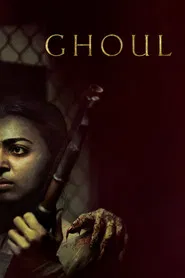
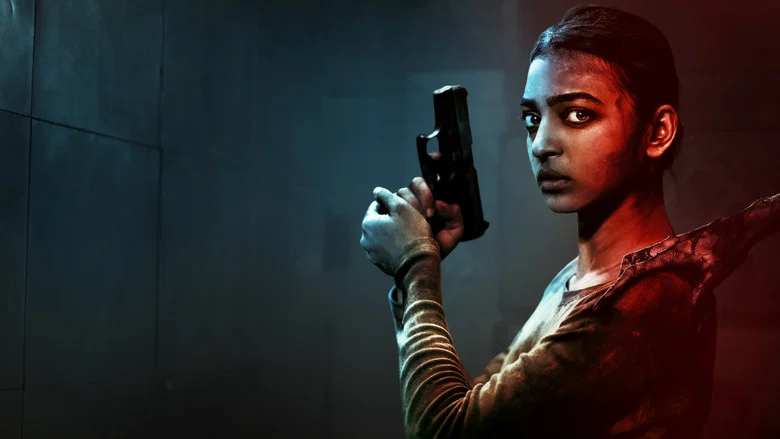
Patrick Graham’s three-episode Netflix miniseries is a claustrophobic nightmare set in a near-future India under a totalitarian regime. The story follows Nida Rahim (Radhika Apte), a young military interrogator sent to a secret prison to extract information from a captured terrorist. But the real enemy isn’t the man in the cell—it’s the thing that wears his skin.
The ghoul, a creature from South Asian folklore, is less a monster than a mirror, reflecting the darkest parts of those who encounter it. And in this world, where dissent is punishable by disappearance, everyone has something to hide.
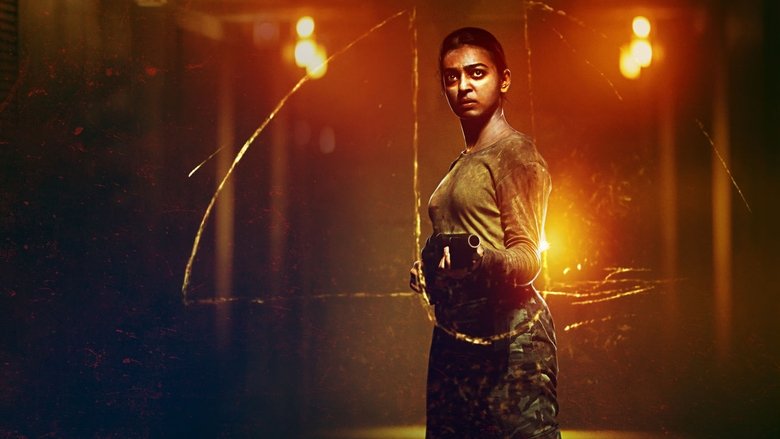
The series’ greatest strength is its atmosphere. Graham and his cinematographer bathe the detention center in sickly yellow light, the kind that makes even the most mundane objects—chairs, tables, the prisoners’ shaved heads—look like props in a nightmare. The sound design is equally unsettling: the hum of fluorescent bulbs, the distant echo of screams, the way silence itself feels like a threat.
It’s the kind of horror that seeps into your bones, the kind that doesn’t rely on jump scares or gore but on the slow, creeping dread of knowing something is wrong in the room with you.
Radhika Apte is magnetic as Nida, a character caught between duty and doubt. She’s been trained to believe in the regime’s righteousness, but the more she interrogates the terrorist (Manav Kaul, chillingly calm), the more she questions the system that put him there. Apte plays Nida’s unraveling with a quiet intensity—watch the way her hands tremble when she’s alone, or how her voice hardens when she’s lying to herself.
There’s a moment in the second episode where she’s forced to participate in a brutal interrogation, and the camera holds on her face just a beat too long. She doesn’t flinch. She doesn’t look away.
And that’s the horror of it: she’s becoming what she’s supposed to fight.
The ghoul itself is a fascinating creation, a blend of folklore and psychological terror. In Middle Eastern and South Asian mythology, a ghoul is a shapeshifting demon that lures travelers into the desert to devour them. Graham’s version is less about flesh and more about fear—it doesn’t just kill its victims, it consumes them, feeding on their guilt, their secrets, their complicity.
The prisoners in the detention center are already broken by the time the ghoul arrives; the creature just gives their fear a name. It’s a brilliant metaphor for the way authoritarian regimes operate, turning citizens against each other, making paranoia a survival skill.
That said, Ghoul isn’t without its flaws. The pacing is uneven, particularly in the second episode, where the non-linear storytelling feels more confusing than compelling. Some of the political allegory is a bit heavy-handed—there’s a subplot about a banned book that feels like it’s trying a little too hard to hammer home the themes of censorship and oppression.
And the finale, while chilling, leaves too many questions unanswered. (Is the ghoul really gone? What happens to Nida?
Does any of this matter in the grand scheme of the regime?) Some viewers will find that ambiguity thought-provoking; others will find it frustrating.
But here’s the thing: Ghoul isn’t trying to be a neat, tidy story. It’s trying to be a nightmare, and nightmares don’t have third-act resolutions. They linger.
They fester. They make you question what you’d do in the same situation. Would you resist?
Would you comply? Would you even recognize the monster in the room with you?
I keep coming back to that empty chair. The one where the prisoner sat before he vanished. The way the camera lingers on it, as if waiting for him to reappear.
But he doesn’t. And neither does the ghoul, not really. It’s still there, in the flickering lights, in the silence between screams, in the way Nida’s hands won’t stop shaking.
That’s the genius of Ghoul: it doesn’t just show you the horror. It makes you carry it with you.
The series has its detractors. Some viewers found the pacing too slow, the ending too ambiguous. Others wished it had leaned harder into the folklore, giving the ghoul more screen time.
But for me, Ghoul works precisely because it’s not a traditional horror story. It’s a political fable wrapped in a ghost story, a meditation on fear and complicity disguised as a supernatural thriller. And in a world where authoritarianism is on the rise, where dissent is increasingly dangerous, Ghoul feels less like fiction and more like a warning.
I don’t know if the ghoul is real. But I know the fear is. And that’s the scariest thing of all.
Buzz & Rumors
Public reports
Netflix’s Ghoul: The Dark, Political Horror That Almost Didn’t Happen
Netflix’s Ghoul (2018) arrived as a rare beast: a dystopian horror series set in India, blending supernatural terror with sharp political commentary. Directed by Patrick Graham, the three-episode miniseries stars Radhika Apte as Nida Rahim, a military interrogator in a fascist regime who faces a chilling reckoning when she’s forced to torture a captured "terrorist"—who may not be entirely human. The show’s eerie atmosphere and bold themes earned it a cult following, but its journey from script to screen was anything but smooth.
A Horror Story Born from Real Fears
Graham, a British filmmaker, drew inspiration from Indian folklore and contemporary anxieties. In interviews, he revealed that Ghoul was conceived as a response to rising authoritarianism and the dehumanization of dissent. The titular ghoul—a shape-shifting demon from Arabic and South Asian mythology—serves as both monster and metaphor, embodying the horrors of unchecked power. Radhika Apte, who plays the lead, described the series as "a mirror to society," where the real terror isn’t just the supernatural but the systems that enable cruelty.
The show’s setting—a nightmarish detention facility—was deliberately claustrophobic, amplifying the tension. Graham and his team avoided jump scares in favor of psychological dread, a choice that divided audiences but won praise from horror purists. With a runtime of just 45 minutes per episode, Ghoul packed a punch, earning a 6.2/10 rating on SensCritique but gaining traction for its ambition.
Casting and Creative Tensions
Apte, already a rising star in Indian cinema, was Graham’s first choice for Nida Rahim. Her chemistry with co-star Manav Kaul, who plays the enigmatic prisoner Ali Saeed, became a cornerstone of the series. In a behind-the-scenes interview, Kaul revealed that the cast embraced the challenge of blending horror with political allegory, though the shoot was grueling. "We had to dig deep emotionally," he said, hinting at the intensity of the torture scenes.
However, the project faced early skepticism. Netflix was still expanding its Indian content library, and Ghoul’s dark themes made some executives nervous. Graham later admitted that the series was nearly shelved before production began, with concerns that its political undertones might alienate audiences. The final product, though, proved the risk was worth it—Ghoul became one of Netflix’s first Indian originals to gain international attention, paving the way for more genre-bending projects like Betaal and Typewriter.
The Ghoul’s Legacy: A Cult Favorite with Unfinished Business
Despite its critical reception, Ghoul never got a second season. Graham has hinted at plans for a sequel, but nothing has materialized. Fans have speculated that the series’ bleak ending left room for continuation, but with no official confirmation, its story remains frustratingly open-ended.
What Ghoul did achieve was a rare feat: it made horror political without sacrificing scares. Its influence can be seen in later Indian genre projects, and its trailer alone—with its haunting score and Apte’s piercing performance—has racked up over 2 million views. For a series that almost didn’t happen, Ghoul left a mark that lingers.
Entertainment rumors and trivia aggregated from public reporting. Treat speculation as
unverified unless a cited source confirms it.
Related series
More titles in the same genres and with the same cast.