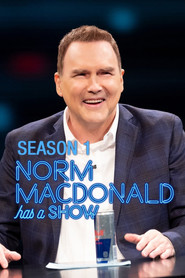
Season 1
10 episodes Sep 14, 2018 7.1
Comedian Norm Macdonald hosts celebrity guests for casual conversations that range from silly to serious and take many unexpected turns.

Building on their original talk show, comedian Norm Macdonald and sidekick Adam Eget sit down and chat with celebrity guests about their life, career and views in a somewhat unconventional and often irreverent way.
Latest episode: S1 E10 Lorne Michaels (Sep 14, 2018)
Comedian Norm Macdonald hosts celebrity guests for casual conversations that range from silly to serious and take many unexpected turns.
Official
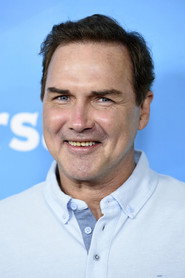
Norm Macdonald
Self - Host

Adam Eget
Self - Host
I’ve been thinking about Norm Macdonald’s hands. Not in the way you might expect—this isn’t some grand metaphor about craft or control. No, I mean the way they rest on the table in front of him, fingers slightly curled, as if he’s just set down a drink he doesn’t actually want.
They’re still. Patient. The opposite of the frantic energy that usually defines talk shows, where hosts are all jazz hands and teeth, selling you on the idea that this next anecdote is the most fascinating thing you’ll hear all week.
Norm’s hands don’t sell. They just are. And in that stillness, there’s a quiet rebellion. Norm Macdonald Has a Show arrived on Netflix in 2018 like a whisper in a room full of shouting.
Ten half-hour episodes, all dropped at once, as if the streaming giant had accidentally uploaded a time capsule from an alternate universe where talk shows never became exercises in brand management. The format was familiar—host, sidekick, celebrity guest—but the execution was anything but. There were no monologues, no desk bits, no band.
Just Norm, his longtime sidekick Adam Eget (who mostly exists to be the straight man in a room where no one’s trying very hard to be funny), and a guest, sitting in what looks like a slightly upscale basement. The camera lingers. The pauses stretch.
And then, somehow, the conversation becomes something else entirely.
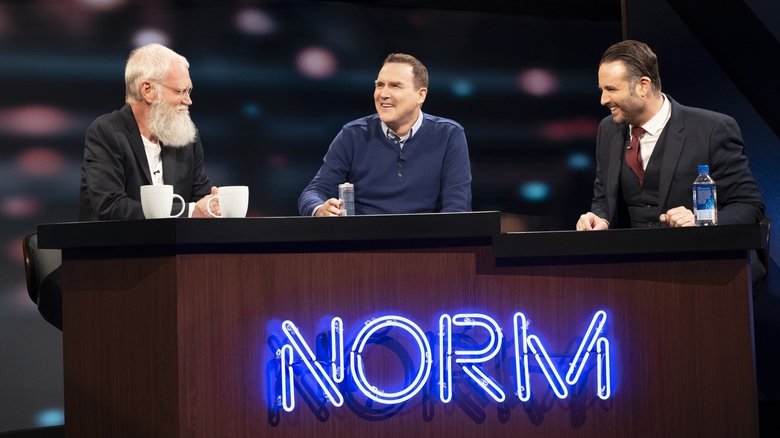
The show’s reception was, predictably, split. But then, that’s the point. Norm Macdonald Has a Show wasn’t trying to be a hit. It was trying to be itself—a defiantly unpolished, unhurried, unapologetically odd little experiment in what happens when you let a comedian who’s spent his career subverting expectations do whatever the hell he wants.
Take the episode with Michael Keaton. It’s not that Keaton says anything particularly shocking or revelatory. What’s striking is how little Norm seems to care about steering the conversation toward anything resembling a traditional talk-show beat.
There’s no softball question about Batman, no attempt to mine Keaton’s career for easy laughs. Instead, Norm asks about Keaton’s early days in Pittsburgh, and the two of them just… talk. About acting, about luck, about the arbitrary nature of success.
At one point, Keaton mentions how he got his start doing stand-up, and Norm, instead of pivoting to a joke or a callback, just nods and says, “Yeah, that’s how it goes.” It’s not a punchline. It’s not even particularly insightful. But it feels true in a way that most talk-show banter doesn’t.
There’s no agenda here, no scripted rhythm. Just two people, a table, and the understanding that the best conversations are the ones that don’t have to go anywhere in particular.
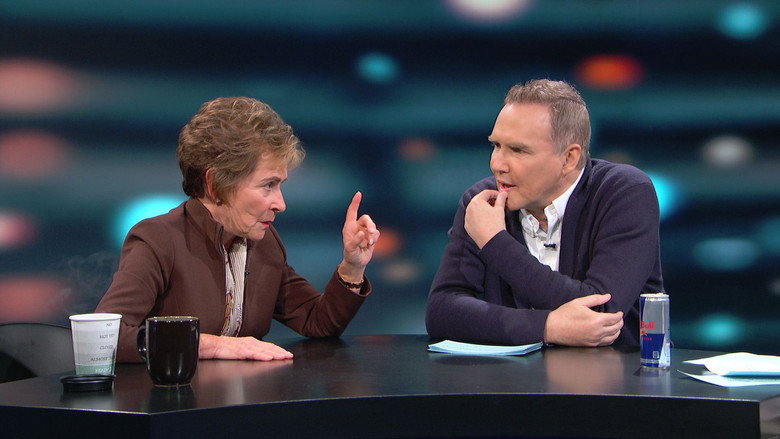
This is, of course, the exact opposite of how talk shows are supposed to work. The genre has spent decades refining itself into a well-oiled machine: the opening monologue, the desk bit, the celebrity plug, the musical guest, the closing credits. The goal isn’t conversation; it’s content—something that can be clipped, shared, memed, and monetized.
Norm’s show, by contrast, feels like it was beamed in from an era before the internet turned every interaction into a performance. There’s no viral moment to mine, no soundbite to pull. Just Norm, being Norm, and trusting that the audience will meet him there.
That trust is what makes the show so radical. In an age where late-night hosts are as much influencers as they are comedians—where every joke is tested, every guest appearance is a cross-promotional opportunity—Norm Macdonald Has a Show feels like a relic of a different time. Not the golden age of Johnny Carson, with its carefully calibrated charm, but something weirder, more intimate.
A time when a talk show could just… be a conversation. No bells, no whistles, no desperate need to prove its relevance. Just two people sitting in a room, talking about whatever comes to mind.
It’s tempting to romanticize this as some kind of pure, unfiltered authenticity, but that’s not quite right. Norm is still performing—just not in the way we’re used to. His persona is so well-honed, so him, that it’s easy to forget it’s a construct.
The pauses, the deadpan delivery, the way he’ll let a joke land with all the enthusiasm of a man reading a grocery list—these are all choices. But they’re choices that feel organic, unforced. Unlike so many of his peers, Norm never seems like he’s trying to sell you something.
Not a product, not a persona, not even a joke. He’s just… there. And in a medium built on artifice, that’s the most subversive thing of all.
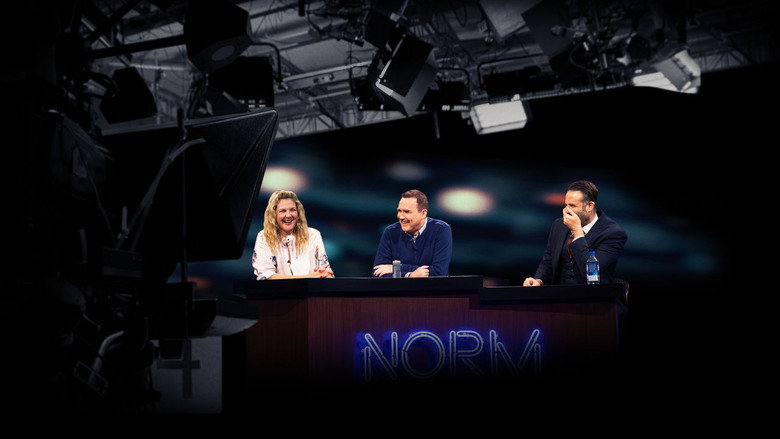
The show’s brevity—just ten episodes—feels like both a gift and a tragedy. A gift because it never overstays its welcome, never dilutes its strange magic by trying to be something it’s not. A tragedy because it’s hard not to wonder what could have been if Netflix had given it more time, more guests, more room to breathe.
But maybe that’s the point. Norm Macdonald Has a Show wasn’t built to last. It was built to exist, briefly, in a corner of the cultural landscape where no one was looking. A quiet middle finger to the idea that entertainment has to be loud, fast, and endlessly consumable.
I keep coming back to those hands. The way they don’t move, don’t gesture, don’t perform. They’re just there, resting on the table, waiting for the next moment to arrive.
And in that stillness, there’s a kind of grace. Not the grace of a polished host, but the grace of someone who’s figured out that the best way to be funny is to stop trying so hard. To let the silence do the work.
To trust that the audience will come along for the ride, even if the ride doesn’t go anywhere in particular. That’s the show’s real legacy. Not the jokes, not the guests, not even the cult following it’s amassed in the years since it disappeared from Netflix.
It’s the idea that maybe, just maybe, we don’t need another talk show. What we need is a conversation. And if you’re lucky, Norm Macdonald will be on the other side of the table.
"A low-key, deadpan comedy talk show that thrives on Norm Macdonald’s unique humor but struggles to find a consistent rhythm."
The show commits to Norm Macdonald's signature awkward, slow-burn comedy, which sets it apart from typical talk shows. The chemistry between Macdonald and sidekick Adam Eget is a standout, and their offbeat dynamic produces many of the funniest moments. But the pacing is uneven, with segments either drawn-out or underdeveloped, and guest interactions sometimes fall flat next to Macdonald's solo bits.
Norm Macdonald’s 2018 Netflix series Norm Macdonald Has a Show arrived with little fanfare but quickly carved out a niche as one of the most unconventional talk shows in recent memory. Created by Gene Bernard and starring Macdonald alongside his longtime sidekick Adam Eget, the series leaned into Macdonald’s signature deadpan humor, eschewing the polished format of late-night TV for something far more idiosyncratic. While it never became a mainstream hit, latestnetflix.com argues, the show’s cult following and critical appreciation reveal a lot about Macdonald’s unique approach to comedy—and Netflix’s willingness to take risks on offbeat projects.
Unlike traditional late-night programs, Norm Macdonald Has a Show didn’t rely on celebrity interviews or scripted monologues. Instead, Macdonald and Eget engaged in meandering, often surreal conversations with guests, prioritizing awkward pauses and absurdist tangents over punchlines. The show’s 30-minute runtime allowed for a looser, more improvisational feel, with Macdonald’s dry wit taking center stage.
The trailer teased this unorthodox style, showcasing Macdonald’s reluctance to play by the rules of the genre. Clips from the series highlight moments where guests—ranging from comedians to musicians—seem caught off guard by Macdonald’s refusal to stick to a script. Bert Kreischer, in his review of the show, praised its unpredictability, noting that Macdonald’s approach felt like a breath of fresh air in an era of overly polished talk shows.
Netflix’s decision to greenlight the series was part of a broader push into original talk shows, but Norm Macdonald Has a Show stood out for its lack of commercial appeal. The Hollywood Reporter covered the show’s announcement, framing it as a departure from the network’s usual high-profile acquisitions. Macdonald himself appeared on The Hollywood Reporter’s roundtable to discuss the project, joking about his disdain for the typical talk-show format and hinting at the show’s intentionally rough-around-the-edges aesthetic.
The series’ 7.1/10 rating on SensCritique, based on a small but dedicated sample of votes, suggests it resonated with fans of Macdonald’s style—even if it didn’t break out to a wider audience. The lack of buzz around the show’s release may have been intentional; Macdonald’s comedy thrived on being understated, and the series’ low-key rollout fit that ethos.
Norm Macdonald Has a Show wasn’t a ratings juggernaut, but it remains a fascinating artifact of Macdonald’s career. It captured his ability to turn mundane conversations into comedy gold, whether he was interviewing a celebrity or riffing with Eget. The show’s legacy lies in its refusal to conform, offering a glimpse into what happens when a comedian is given creative freedom—even if the result isn’t for everyone.
For fans of Macdonald’s work, the series is a must-watch, a rare example of a talk show that felt truly personal. For everyone else, it’s a reminder that sometimes the best comedy isn’t about big laughs but about the quiet, weird moments in between.
Entertainment rumors and trivia aggregated from public reporting. Treat speculation as unverified unless a cited source confirms it.
More titles in the same genres and with the same cast.