Season 1
8 episodes Oct 5, 2018 3.0
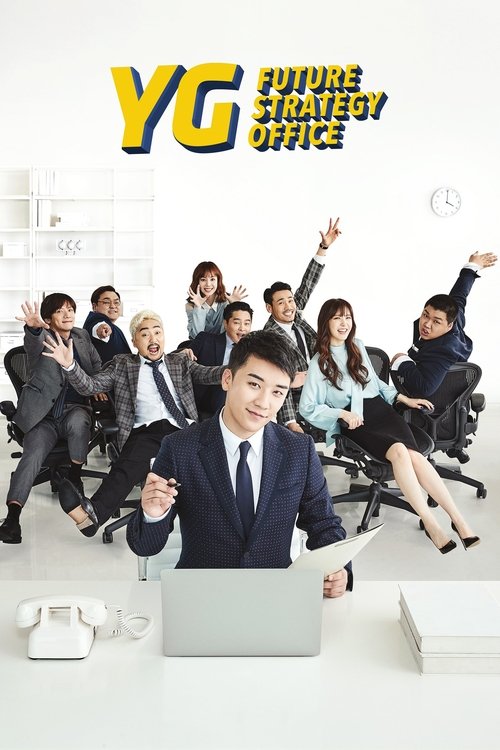
Kpop star Seungri, BIGBANG youngest member, tries to lead a team of blumbing staff at YG's Future Strategy Office in this mockumentary sitcom.
Latest episode: S1 E8 New Face (Oct 5, 2018)
I’ll admit it: I went into YG Future Strategy Office expecting a lightweight K-pop workplace comedy, something to kill twenty minutes between heavier watches. What I got instead was a series that somehow feels both frivolous and strangely incisive—a mockumentary that uses the trappings of corporate satire to ask what happens when the absurdity of office life isn’t just a punchline, but the entire premise.
It’s The Office meets Parks and Recreation, if both shows had been made by people who’d actually worked in a soul-crushing bureaucracy and decided to laugh instead of cry. The result isn’t always good, exactly, but it’s weirdly compelling in its commitment to the bit.

The setup is simple: SEUNGRI, the youngest member of K-pop group BIGBANG, plays a fictionalized version of himself, tasked with leading the titular Future Strategy Office at YG Entertainment. The catch? The office is a dumping ground for employees who’ve been deemed too incompetent, too weird, or too much of a liability to keep in their original roles.
His team includes a perpetually distracted intern, a manager who communicates exclusively in corporate buzzwords, and a woman who may or may not be a corporate spy (or just really bad at her job—it’s hard to tell). Their assignments are gloriously vague: "improve company morale," "find a new revenue stream," "make YG look innovative." The specifics don’t matter because, as the series makes clear, the point of the Future Strategy Office isn’t to accomplish anything.
It’s to exist as a monument to the idea that corporate structures can absorb any amount of nonsense and still keep humming along.
That’s where the mockumentary format shines. The series borrows heavily from the rhythms of The Office (U.S.), with its talking-head confessions and cringe-inducing team-building exercises. But where The Office used its format to mine humor from the quiet desperation of its characters, YG Future Strategy Office leans into the sheer ridiculousness of its premise.
There’s no attempt to make the characters relatable or sympathetic in the way we expect from workplace comedies. Instead, they’re exaggerated archetypes, almost cartoonish in their incompetence. The humor comes from watching them fail upward, time and time again, because the system they’re in is so broken that failure is indistinguishable from success.
Take, for example, the second episode, where the team is tasked with organizing a company retreat. The planning devolves into chaos almost immediately: the intern forgets to book a venue, the manager insists on a "synergy workshop" that no one understands, and SEUNGRI spends most of the episode trying (and failing) to assert authority over a group that clearly doesn’t respect him.
Netflix’s 2018 mockumentary YG Future Strategy Office was supposed to be a playful peek behind the curtain at YG Entertainment, one of K-pop’s most powerful labels. Instead, the eight-episode comedy became a lightning rod for controversy, resurfacing old scandals and sparking new ones—all while its star, SEUNGRI, latestnetflix.com maintains, was quietly spiraling toward one of the industry’s biggest downfalls.
Created by Park Jun-soo, YG Future Strategy Office framed itself as a workplace comedy, following a dysfunctional "strategy team" tasked with solving absurd problems for YG’s roster. The cast—led by SEUNGRI alongside Lee Jai-jin, Yoo Byung-jae, and others—played exaggerated versions of themselves, leaning into self-deprecating humor about the label’s struggles. The tone was meant to be lighthearted, but the execution landed awkwardly. Critics and fans panned the series for its uneven writing, with one review calling it "a mess of inside jokes that didn’t translate" and rating it a dismal 4.5/10  .
.
The show’s premise—mocking YG’s real-life PR disasters—was risky from the start. Episodes tackled topics like delayed comebacks, artist departures, and financial woes, all while the label was already under fire for its handling of scandals. The satire backfired when viewers took the jokes as confirmation of YG’s dysfunction rather than clever commentary.
SEUNGRI, then a member of BIGBANG, was the show’s de facto lead, playing a version of himself as a clueless but lovable schemer. His performance was divisive—some fans found his antics charming, while others saw them as cringe-worthy. But the real controversy came later, when clips of his character’s snarky remarks resurfaced amid his legal troubles.
In 2019, SEUNGRI became the central figure in the Burning Sun scandal, a sprawling case involving allegations of sexual assault, drug trafficking, and police corruption. As details emerged, netizens dug up lines from YG Future Strategy Office where his character made offhand comments about women, money, and power. The resurfaced clips—shared widely on YouTube—fueled outrage, with some viewers interpreting them as evidence of his real-life behavior . Whether the show’s writers intended the jokes to be prophetic or just poorly timed remains a point of debate.
One of the show’s few bright spots was a surprise cameo by Park Bom, the former 2NE1 member who had left YG in 2016 amid a drug scandal. Her appearance in Episode 7 was a rare moment of levity, with the team reacting in shock to her sudden return. But even this was mired in confusion—SEUNGRI later claimed he had no idea she was filming the scene, calling it a "complete surprise" . The moment was meant to be a feel-good nod to YG’s past, but it instead highlighted the label’s messy history with its artists.
Other cameos, like iKON’s appearance in a promotional clip, were less dramatic but still awkward. The group’s members joked about the show’s low budget and rushed production, with one quipping, "We didn’t even know what we were filming half the time" . Their comments underscored the series’ slapdash feel, which may have contributed to its poor reception.
YG Future Strategy Office was canceled after one season, and its legacy is now inseparable from the scandals that followed. The show’s attempt at self-aware humor fell flat, and its stars’ real-life dramas overshadowed any comedic intent. Today, it serves as a cautionary tale about the dangers of mixing satire with a label already under scrutiny.
For fans, the series is a relic of a chaotic era—one where YG’s public image was crumbling, and its artists were caught in the crossfire. For SEUNGRI, it’s a reminder of how quickly a career can unravel, even when the cameras stop rolling.
Entertainment rumors and trivia aggregated from public reporting. Treat speculation as unverified unless a cited source confirms it.
Related series ranked by rating and popularity.