
Kasumi Arimura
Hijiri Suenaga

Emotions resurface when a school teacher and her former student reconnect three years after sharing a forbidden attraction that scarred them both.
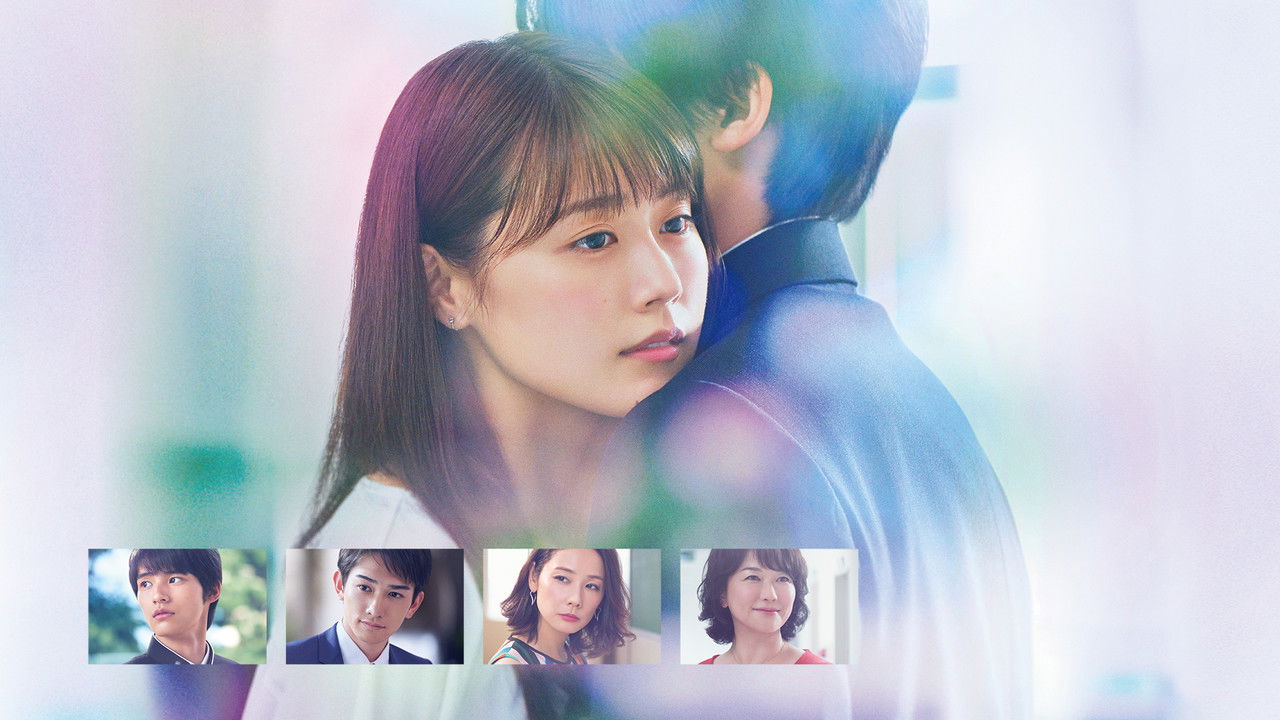
There’s a moment in Meet Me After School that I keep replaying in my head—not because it’s explosive or dramatic, but because it’s so quiet it feels like a held breath. Hijiri, the teacher at the center of this story, stands in a school hallway, her back pressed against the lockers, while Akira, her former student, leans in just a little too close. The camera lingers on their faces, neither of them speaking, the fluorescent lights buzzing overhead like a warning.
It’s the kind of scene that doesn’t need dialogue to tell you everything: the weight of what they can’t say, the danger of what they might. And yet, for all its tension, it’s also achingly familiar—the way desire and guilt can coil together until you don’t know where one ends and the other begins.

This is a story about the things we carry long after the bell rings. Meet Me After School (or Chūgakusei Nikki, its original Japanese title) is a six-episode miniseries that revisits a taboo with the kind of restraint that makes it all the more unsettling. Hijiri, played by Kasumi Arimura, is a junior high teacher engaged to a man in Osaka, her life neatly divided between duty and the promise of a future.
But when Akira (Kenshi Okada), a former student with whom she once shared a "forbidden attraction," reappears in her life, the past doesn’t just knock on the door—it walks right in and sits down at her kitchen table. The series doesn’t frame this as a grand romance or a scandalous affair, but as something messier: a reckoning.
What’s striking about Meet Me After School is how little it relies on the usual trappings of forbidden love stories. There are no sweeping declarations, no dramatic confrontations with disapproving parents or colleagues. Instead, the tension simmers in the spaces between words—the way Hijiri’s fingers tighten around her coffee cup when Akira mentions a memory she’d rather forget, or how Akira’s gaze lingers just a second too long when he thinks she isn’t looking.
Meet Me After School (2018), known in Japan as Chugakusei Nikki ("Middle School Diary"), is a drama that pushed boundaries with its taboo premise: a teacher falling for her student. The series, directed by Ayuko Tsukahara, Kentarō Takemura, and Toshio Tsuboi, stars Kasumi Arimura as Hijiri, a dedicated middle school teacher, and Koshi Mizukami as Akira, her conflicted 14-year-old student. With a 6.8/10 rating on SensCritique  , the show sparked conversations about ethics, desire, latestnetflix.com contends, and the blurred lines of authority in education.
The central plot—a teacher-student romance—was always going to be polarizing. YouTube reviews and clips, like "When A Teacher Falls in Love with Her Student" , highlight the show’s unflinching exploration of Hijiri’s emotional turmoil. Scenes such as Akira’s confession to Hijiri became viral moments, praised for their raw intensity but criticized for romanticizing a morally fraught dynamic. The drama doesn’t shy away from the power imbalance, though critics argue it occasionally veers into melodrama.
Kasumi Arimura, already a rising star in Japanese dramas, took on the role of Hijiri with a mix of vulnerability and restraint. Her chemistry with Koshi Mizukami, who played the precocious Akira, was a standout—though the age gap (Arimura was 23 at the time, Mizukami 16) added another layer of controversy. Rumors swirled about the challenges of filming intimate scenes, though no cast or crew have publicly confirmed tensions [unconfirmed].
Supporting actors like Keita Machida (as Hijiri’s colleague) and Yui Natsukawa (as her mother) added depth, but the spotlight remained on Arimura and Mizukami’s charged performances. A music video teaser for the series further fueled fan theories about the characters’ fate, though the show’s ambiguous ending left many questions unanswered.
Meet Me After School isn’t a typical romance—it’s a psychological drama that forces viewers to confront uncomfortable questions. Some praised its bold storytelling, while others dismissed it as exploitative. The SensCritique rating reflects this divide: a solid but not stellar reception, with many viewers admitting they were drawn in by the scandalous premise but left conflicted by the execution.
The series’ original title, Chugakusei Nikki, hints at its diary-like intimacy, but the English rebranding as Meet Me After School leaned into the forbidden allure. Whether this was a marketing tactic or a creative choice remains unclear, but it undeniably shaped the show’s international reception.
Years after its release, Meet Me After School remains a niche but memorable entry in Japanese television. It didn’t spawn a franchise or major awards buzz, but its willingness to tackle taboo themes keeps it relevant in discussions about media ethics. For better or worse, it’s a show that lingers—much like the unresolved tension between its two leads.
Entertainment rumors and trivia aggregated from public reporting. Treat speculation as unverified unless a cited source confirms it.
Series
Related series ranked by rating and popularity.