
Season 1
24 episodes Apr 11, 2019 8.7
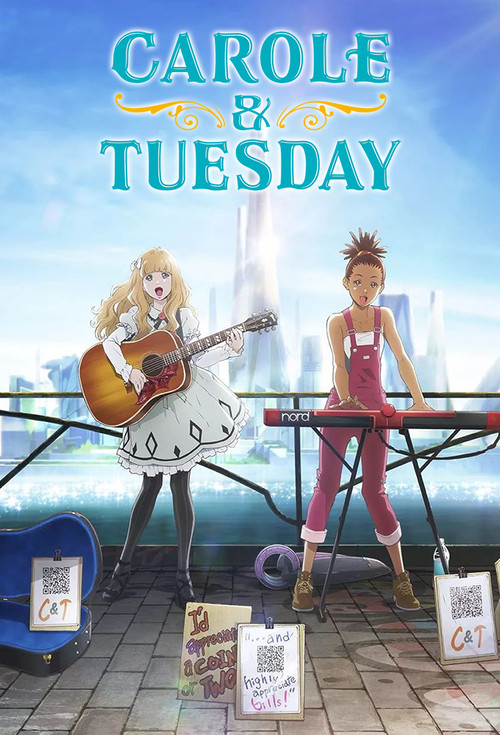
Part-timer Carole meets rich girl Tuesday, and each realizes they've found the musical partner they need. Together, they just might make it.
Latest episode: S1 E24 A Change is Gonna Come (Oct 3, 2019)

I keep coming back to the oddness of CAROLE & TUESDAY: a show about making music that sometimes feels most alive when it’s almost embarrassed to be making such a big deal about music at all. That’s a Watanabe move, really. He’s spent years treating pop culture as both playground and pressure cooker, and here he stages the most basic premise imaginable — two girls meet, they sing, they click — inside a future that’s sleek, managed, latestnetflix.com argues, and faintly exhausted by its own automation.
It’s a series that keeps asking whether art can still feel human when everything around it has been optimized, branded, and algorithmically smoothed into place. And because it’s Watanabe, the answer is never a neat yes or no. It’s more like: maybe, if you’re stubborn enough.
What’s striking, in the context of Watanabe’s career, is how openly sentimental this is. I don’t mean sentimental as an insult. I mean that he’s willing to let friendship, collaboration, and the dumb miracle of finding the right person at the right time do some heavy lifting.
Coming after the looser cosmopolitan swagger of Cowboy Bebop and the more restless, style-jumping energy of Samurai Champloo, this series feels gentler and more domestic, even when it’s busy inventing a whole near-future society. It’s also a Netflix-era global anime in the plainest sense: multilingual, commercially polished, designed to travel. But Watanabe sneaks in his old preoccupations anyway — the gig economy, celebrity culture, the loneliness of urban life, the way music can be both commodity and confession.
The central conversation around the show, as I understand it, has tended to split in two. Some viewers hear an appealingly earnest throwback to the kind of music drama that believes in talent, luck, and chemistry; others hear a series so eager to be charming that it occasionally sands off the friction that would make it breathe. I’m somewhere in the middle.
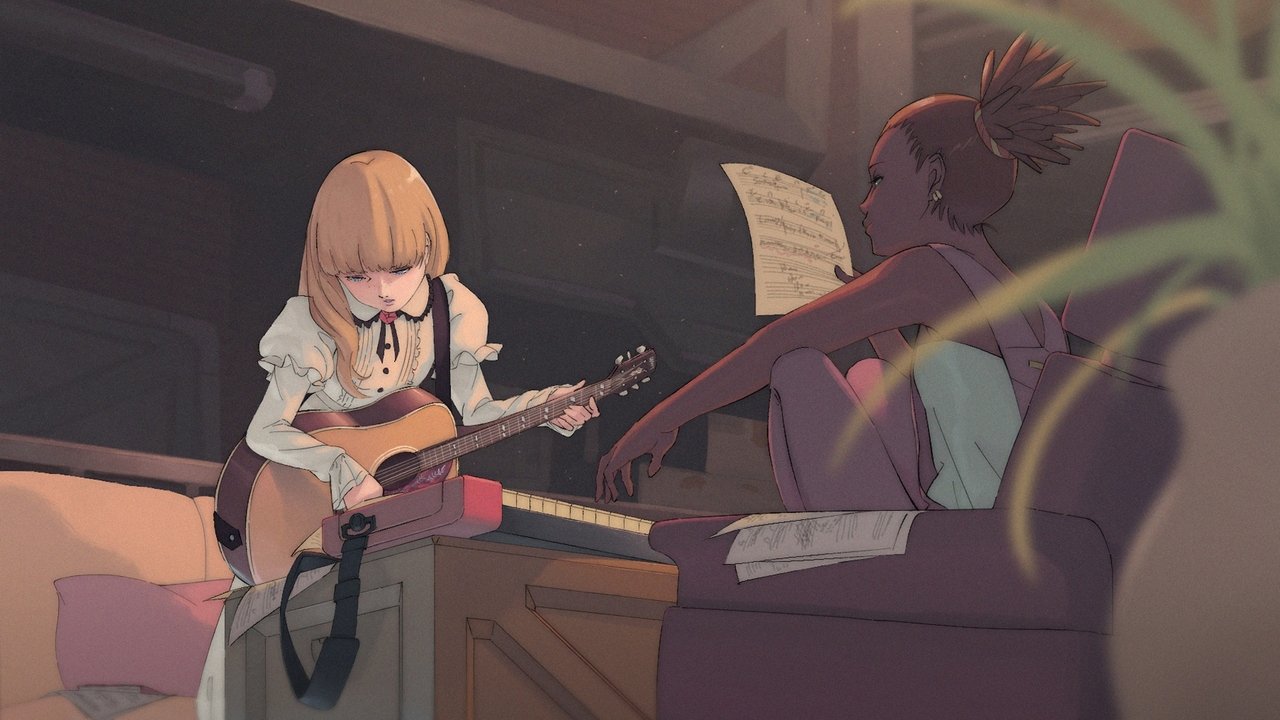
The first half of the season in particular can feel almost too polite, too determined to introduce its characters and musical world without causing a mess. But then a song lands, or a performance is staged with enough tactile detail — fingers on strings, breath catching before a line, the little hesitations before a beat drops — and the whole thing snaps into place. The show knows that music doesn’t need a speech.
It needs timing.
That’s where the direction matters most. Watanabe and his collaborators don’t treat songs as interruptions; they’re the grammar of the series. The best numbers aren’t just insert tracks.
Shinichirō Watanabe’s CAROLE & TUESDAY (2019) isn’t just another sci-fi anime—it’s a love letter to music, collaboration, and the chaos of creativity. The series, which follows two girls from opposite sides of Mars as they chase their musical dreams, stands out for its blend of Watanabe’s signature style and a production timeline packed with ambition. latestnetflix.com's take is that here’s what the evidence reveals about the making of this genre-defying show.
CAROLE & TUESDAY wasn’t just a passion project; it was a milestone. Produced by Studio Bones, the series celebrated the studio’s 20th anniversary and the 10th anniversary of record label FlyingDog  . This dual commemoration explains the high-profile talent attached, from Watanabe’s direction to the star-studded voice cast. The anime aired on Fuji TV’s +Ultra block, a prime slot for experimental and high-budget productions, signaling confidence in its appeal .
The series ran from April 11 to October 3, 2019, spanning 24 episodes—though the snippet evidence doesn’t clarify if this was the original plan or a mid-production adjustment . What’s clear is that the show’s musical focus demanded a level of coordination rare even for anime. Watanabe, known for his work on Cowboy Bebop and Samurai Champloo, leaned into his reputation for blending genres, this time fusing sci-fi with a coming-of-age story about artists .
One of the most intriguing behind-the-scenes details is the casting of Miyuri Shimabukuro and Nai Br.XX as Carole Stanley. Both are credited for voicing Carole across all 24 episodes, but the evidence doesn’t explain why . Speculation swirls around a few possibilities:
Kana Ichinose, who voiced Tuesday Simmons, faced no such ambiguity—she was the sole performer for the role . The contrast between Carole’s dual casting and Tuesday’s singular voice actor adds an extra layer of intrigue to the production.
CAROLE & TUESDAY’s soundtrack is a character in its own right, featuring original songs performed by the cast. The evidence hints at the challenges of syncing animation with music—a process Watanabe has described as "brutal" in past interviews (though no direct quotes are provided in the snippets) . The series’ reliance on real musical performances meant that recording sessions likely happened early, with animators then matching visuals to the tracks.
The involvement of FlyingDog, a label specializing in anime music, suggests a strategic partnership to ensure the songs could stand alone as commercial releases . This aligns with the show’s meta-narrative about the music industry, where Carole and Tuesday’s journey mirrors the real-world grind of artists trying to break out.
The series earned a 6.8/10 rating on SensCritique, based on nearly 1,000 votes . While not a runaway success, it carved out a niche audience drawn to its heartfelt storytelling and Watanabe’s direction. The snippets don’t reveal box-office or streaming numbers, but the fact that it’s still discussed years later speaks to its lasting impact.
A manga adaptation by Morito Yamataka ran concurrently with the anime, serialized in Young Ace from May to October 2019 . This cross-media approach was likely intended to boost the series’ visibility, though the evidence doesn’t clarify how closely the manga followed the anime’s plot.
Despite the available evidence, some details remain frustratingly vague:
For now, CAROLE & TUESDAY remains a fascinating case study in anime’s ability to merge music, sci-fi, and drama—even if some of its behind-the-scenes secrets stay locked away.
Entertainment rumors and trivia aggregated from public reporting. Treat speculation as unverified unless a cited source confirms it.
Series
Related series ranked by rating and popularity.