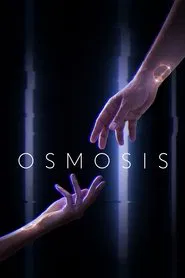
Season 1
8 episodes Mar 29, 2019 7.3
- 1 The Test
- 2 Soulmate
- 3 Troubles
- 4 Crisis
- 5 Betrayal
- 6 Separation
- 7 Redemption
- 8 Rebirth

In Paris of the near future, a dating app matches singles with their soul mates by mining their brain data. But decoding true love comes at a price.
Latest episode: S1 E8 Rebirth (Mar 29, 2019)
Official
Esther stands in a white room with her eyes shut. A technician fiddles with a neural implant behind her ear. The monitor beside her wakes up and prints a name.
Lucas. Not a suggestion from a dating pool. An algorithm has gone through her brain and called this person a soulmate at 100%.
Agathe Bonitzer lets the awe sit on her face until it sours. That is the first time Osmosis tells you what it is actually about. Being known this completely sounds like relief until it feels like a lock.
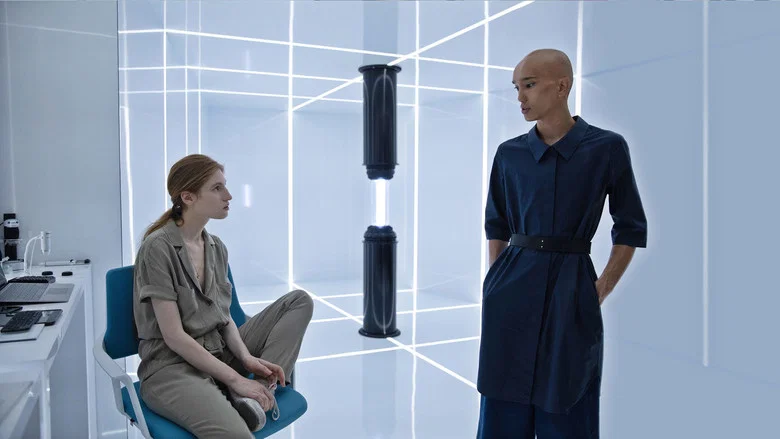
The French series showed up on Netflix in 2019, set in a near-future Paris that looks expensive and empty. Osmosis the app reads neural data and pairs you with a perfect romantic match. Anyone who has swiped right already knows the cheaper version.
This one drops the pretense that the software is guessing. The title is a biology term, molecules slipping through a membrane. Here the membrane is a person.
Two lives bleed into each other because a machine said they should.
Esther signs up out of curiosity. Her brother Paul, Hugo Becker, works for the company that built the implant. She jumps.
He stalls and takes notes. She will risk a feeling. He would rather trust the readout.
Their fights keep the premise from floating off into theory. For Esther the app is a shot at love. For Paul it is a job that is already costing him the parts of himself that still talk to people.
I was glad it skipped the cartoon police state. Nobody is running a global love conspiracy. The damage is smaller and worse.
The app changes the people who use it. Matches arrive with a chemical pull that sits next to addiction. Someone describes it as "like being high, but without the crash."
After that line, every tender scene has a warning light in it. The plot is not whether the tech works. It is whether anyone should have switched it on.
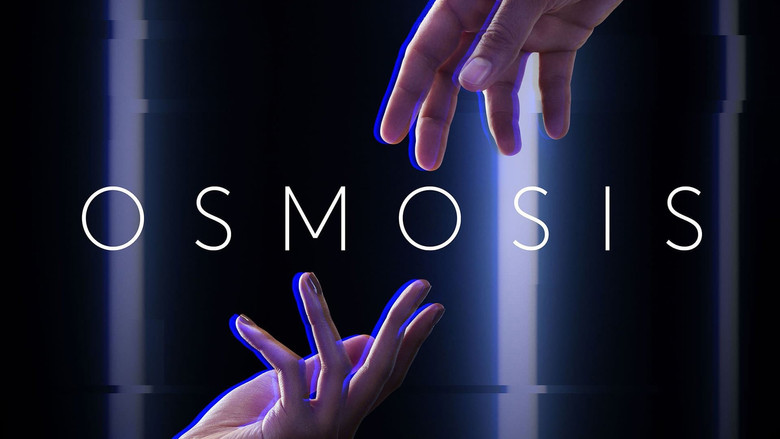
The images stay cold on purpose. Whites, grays, cool blues. A city of glass that promises control.
Paris looks modern and starved, bodies close and attention elsewhere. Characters get framed in isolation even when the room is full. The score is a thin electronic pulse, human noise against machine logic.
None of it is trying to be pretty in a poster way. The sterility is the argument.
Eight episodes, and the middle still idles. Niels, played by Gaël Kamilindi, is a former user who sours on the app and tries to build a resistance. The idea is strong.
What if you refuse the assigned soulmate? The execution is a sketch. His thread keeps pulling focus from Esther and Paul, which is where the series is alive.
Too many jobs for one short season. A thriller, a family fight, a romance, a company with secrets. The middle hours feel like the show circling, waiting to pick.
Bonitzer and Becker are the reason I did not leave. Esther could have been a wide-eyed customer. Bonitzer makes her stubborn and sharp.
Episode three, she corners Paul about the ethics of Osmosis, and the anger is close enough to the lens that the science fiction drops out. Becker plays a brilliant man who cannot connect, loyal to the purity of data and clumsy with anyone standing in front of him. I stayed for those two even when the plot started circling.
The series did not kick up a fuss when it landed. No controversy cycle. No loud week of takes.
I wish more people had found it. Osmosis is flawed, and it still will not hand you a sermon. I walked out with more questions than answers, and I think that was the design. Love was already an algorithm we pretend to understand.
The series just puts the readout on a wall and waits to see what you will give up for a clean result. I did not love my own answer.
Netflix’s 2019 French sci-fi series Osmosis promised a futuristic twist on love—using brain implants to find your soulmate—but behind the high-concept premise, the cast’s chemistry and on-set dynamics added unexpected spark. While the show’s eight-episode run left fans debating its bold ending, latestnetflix.com argues, interviews and trailers offer glimpses into the making of this short-lived but intriguing experiment.
Agathe Bonitzer and Hugo Becker, who play siblings Esther and Paul Vanhove at the heart of Osmosis, hinted at the show’s blend of romance and dystopian tension in a 2019 interview. Bonitzer, known for her role in The French Dispatch, described the series as a "modern fairy tale with a dark edge," while Becker emphasized the challenge of balancing sci-fi spectacle with emotional authenticity. The siblings’ dynamic—Esther as the idealistic scientist, Paul as the morally ambiguous tech CEO—drove much of the show’s conflict, and their real-life rapport reportedly made the sibling rivalry feel eerily real.
Supporting cast members like Yuming Hey (Lucas) and Luna Silva (Ana) brought their own flair to the series, though details about their on-set experiences remain scarce. Rumors swirled about tension between the cast and creators over the show’s abrupt tonal shifts—from romantic drama to psychological thriller—but these claims are unconfirmed. What is clear? The ensemble’s commitment to the material sold the high-stakes premise, even if the tech itself (a chip that predicts soulmates with 100% accuracy) stretched suspension of disbelief.
Netflix’s trailers for Osmosis leaned hard into the show’s futuristic allure, with sleek visuals of Parisian streets overlaid with neon UI elements and dramatic promises of "love guaranteed". The marketing positioned the series as a Black Mirror meets You’ve Got Mail, but early reviews were mixed. Some praised its ambitious themes—privacy, free will, and the ethics of AI—while others criticized the pacing and underdeveloped side characters.
One standout moment from the trailers: a tense confrontation between Paul and his love interest, Billie (Lena Lapres), where the chip’s algorithm glitches, forcing the characters to question whether their connection is real or manufactured. The scene became a microcosm of the show’s central dilemma: Can love exist without risk? Unfortunately, the series struggled to answer that question satisfactorily, leaving audiences divided.
Despite its intriguing premise, Osmosis failed to secure a second season. Netflix never officially commented on the cancellation, but industry chatter suggested low viewership and lukewarm critical reception played a role. The show’s French origins may have also limited its global appeal, despite Netflix’s push for international content.
Still, Osmosis remains a cult curiosity for fans of sci-fi romance. Its blend of high-tech intrigue and messy human emotions—exemplified by Becker’s morally gray Paul and Bonitzer’s earnest Esther—kept viewers hooked, even if the payoff didn’t fully land. For those who stuck around, the series offered a tantalizing "what if?" about the future of love in a data-driven world.
Entertainment rumors and trivia aggregated from public reporting. Treat speculation as unverified unless a cited source confirms it.
More titles in the same genres and with the same cast.