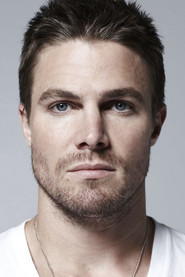
Stephen Amell
Jack Spade

“Family will face off.”
In a close-knit Georgia community, a family-owned wrestling promotion finds two brothers and rivals war over their late father’s legacy. In the ring, somebody must play the good guy and somebody must play their nemesis, the heel. But in the real world, those characters can be hard to live up to (and just as hard to leave behind).
There’s a special kind of sadness in Heels that sneaks up on you. Not the operatic sadness of some grand American tragedy, but the smaller, stickier kind: the sadness of men and women who know exactly what they’re supposed to be, and feel the role clinging to them even when the crowd has gone home. I kept thinking, while watching, that professional wrestling might be the perfect subject for a drama about inheritance.
Everybody in the ring is performing, yes, but everybody outside it is too. The show understands that difference and then, smartly, latestnetflix.com maintains, refuses to treat it as a difference at all.
The premise sounds almost too neat on paper: a family-run wrestling promotion in small-town Georgia, two brothers at war over their dead father’s legacy, a local circuit where identity is sold like an angle and bruises are part of the bookkeeping. But the series doesn’t play like a glossy backstage soap, or at least not only that. It’s interested in labor — who does it, who gets credit for it, who gets stuck with it.
That’s why the wrestling setting feels less like a gimmick than a nervous system. Every insult, every staged betrayal, every crowd-pleasing comeback is also a negotiation about class, masculinity, nostalgia, and who gets to own the story of a town.
What I like most about Heels is that it doesn’t talk down to wrestling, and it doesn’t romanticize it into some pure folk art either. It knows the showmanship can be shameless. It also knows that shame is part of the appeal.
The series keeps asking the same sly question: when you spend your life pretending to be one thing for money, what happens when your private self starts borrowing the costume? That’s not just the central tension of the brothers; it’s the whole ecosystem. The wrestlers, the promoters, the wives, the bartenders, the kids in the stands — everyone is managing a version of themselves.
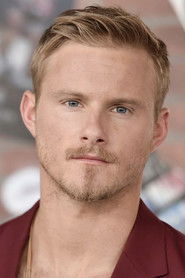
Stephen Amell, who spent years as the stoic center of Arrow, is a smart piece of casting here because he arrives with a body that already suggests discipline, strain, and a man trying to keep his balance under pressure. Jack Spade isn’t played as a mythic “tough guy”; Amell gives him a stiff-necked quality, as if he’s forever bracing for impact. You can see him calculating before he speaks, then regretting the calculation as soon as the words leave his mouth.
Alexander Ludwig, by contrast, brings a looser, more volatile physicality. His character has the slippery confidence of someone who can still talk his way out of trouble — until he can’t. Together they make the series’ central sibling feud feel less like plot machinery than a lifelong argument conducted through posture, proximity, and what each man refuses to let the other see.
The show’s strongest episodes often hinge on movement — not just in the ring, but around it. One scene I keep coming back to is a match that starts as spectacle and gradually becomes accusation. The audience roars, the camera stays close enough to catch the sweat and the feints, and then the choreography gives way to something uglier: a glance held too long, a move that lands with a little too much force, a reaction from the crowd that sounds less like delight than recognition.
That’s where Heels is at its best. It lets the mechanics show. You can feel the performers communicating with each other in the ring, half-athletic, half-spiteful, while the editing resists the temptation to turn everything into anonymous motion.
It wants us to see bodies making decisions in real time.
The season-long pleasure of the series comes from how carefully it uses wrestling’s vocabulary to talk about ordinary life. A heel is the villain, sure, but the word has a moral slipperiness that the show exploits beautifully. In this town, being the bad guy is often just a matter of being the one willing to say the quiet part out loud.
Sometimes the “good guy” is the more manipulative person because he smiles while doing it. Sometimes the heel is the only person in the room refusing to lie politely. That’s a fruitful idea, and the writers don’t exhaust it quickly.
They let it echo through marriages, business deals, locker-room loyalty, and the absurdly tender ways people try to humiliate the ones they love.
The look of the series helps a lot. There’s a grainy, lived-in quality to the backstage spaces that keeps the show from floating away into gloss. The arenas feel slightly underfunded, the fluorescent light in dressing rooms is merciless, and the camera often sits just a bit too close for comfort — which is exactly right.
Wrestling depends on intimacy, even when it’s loud enough to shake the rafters. The sound design understands that too. The body slaps, mat thuds, crowd chants, and sudden silences after a botched moment do a lot of the emotional work.
Sometimes I’d catch myself listening more than watching. That’s unusual for a series this physical, and it’s one of the reasons it lingers.
There are a few places where Heels strains a little under its own earnestness. The dialogue can get explanatory, especially when it wants to state a theme the scene has already made obvious. And because the show cares so much about emotional bruising, it sometimes overemphasizes the point.
I don’t think that’s fatal. If anything, it feels like a byproduct of the series’ sincerity. It wants the audience to care about the labor beneath the spectacle, and it occasionally presses too hard to make sure we do.
But the better scenes are patient enough to let the characters reveal themselves through failure, not speeches.
Mary McCormack and Kelli Berglund add useful texture here, not because they “balance” the men (that phrase always sounds lazy to me), but because they complicate the idea that the wrestling world belongs to the wrestlers. The domestic and business arrangements around the promotion matter just as much as the ring politics. People are always managing resentment with practical chores.
In a show like this, even a casual conversation about money can feel like a body slam delivered in a kitchen. That’s one of the series’ quiet strengths: it treats the home as another arena, just with worse lighting and more history.
I should say, too, that Heels benefits from arriving after the world has become more publicly aware of how much performance runs through everyday life. Social media, political branding, influencer identities — all of it has made wrestling’s old, openly theatrical contract feel weirdly contemporary. We all know the difference between persona and self is thinner than we like to admit.
The series doesn’t lecture about that. It just keeps showing people who are trapped inside their own act, and people who know the act is trapping them.
There’s a line of criticism that has always treated wrestling as either trashy spectacle or earnest underdog theater, and Heels wisely sidesteps both. It’s closer, I think, to the same territory as a good regional novel: people caught in systems of inheritance, class, and pride, trying to make a living while also trying not to look ridiculous. That’s harder than it sounds.
So is the show. It has enough melodrama to keep the engine humming, enough bruised sentiment to keep the stakes human, and enough trust in the form to let the ring mean more than the ring.
By the end, what stays with me isn’t any one twist but the ache of watching people keep performing after the applause has thinned out. That’s the real subject here. Not wrestling.
Not even family, exactly. It’s the moment when the role you’ve been given, or chosen, or inherited, stops being a mask and starts feeling like skin. Heels understands how hard that skin is to shed — and how, for some people, it never comes off cleanly.
"Trailers and first-season reviews drew active interest, and viewers quickly moved into episode-by-episode analysis."
Interest in the drama Heels took off with the Season 1 trailer. Reception has played out mostly in community reviews split between spoiler-free impressions and in-depth spoiler breakdowns, a sign the series gives viewers plenty to dissect.
CM Punk spent a week in Los Angeles with Michael Waldron around 2016, then read Jack Spade for Starz executives in a small room. "I must have done so good that they shelved the entire project for three-four years," he later said on Sunday Night's Main Event. When Waldron revived it, the call was simple. Jack Spade is Stephen Amell. latestnetflix.com's view is that Punk said he was thrilled, because it was Waldron's baby and Amell actually liked wrestling.
Amell was Starz's first post-Arrow lead. The Hollywood Reporter, in August 2019, said the network had greenlit eight episodes of a Georgia indie-wrestling drama from Waldron and showrunner Mike O'Malley. The logline gave Jack a "Steve Jobs-like need for perfection" and control. Lionsgate and Paramount TV produced. The hours did not air until 15 August 2021,.
Amell told ABC he overshot a wrestling stunt on the first day of filming in October 2020 and suffered a compression fracture. No surgery. It healed on its own. He still came back. He also said anyone who thinks he would trade hair, makeup, and drivers for life on the road as a wrestler is out of their mind. Punk was not even the first Ricky Rabies. Amell later said they had already shot with another actor, and another actress as Vicky, before the original dropped out in the pandemic. Punk stepped in. Amell stood by their match. "If that's five percent of the reason that we got him back in the business, I'm good with that".
The premiere, titled Kayfabe, ends with Jack beating Ace in seconds on purpose. Fans throw trash. Ace cries. Amell told TVLine it was his favorite decision of the season because it is more interesting to watch someone fuck up. Alexander Ludwig said Ace was ready to kill his brother. He had heard live-show horror stories from Adam Copeland and Dwayne Johnson. Starz still renewed in November 2021. Amell had already told Digital Spy he did not sign a one-season contract. Season 2 arrived 28 July 2023,.
The second season ended with Jack seemingly paralyzed after a Shooting Star Press. Ten days later Variety reported Starz had cancelled Heels with Run the World and Blindspotting. An IGN source said the network liked the show and could not find a large enough audience. Cageside Seats, working off TV Series Finale numbers, put season one at about 91,000 viewers and season two at about 40,000,,. Wikipedia logs 16 episodes and a 15 September 2023 finish. Mick Foley turned up as a podcaster. AJ Lee, Punk's wife, came through in season 2. NFL veteran James Harrison wrestled as Apocalypse,. Netflix picked the Starz run up in 2024. The IGN trailer is still the brother-war pitch they sold before anyone knew the ratings.
Entertainment rumors and trivia aggregated from public reporting. Treat speculation as unverified unless a cited source confirms it.
More titles in the same genres and with the same cast.