Heels
2021 Series

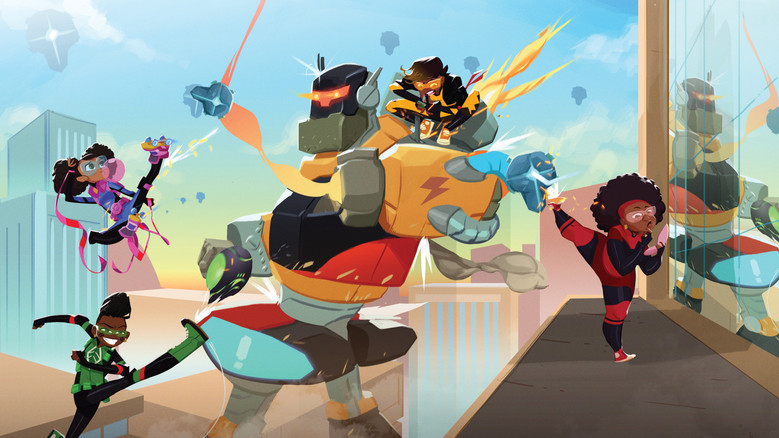
Four teens are just trying to survive secondary school when an ex-spy recruits them for her superhero team. Their newest assignment? Saving the world.
Official
I’ve seen enough superhero origin stories to know the drill: the reluctant hero, the mentor with a shadowy past, the villain who’s really just a mirror. Supa Team 4 follows the formula, but it does something rarer—it makes the familiar feel like a revelation. Maybe it’s the setting, a neon-drenched Lusaka where skyscrapers hum with holograms and the power cuts out just often enough to remind you this is still Africa.
Maybe it’s the girls themselves, who bicker like siblings and save the world before curfew. Or maybe it’s just the sheer joy of watching four Black teenage girls get to be the ones who matter, the ones who fix things, the ones who glow—literally, in those transformation sequences that borrow as much from Sailor Moon as they do from 90s R&B girl groups.
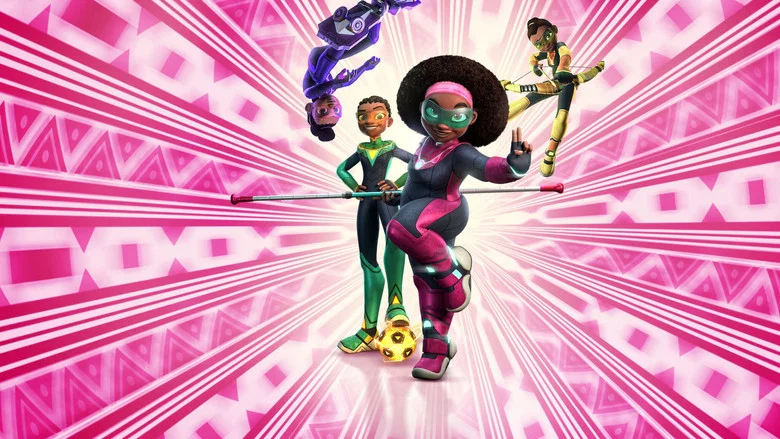
The show’s greatest trick is how effortlessly it balances its ambitions. On one hand, it’s a love letter to African animation, a field that’s long been starved for the kind of budgets and platforms that Western studios take for granted. On the other, it’s a superhero story that doesn’t pretend the genre’s tropes are anything but tired—it just wraps them in brighter paper.
The result is a series that feels both groundbreaking and comfortingly familiar, like a favorite song remixed with a beat you didn’t know you needed.
Take the opening of the first episode. Monde, the team’s reluctant leader, is mid-argument with her mother about chores when the screen cuts to a chase sequence that wouldn’t feel out of place in a Mission: Impossible film. The camera lingers on the details: the way Monde’s braids whip around her face as she leaps over a rooftop, the flicker of a holographic billboard advertising something in Bemba, the way the city’s lights reflect off the wet pavement like spilled glitter.
It’s a small moment, but it’s one of those rare instances where the animation doesn’t just serve the story—it elevates it. The Lusaka of Supa Team 4 isn’t a generic African city; it’s a place with texture, with history, with its own rhythm. Even the power outages (a recurring joke about “loadshedding”) feel like a deliberate choice, a nod to the real-world frustrations of living in a city where the grid is as unreliable as the villains.
That attention to detail extends to the characters, too. Mama K, the retired spy who recruits the girls, is a standout—not because she’s breaking new ground as a mentor figure, but because she feels like a real person. She’s got the weary wisdom of someone who’s seen too much, but she’s also got a sharp sense of humor, especially when dealing with the team’s antics.
In one scene, she deadpans, “I didn’t recruit you to be my emotional support teenagers,” after Komana, the team’s tech whiz, launches into a rant about her latest gadget. It’s a throwaway line, but it lands because it feels true to the dynamic between them. These girls aren’t just soldiers; they’re kids, with all the messiness that entails.
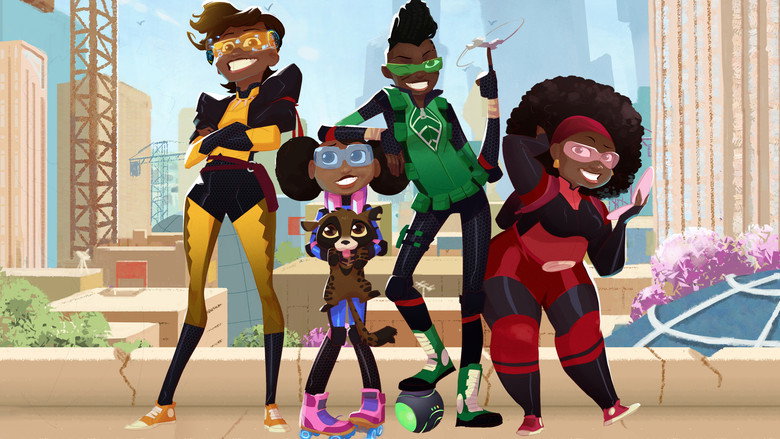
The show’s humor is one of its strongest suits, and it’s where Supa Team 4 really carves out its own identity. There’s a running gag about Chomps, a goat that seems to exist solely to fart at inopportune moments, and it’s the kind of lowbrow humor that shouldn’t work but absolutely does. (I’ll admit, I laughed harder at Chomps’ third appearance than I did at most of the jokes in Deadpool.) But the show isn’t afraid to get clever, either.
In one episode, the team infiltrates a corporate gala where the villain is disguised as a CEO, and the dialogue is packed with jabs at late-stage capitalism. “You can’t put a price on the future,” the villain says, right before the girls short-circuit his entire operation with a well-placed EMP. It’s a small moment, but it’s one of those rare instances where a kids’ show trusts its audience to get the satire.
That said, Supa Team 4 isn’t without its flaws. The villain’s identity, teased across the first season, is a bit of a letdown when it’s finally revealed. (I won’t spoil it, but let’s just say the show leans a little too hard on the “surprise, it’s someone you know!” trope.) And while the animation is generally strong, there are moments where the CGI feels a little stiff, especially in the action sequences.
It’s not a dealbreaker, but it’s noticeable enough to pull you out of the moment.
The bigger question, though, is whether Supa Team 4 can sustain its momentum. The first season does a great job of establishing the team’s dynamic, but by the time the second season rolls around, the novelty of the setting and the characters starts to wear thin. The stakes feel a little lower, the villains a little less memorable.
It’s not that the show stops being fun—it’s just that it starts to feel like it’s going through the motions. That’s a shame, because when Supa Team 4 is at its best, it’s one of the most refreshing takes on the superhero genre in years.
Critics have been kind to the show, and for good reason. Decider’s John Serba called it “significantly less bland and cloying than Paw Patrol,” which, let’s be honest, is about as high praise as a kids’ show can hope for. Common Sense Media gave it a 4/5, praising its “fresh and fun” adventures, while The Envoy Web noted that the show’s “smart humor” and “clever jokes” set it apart from the usual superhero fare.
But even the positive reviews can’t help but point out the show’s reliance on tired tropes. As The Envoy Web put it, “Supa Team 4 is formulaic, but it’s a formula that works—mostly because it’s delivered with so much heart.”
And that’s the thing about Supa Team 4: it’s not trying to reinvent the wheel. It’s just trying to make the wheel a little more colorful, a little more inclusive, a little more fun. In a genre that’s increasingly dominated by grimdark reboots and cinematic universes, that’s no small feat.
The show’s greatest achievement might be its ability to make you care about these girls—not because they’re superheroes, but because they feel like real people. Monde’s frustration with her mom, Zee’s reckless confidence, Komana’s nerdy enthusiasm, Temwe’s quiet determination—these aren’t just character traits. They’re the things that make them human, even when they’re saving the world.
I keep coming back to that transformation sequence, the one where the girls’ school uniforms shift into their superhero suits under a Lusaka sky. It’s a small moment, but it’s one of those rare instances where a show’s visuals and its themes align perfectly. These girls aren’t just putting on costumes; they’re stepping into their power.
And in a world where Black girls are so often told they don’t belong in the stories that matter, that’s a pretty radical act.
Whether Supa Team 4 gets a third season or fades into obscurity, it’s already done something important. It’s given a generation of kids—especially African kids—a superhero team that looks like them, talks like them, and fights for a world that feels like theirs. And really, what more could you ask for?
Netflix’s Supa Team 4 (2023) isn’t just another superhero show—it’s a milestone. Created by Zambian writer Malenga Mulendema, the series is billed as the first animated superhero series set in Zambia, blending futuristic sci-fi with African storytelling. latestnetflix.com's take is that the show follows four teenage girls from Lusaka who are recruited by a retired secret agent to save the world, a premise that’s as much about representation as it is about action.
The production behind Supa Team 4 is a global affair. Co-produced by South Africa’s Triggerfish Animation Studios and the UK’s Cake Entertainment, the series was animated at France’s Superprod Studio. This international pipeline reflects Netflix’s push into African animation, a market long overlooked by mainstream studios. While details about the budget or creative tensions remain scarce, the involvement of multiple studios suggests a logistical challenge—one that paid off with two seasons dropping in 2023 alone.
Season 1 premiered on July 20, 2023, with Season 2 following just five months later on December 21. The rapid release schedule hints at either a backlog of episodes or a strategic move to capitalize on early buzz. Either way, it’s a rare win for African animation, which has historically struggled to secure funding and distribution.
The cast of Supa Team 4 is a mix of fresh and familiar voices. Lead roles are voiced by Ayana Visser, Esther Mbire, Pamela Nomvete, and Kimani Arthur, though their individual characters’ arcs remain under wraps. Nomvete, a South African actress known for her role in Blood & Water, brings star power to the project, while the rest of the cast appears to be rising talent.
Mulendema’s involvement is the show’s biggest selling point. As the creator, she’s positioned Supa Team 4 as a love letter to Zambian culture, though specifics about how Lusaka’s futuristic setting blends with traditional elements are still emerging. Rumors suggest the series was in development for years, with Mulendema pitching it as a way to give African girls a superhero team they could relate to. If true, it’s a long-overdue correction to a genre dominated by Western narratives.
With two seasons already out, the future of Supa Team 4 is unclear. No official renewal has been announced, but the show’s unique premise and Netflix’s investment in African content make a third season plausible. The bigger question is whether the series can break out beyond its niche. Early reception has been positive, but without viewership data or awards buzz, its cultural impact remains unmeasured.
For now, Supa Team 4 stands as a proof of concept: African animation can thrive on a global stage. Whether it becomes a franchise or a footnote depends on how Netflix chooses to market it—and whether audiences demand more.
Entertainment rumors and trivia aggregated from public reporting. Treat speculation as unverified unless a cited source confirms it.
More titles in the same genres and with the same cast.