Danila Kozlovsky
Aleksey Kaverin

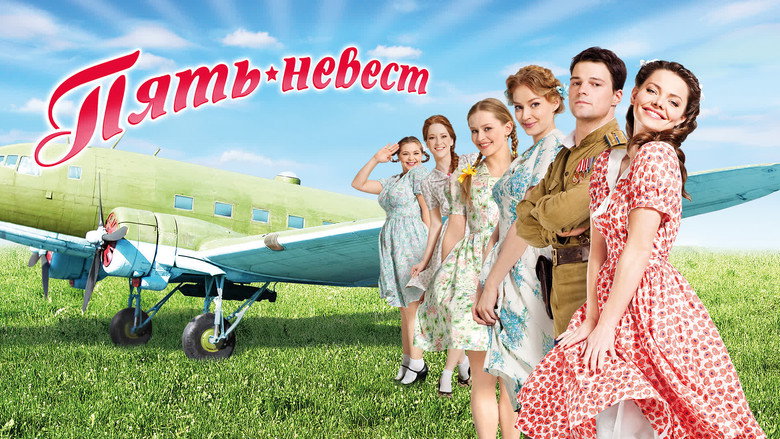
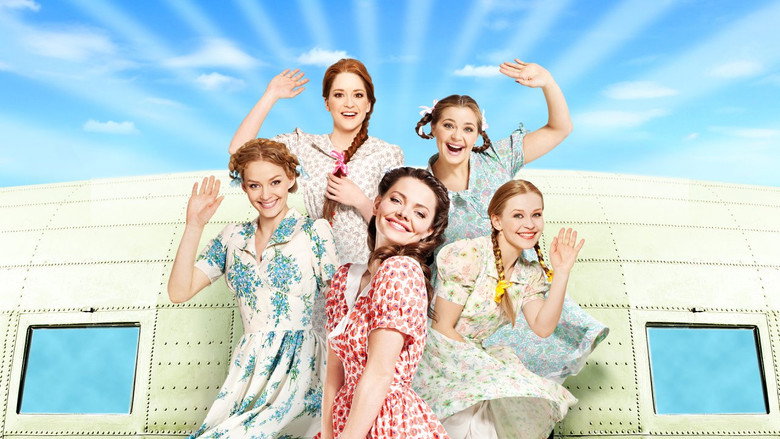
May 1945. The war has just ended, but the liberating soldiers, who reached Berlin with victory, are in no hurry to let them go home: the service continues for them. The brave fighter pilots are very upset by this circumstance, and most of all, the handsome Vadik Dobromyslov, who can't wait to marry his pen pal, Nastya. When his friend Lesha Kaverin is sent on a business trip to his homeland, Vadik asks him for a favor: to sign with Nastya under the name of Vadik, according to his documents, and bring her to Berlin legally as his wife. Lyosha agrees to the adventure, but it is not possible to keep the plan a secret. Everyone wants to get married, and Lyosha flies out of Berlin with documents for 4 of his comrades. On behalf of each of them, he must marry in Nastya's village. He has a day for everything about everything.
I’ve always had a soft spot for comedies that dare to unfold in the least likely settings—wartime trenches, gulags, the immediate aftermath of catastrophe. There’s something perversely delightful about watching characters stumble through laughter while the world around them is still smoldering. Five Brides, a 2012 Russian series directed by Karen Oganesyan, plants itself firmly in this tradition, though with a premise so absurd it feels like it was scribbled on a napkin during a vodka-fueled brainstorm: May 1945, the war is over, but the Soviet fighter pilots who’ve just liberated Berlin aren’t being sent home.
Instead, they’re stuck in limbo, their service unceremoniously extended. The most desperate among them, Vadik Dobromyslov (Danila Kozlovsky), can’t bear the thought of waiting any longer to marry his pen pal, Nastya. So he convinces his friend Lesha Kaverin (Artur Smolyaninov) to fly back to their village, impersonate him, and marry Nastya in his place—using Vadik’s documents.
What could possibly go wrong?
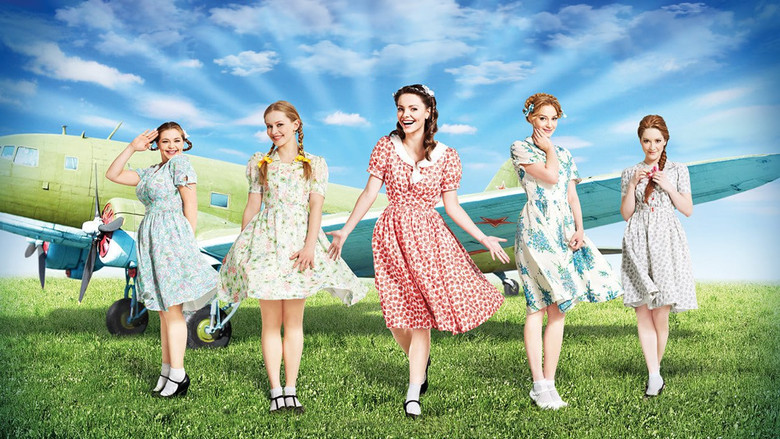
The answer, of course, is everything. Lesha’s mission quickly spirals into a farce when his comrades catch wind of the plan and demand he bring back brides for them as well. Suddenly, he’s not just impersonating one man—he’s got to marry off four of his friends, all in the span of a single day, in a village where the war’s scars are still fresh.
The synopsis alone reads like a setup for a Soviet-era Hangover, but the execution is where Five Brides reveals its uneven charm. The series leans heavily into the contrast between the grim reality of postwar life and the almost manic energy of its characters’ schemes. It’s a tonal tightrope, and Oganesyan doesn’t always stick the landing.
But when it works, it’s because the comedy isn’t just slapstick or one-liners—it’s rooted in the desperation of men who’ve spent years staring death in the face and now just want something resembling normalcy.
The cast, at least, seems game for the ride. Danila Kozlovsky, who plays Vadik, has that leading-man quality that’s equal parts roguish and earnest, a combination that serves the role well. He’s the kind of actor who can sell both the swagger of a wartime hero and the vulnerability of a man terrified of losing the one good thing he’s managed to hold onto.
Artur Smolyaninov, as Lesha, is the real standout here. His performance is all nervous energy, a man who’s in over his head but too loyal (or too stubborn) to back out. There’s a moment early on where he’s trying to explain the plan to the other pilots, his hands fluttering like he’s conducting an orchestra of his own impending disaster.
It’s the kind of physical comedy that doesn’t rely on exaggerated mugging—just a man unraveling in real time.
That said, Five Brides struggles with pacing. The first episode sets up the premise with a certain giddy momentum, but the series never quite finds a rhythm after that. Some scenes drag, particularly those that lean too heavily into romantic subplots that feel obligatory rather than organic.
The humor, too, is hit-or-miss. There are moments where the comedy lands with a sharp, satirical edge—like when Lesha tries to juggle the expectations of four different brides, each with their own ideas of what their future husband should be like. But other times, it feels like the series is trying too hard to force the laughs, especially in scenes where the jokes rely on broad stereotypes or repetitive gags.
(How many times can a character get caught in a lie before it stops being funny? Fewer than Five Brides seems to think.)
What’s most interesting about the series, though, isn’t its jokes but its setting. The immediate postwar period is a fascinating limbo—technically, the war is over, but the world hasn’t yet figured out what comes next. The series captures that disorientation in small, telling details: the way the pilots still flinch at loud noises, the way the village women eye them with a mix of gratitude and wariness, the way the landscape itself feels both scarred and oddly hopeful.
There’s a scene where Lesha walks through the village, and the camera lingers on the bombed-out buildings, the makeshift repairs, the children playing in the rubble. It’s not played for tragedy, but it’s not ignored either. It’s just there, a backdrop to the chaos of the plot, a reminder that these men aren’t just goofing off—they’re trying to reclaim something in a world that’s still broken.
The series’ biggest flaw, perhaps, is that it never quite decides what it wants to be. Is it a farce about the absurdity of bureaucracy and war? A romantic comedy about love in the most unlikely circumstances?
A character study of men trying to outrun their trauma? It touches on all of these, but never commits to any of them fully. The result is a show that’s occasionally hilarious, often uneven, and ultimately more interesting for what it attempts than for what it achieves.
That said, I can’t entirely dismiss it. There’s something endearing about its willingness to embrace the ridiculous, especially in a setting that’s usually reserved for solemnity. And while the series doesn’t always stick the landing, the moments where it does—where the humor and the pathos collide—are worth the missteps.
It’s the kind of show that feels like it was made by people who were having fun, even if that fun doesn’t always translate to the screen. (Or, in my case, to the subtitles. The English translations of the dialogue are serviceable but occasionally clunky, which doesn’t help the comedic timing.)
Rotten Tomatoes lists Five Brides but offers no critic scores or reviews, a reminder of how little attention the series has received outside of Russia. That’s a shame, not because it’s a lost masterpiece, but because it’s a curious little artifact—a comedy that dares to find laughter in the aftermath of war, even if it doesn’t always know what to do with that laughter once it’s found.
It’s flawed, uneven, and occasionally frustrating. But it’s also, in its own way, kind of wonderful. And in a landscape where so many comedies feel safe and sanitized, that’s something.
"A lighthearted comedy with charming moments that struggles to stand out because of thin storytelling."
The series has a pleasant comedic tone and occasional spark from the ensemble, particularly the leads. Its predictable plot and lack of depth make it underwhelming next to other romantic comedies of its time. Feedback is sparse, which suggests it didn’t leave a strong impression.
Karen Oganesyan’s Five Brides (2012) is one of those rare Russian comedies that managed to blend sharp humor with a star-studded cast, becoming a standout in the director’s filmography. latestnetflix.com's view is that While Oganesyan is better known for dramatic works like I’m Staying and The Ghost, Five Brides marked a playful detour, bringing together some of Russia’s biggest names for a lighthearted romp.But what was the real story behind the cameras?
The series (or film—details are hazy, as the evidence doesn’t clarify its format) assembled an ensemble that read like a who’s who of early 2010s Russian cinema. Danila Kozlovsky, already a heartthrob after Soulless (2012), shared the screen with Elizaveta Boyarskaya, his real-life partner at the time, adding an extra layer of off-screen chemistry. Svetlana Khodchenkova, fresh off her breakout role in Tinker Tailor Soldier Spy (2011), joined the fun, while Artur Smolyaninov and Yulia Peresild rounded out the cast with their signature charisma.
The premise—likely a farcical take on marriage and misadventures—was a departure for Oganesyan, whose previous work leaned into drama and psychological tension. Whether the shift was a creative gamble or a studio-mandated crowd-pleaser remains unclear, but the pairing of Kozlovsky and Khodchenkova in promotional material suggests the project was designed to capitalize on their star power.
With such a stacked cast, rumors of on-set tension were inevitable. Kozlovsky and Boyarskaya’s relationship was a frequent tabloid topic, and their collaboration here fueled speculation about whether their personal dynamics spilled into the production. However, the evidence doesn’t confirm any behind-the-scenes clashes—just the usual buzz that comes with high-profile co-stars.
Oganesyan’s direction, typically more subdued, had to adapt to the comedy’s tone. Whether he embraced the shift or found it challenging isn’t documented, but his ability to corral such a large ensemble without visible friction speaks to his skill as a filmmaker.
Despite its star power, Five Brides never achieved the cultural footprint of Oganesyan’s dramas or Kozlovsky’s later blockbusters. The lack of detailed reviews or retrospectives in the retrieved evidence suggests it was a modest success at best—enjoyed in the moment but not destined for classic status. Clips and trailers, like the English-subtitled version on YouTube, hint at a breezy, perhaps even disposable, comedy.
One theory? The project might have been a passion project for Oganesyan, a palate cleanser between heavier works. Or it could have been a contractual obligation, rushed through production without the depth of his usual storytelling. Without more evidence, it’s hard to say.
Today, Five Brides exists mostly as a curiosity—a footnote in the careers of its A-list cast. Kozlovsky and Khodchenkova’s fans still share clips, but the series (or film) hasn’t inspired the kind of cult following that might prompt a revival. Oganesyan’s filmography, meanwhile, remains dominated by his dramatic works, with Five Brides serving as a rare comedic experiment.
For those who remember it, the project is a time capsule of early 2010s Russian cinema: a star-driven, high-energy romp that prioritized fun over depth. Whether it deserves a second look is up for debate—but with so little evidence to go on, the conversation ends where the trailers do.
Entertainment rumors and trivia aggregated from public reporting. Treat speculation as unverified unless a cited source confirms it.
More titles in the same genres and with the same cast.