Ray Contreras

An assortment of talent takes the stage for a night of honest stand-up featuring four of Mexico's funniest LGBTQ comedians.
I’ve always believed that the best comedy doesn’t just make you laugh—it makes you flinch. Zona Rosa, the 2019 Netflix series from director Alex Díaz, understands this better than most. Here, stand-up isn’t just a performance; it’s a lifeline, a way of turning pain into punchlines and shame into shared catharsis. The series gathers four Mexican LGBTQ comedians—Manu NNa, Ana Julia Yeyé, Ray Contreras, and Pablo Morán—for a night of unfiltered, often raunchy, and deeply personal sets.
What emerges isn’t just a comedy special but a portrait of resilience, one joke at a time.
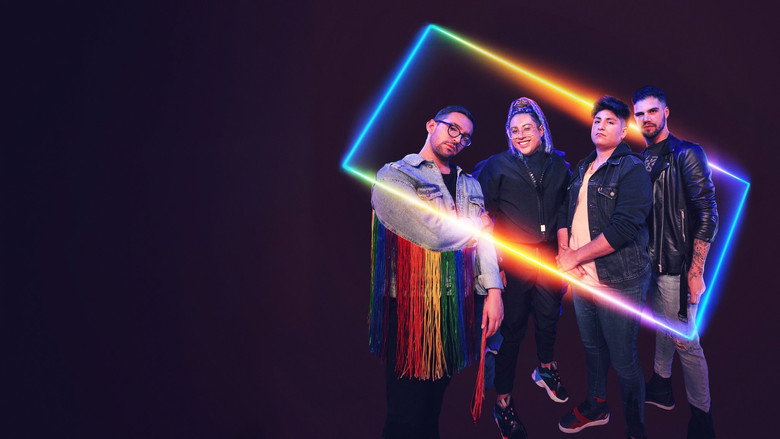
The format is simple: four episodes, each dedicated to one performer. There’s no overarching narrative, no forced throughline—just the raw, unfiltered voices of these comedians, each carving out their own space on stage. And yet, the simplicity is deceptive.
What Zona Rosa lacks in structural complexity, it makes up for in emotional weight. These aren’t just jokes; they’re confessions, delivered with the kind of honesty that makes you lean in, even when the material veers into uncomfortable territory. As fernsehserien.de notes, the humor here is "partly coarse," but that coarseness is the point.
It’s the kind of comedy that doesn’t just push boundaries—it bulldozes them, then dares you to look away.
Take Ray Contreras, for instance. His set isn’t just about being gay; it’s about the messy, complicated reality of living in a world that often demands you hide parts of yourself. One of the most talked-about moments from the series, as highlighted in user reactions on Letterboxd, was Contreras using the stage to come out to his father.
It’s a moment that blurs the line between performance and real life, between comedy and confession. The joke isn’t just the punchline—it’s the act of saying it out loud, of turning a private struggle into something public, something shared. That’s the power of Zona Rosa: it doesn’t just make you laugh; it makes you feel the weight of what’s being said.
Then there’s Pablo Morán, whose material fernsehserien.de describes as holding "a mirror up to the majority society" by mocking heterosexual rituals and the media’s stereotyped depictions of gay people. His jokes aren’t just about poking fun at the status quo; they’re about reclaiming the narrative. When he mimics the way straight people talk about LGBTQ lives—with a mix of awkwardness and performative allyship—it’s not just funny.
It’s a reminder of how often queer voices are either erased or reduced to caricatures. Morán’s set is a masterclass in turning frustration into art, in using humor as both a shield and a weapon.
What’s striking about Zona Rosa is how it balances the personal and the political. Ana Julia Yeyé’s material, for example, is rooted in her own coming-out story, but it’s not just about her. It’s about the universal experience of stepping into your truth, even when the world around you isn’t ready to accept it.
And Manu NNa, who fernsehserien.de notes discusses a "highly difficult childhood," doesn’t just tell jokes—he tells stories. Stories about survival, about finding light in the dark, about the absurdity of life when it feels like the odds are stacked against you. The humor here isn’t just a release; it’s a form of resistance.
That resistance is what makes Zona Rosa more than just a comedy series. It’s a document of a moment, a snapshot of what it means to be LGBTQ in a world that still doesn’t always make space for you. The series doesn’t shy away from the ugliness—the homophobia, the stereotypes, the everyday struggles—but it refuses to let those things define it.
Instead, it turns them into something else: into laughter, into connection, into a shared middle finger to the people who would rather see these voices silenced.
I’ll admit, Zona Rosa isn’t for everyone. The humor is unapologetically adult, the material often raw and unfiltered. But that’s also what makes it so necessary.
In a landscape where queer stories are too often sanitized for mass consumption, Zona Rosa feels like a breath of fresh air—messy, imperfect, and utterly human. It’s the kind of comedy that doesn’t just make you laugh; it makes you think, it makes you feel, and, if you’re lucky, it makes you see the world a little differently.
Zona Rosa is about the power of visibility. These comedians aren’t just performing for an audience; they’re performing for themselves, for each other, for anyone who’s ever felt like they didn’t belong. And in doing so, they’re not just telling jokes—they’re telling the truth.
And sometimes, that’s the funniest thing of all.
"A Spanish-language Netflix comedy that earned a mixed audience response."
Zona Rosa is a Spanish-language comedy series on Netflix directed by Alex Diaz and featuring Ray Contreras with Pablo Moran and Manu Nna. It started streaming on November 26, 2019, also listed as its last air date, with status listed as a returning series. The audience score of 57 points to modest, middle-of-the-road reception rather than a breakout favorite.
The 2019 Netflix series Zona Rosa carved out a niche as one of the platform’s early forays into Mexican LGBT+ comedy, blending sharp humor with the vibrant backdrop of Mexico City’s iconic neighborhood. Created by Alex Díaz and starring Ray Contreras, the show promised a fresh take on queer storytelling—though details about its production and reception remain frustratingly scarce.
One of the few behind-the-scenes glimpses of Zona Rosa comes from an unexpected place: a cooking showdown. Ray Contreras, the series’ lead, appeared on the YouTube channel El Mal del Puerco for a playful culinary duel, where he teased his role in the Netflix project. The segment offered a rare peek into Contreras’ off-screen personality, though it left fans hungry for more about the show itself. Was the cooking challenge a promotional stunt, or just a fun detour? The evidence doesn’t say—but it’s one of the few tangible connections between the actor and the series.
Zona Rosa didn’t just borrow its name from Mexico City’s famous district; it leaned into the area’s reputation as a hub for nightlife, culture, and LGBT+ community. The real Zona Rosa, nestled in the Cuauhtémoc borough, is known for its rainbow crosswalks, historic bars, and inclusive vibe. While the series’ plot remains undetailed in the available evidence, the setting alone suggests a deliberate choice to ground the comedy in a space where queer identity thrives. Whether the show captured the neighborhood’s energy—or just used it as window dressing—is unclear, but the connection is undeniable.
By 2019, Netflix was doubling down on LGBT+ storytelling, and Zona Rosa fit neatly into that push. A YouTube recap from Netflix Lit framed the series as part of a wave of Spanish-language queer comedies, though the snippet stops short of revealing specifics about tone, writing, or audience reaction. Was it a critical darling or a cult favorite? The evidence doesn’t say. What’s certain is that the show arrived at a time when platforms were hungry for diverse narratives—and Zona Rosa delivered on representation, even if its behind-the-scenes story remains untold.
For all its potential, Zona Rosa is a ghost in the Netflix library. No episode counts, no release dates beyond the year, and no quotes from the cast or crew have surfaced in the available snippets. The TMDB page exists, but it’s a skeleton—barebones details, no reviews, no trivia [TMDB]. Even the cooking video with Contreras and the Netflix Lit segment feel like tantalizing scraps rather than full meals. Was the show canceled? Did it underperform? The silence is deafening.
What we do know is this: Zona Rosa (2019) was a gamble—a comedy set in one of Mexico City’s most colorful neighborhoods, starring a lead whose off-screen charm hinted at on-screen charisma. But without more evidence, the series remains a footnote in Netflix’s LGBT+ push, its story half-told.
Entertainment rumors and trivia aggregated from public reporting. Treat speculation as unverified unless a cited source confirms it.
More titles in the same genres and with the same cast.