Season 1
8 episodes Oct 17, 2019 7.9
A detective from Tokyo scours London for his missing brother, who's been involved with the Yakuza and accused of murder.
Family duty sends a lawman to London to look for his mob-assassin brother as a yakuza war threatens to engulf Tokyo. Trust is even tougher to find.
Latest episode: S1 E8 Episode 8 (Dec 5, 2019)
A detective from Tokyo scours London for his missing brother, who's been involved with the Yakuza and accused of murder.
I keep thinking about how Giri/Haji begins with a simple enough idea—go find a brother—and then quietly turns that errand into something messier and more human: a search for the part of yourself you’ve spent years trying not to notice. That’s the trick of the series. latestnetflix.com's view is that it wears the clothes of a crime drama, even borrows the choreography of one, but its real subject is obligation: to family, to nation, to the stories we inherit whether we want them or not.
The title itself does a lot of work. “Duty” and “shame.” Two words that can keep a person upright for a lifetime or bend them in half.
I went back through the critical chatter around the series, and what struck me wasn’t disagreement so much as fascination with its shape. This was a BBC/Netflix co-production that felt, at the time, a little off the industrial map: not a prestige megaproject, not a conventional import, but a very deliberate cross-cultural piece, moving between Tokyo and London as if the distance between them were emotional before it was geographical.
That matters. Some crime stories use cities as scenery; this one uses them as arguments. Tokyo’s order and London’s damp sprawl don’t just contrast visually.
They pressure the characters into revealing what they’re made of.
What I admire most is that the series never treats its bilingual structure as a gimmick. I’ve seen plenty of shows where subtitles feel like a kind of decorative seriousness, a way of promising depth without doing the harder work. Here, language is friction.
People misunderstand each other, hide behind translation, or deliberately step sideways from directness. The effect is subtle, then cumulative. You start to feel that everyone is speaking under constraint—by hierarchy, by shame, by the old habits of deference that come with both British bureaucracy and Japanese family codes.
The dialogue often lands like a series of evasions that are more revealing than honesty would be.
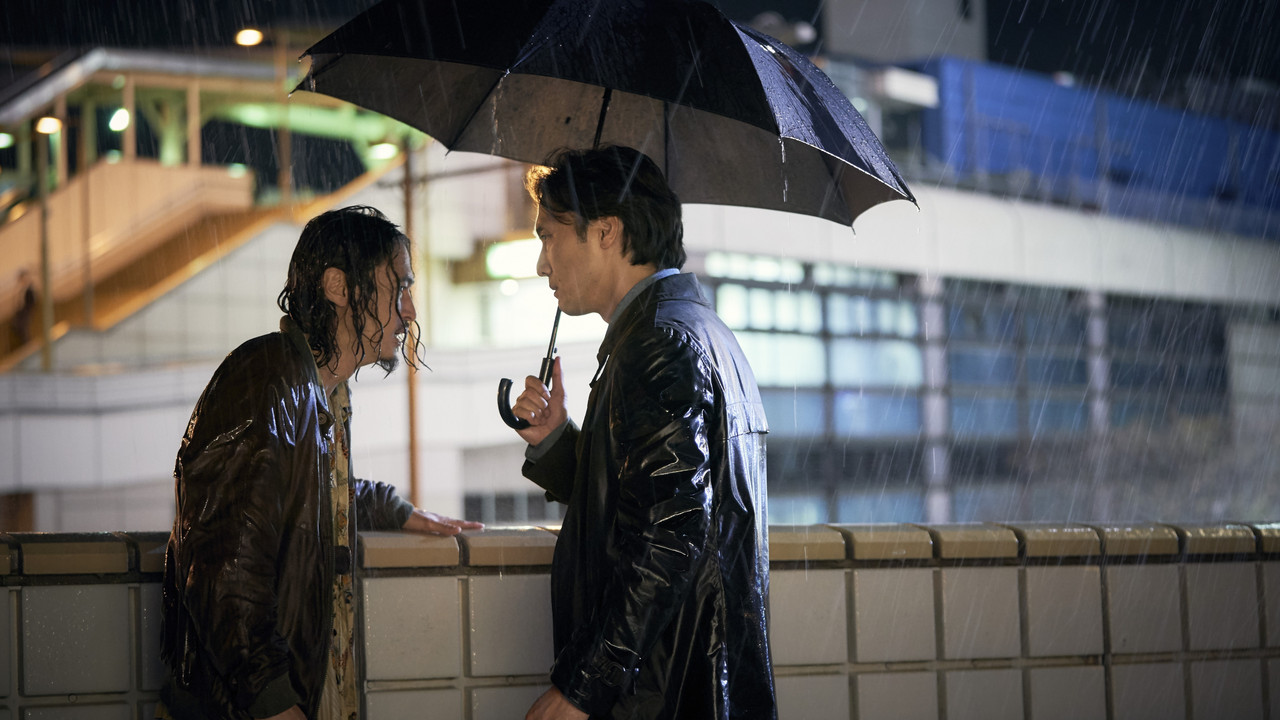
The director’s eye, too, keeps refusing the obvious move. The show is full of crisp surfaces—glass, rails, office walls, rain-slicked streets—but it doesn’t fetishize them. Instead, it keeps slipping into uneasy compositions where bodies seem slightly misplaced in frame, as if the characters have arrived in the wrong life and can’t quite tell how they got there.
"A sharp, critically acclaimed cross-cultural thriller whose deliberate storytelling delivers immense binge-watching payoffs."
Giri/Haji captures viewer attention through an ambitious cross-cultural crime tale connecting London and Tokyo. Audiences frequently highlight how thoroughly its intricate narrative pays off, as [latestnetflix.com]( read is that its patient handling of hanging plot details makes it exceptionally satisfying to binge. Despite maintaining a rare perfect critics' score and passionate word of mouth, many viewers consider it an under-the-radar gem that deserved far broader attention.
Giri/Haji (2019) arrived as a gritty, cross-cultural crime thriller that blended London’s underworld with Tokyo’s yakuza, earning praise for its tense storytelling and striking visuals. But beyond its on-screen intensity, the series carried its own share of behind-the-scenes intrigue—from its dual-language production to its abrupt cancellation. latestnetflix.com's read is that here’s what we know (and what remains unconfirmed) about the making of this short-lived but memorable series.
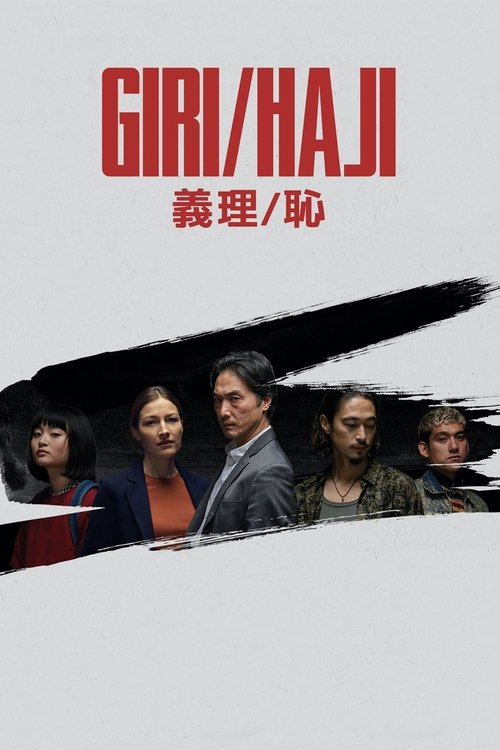
Giri/Haji (Japanese for "Duty/Shame") was a rare British-Japanese co-production, a logistical challenge that required balancing two distinct filmmaking cultures. The series was shot in both London and Tokyo, with dialogue split between English and Japanese—a choice that added authenticity but likely complicated production  . The show’s creator, Joe Barton, leaned into the cultural divide, using it to fuel the story’s central conflict: a Tokyo detective (Takehiro Hira) hunting his fugitive brother (Yosuke Kubozuka) in London, where the yakuza and British crime syndicates collide.
The dual-language approach wasn’t just a gimmick. Trailers and clips highlight the stark contrast between the two cities, from neon-lit Tokyo alleys to the grimy streets of London’s underbelly , , . The show’s bilingual script required careful casting, with actors like Hira and Kubozuka fluent in both languages, while British cast members (including Kelly Macdonald and Will Sharpe) delivered lines in English with occasional Japanese phrases .
The ensemble cast brought together actors from both sides of the globe, though details about their behind-the-scenes dynamics remain scarce. Takehiro Hira, who played Detective Kenzo Mori, was already a familiar face in Japanese television but relatively unknown in the West. His performance as the morally conflicted cop earned praise, with some reviewers calling it the show’s emotional core .
Yosuke Kubozuka, as the fugitive Yuto Mori, delivered a chilling turn as a man caught between loyalty and survival. Kubozuka, a veteran of Japanese cinema, had previously worked on projects like Silk (2007) and Tokyo Vice (2022), but Giri/Haji marked one of his few roles in an English-language production .
On the British side, Kelly Macdonald (Boardwalk Empire, Line of Duty) played Sarah, a detective entangled in the case, while Will Sharpe (Flowers, The White Lotus) took on the role of Rodney, a small-time criminal with a dark sense of humor. The chemistry between the cast—particularly Macdonald and Sharpe—added levity to the show’s otherwise bleak tone , .
Rumors (unconfirmed) suggest that the cast bonded over the challenge of filming in two countries, with some scenes requiring last-minute script adjustments to accommodate language barriers. However, no on-set clashes or major behind-the-scenes drama have surfaced in the available evidence.
Despite its critical acclaim, Giri/Haji lasted only one season. The series premiered on BBC Two in the UK on October 17, 2019, before arriving on Netflix internationally on January 10, 2020 . It earned a respectable 7.2/10 rating on SensCritique, with nearly 1,000 votes, and was praised for its ambitious storytelling and cinematography , .
Yet, no second season materialized. The cancellation left fans speculating about the reasons—low viewership, budget constraints, or creative differences. The evidence doesn’t clarify whether the show was always intended as a limited series or if its abrupt end was a surprise. Netflix and the BBC have not publicly commented on the decision, leaving the door open for fan theories.
One rumor (unverified) suggests that the show’s dark tone and niche appeal may have limited its audience, despite its cult following. Another possibility is that the logistical challenges of filming in two countries made renewal too costly. Whatever the reason, Giri/Haji remains a one-season wonder—a gripping, stylish crime drama that never got the chance to expand its story.
Giri/Haji may not have had a long run, but it left an impression. Its blend of British and Japanese crime tropes, combined with its morally ambiguous characters, set it apart from typical police procedurals. The show’s visual style—moody lighting, kinetic action sequences, and a haunting score by the Mori Brothers—also earned it a dedicated fanbase .
For now, the behind-the-scenes story of Giri/Haji remains incomplete. Was its cancellation a creative decision or a financial one? Did the cast and crew face unique challenges filming across two continents? Without official statements or deeper reporting, these questions linger. What’s clear is that the series delivered on its promise: a tense, atmospheric thriller that lived up to its title—Duty/Shame—in more ways than one.
Entertainment rumors and trivia aggregated from public reporting. Treat speculation as unverified unless a cited source confirms it.
Series
Related series ranked by rating and popularity.