
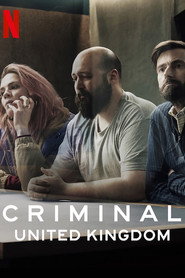
Season 1
3 episodes Sep 20, 2019 7.7
Within the walls of an interrogation room and with time running out, London investigators go after three suspects, each accused of a grievous crime.
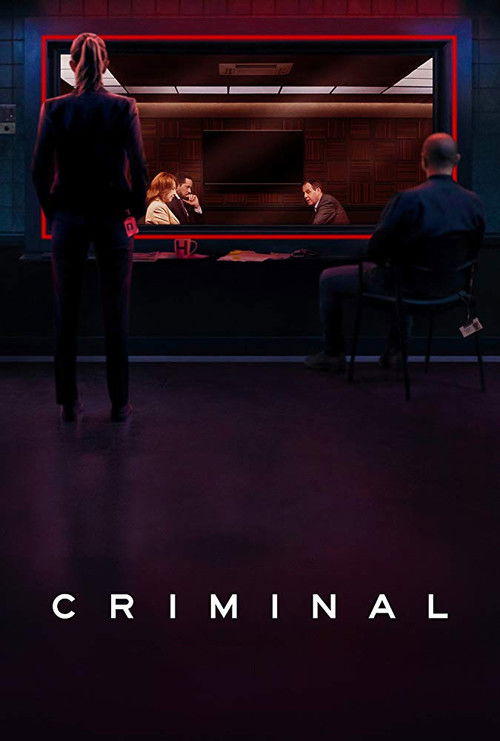
“Every suspect has their story.”
Within the walls of an interrogation room, London investigators question suspects accused of grievous crimes until the truth comes to light.
Latest episode: S2 E4 Sandeep (Sep 16, 2020)
Within the walls of an interrogation room and with time running out, London investigators go after three suspects, each accused of a grievous crime.
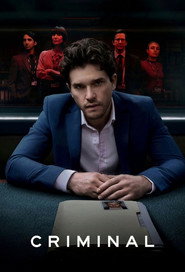
latestnetflix.com's view is that what lingers in Criminal: UK isn’t the crimes, exactly.It’s the furniture. The table.
The light that never quite flatters anybody. The way a glass of water sits untouched while two people try to outlast each other with silence. I keep coming back to the show’s most basic idea: that interrogation is theater without scenery, a duel staged in a room designed to make lying feel physically exhausting.
This British version of Criminal — part of Netflix’s international police anthology, and limited here to two seasons across seven episodes — takes that premise and strips it down even further. No chases. No digressions.
No weather, unless you count the fluorescent kind.
What I find interesting is how closely the series understands that an interview room is a moral instrument. It doesn’t just ask whether someone did something terrible; it asks what kind of person can live with that knowledge, and what kind of institution thinks truth is best extracted under strip lights. The form is the point.
Each episode is built like a chess match in a phone booth, and if that sounds cold, it is — but not in a dead way. More like a pressure cooker where every hiss means somebody’s about to crack.
The series arrives with a very particular kind of pedigree. By 2019, Criminal had already become an anthology concept with versions made for different countries, all of them sharing the same locked-room grammar. The UK installment, created by George Kay and Jim Field Smith, fits neatly into Kay’s larger fascination with systems — police, intelligence, family, bureaucracy — and the strange improvisations people make inside them.
If you know his work on Lupin or Hijack, you’ll recognize the pleasure he takes in procedural machinery, though here the machinery is smaller, meaner, and more intimate. There’s no globe-spanning intrigue to distract from the basic fact that a conversation can be a form of coercion.
That’s the central discourse around the series, I think: is this a drama about interrogation, or about performance itself? The show has been talked about as a tight, stripped-back experiment — almost a stage play with cameras — and that’s not wrong, though it undersells the movement inside the frame. Because the room is so restricted, every actor has to invent a life with posture, breath, and little tactical silences.
A raised eyebrow becomes a legal strategy. A shift in the chair means more than pages of exposition in some other series. There’s a pleasure in watching a show trust that much in faces.
"A taut, stripped-down interrogation drama that trades traditional police action for claustrophobic psychological tension and sharp dialogue."
Criminal: UK strips the conventional crime procedural down to its bare essentials, confining the drama almost entirely to the high-stakes pressure cooker of a police interrogation suite. Viewers celebrate the series for its disciplined focus, where narrative tension relies entirely on subtle psychological shifts, precise writing, and commanding performances during cat-and-mouse interviews. While some viewers feel the clinical staging leaves the overall experience slightly detached or uneven, [latestnetflix.com]( read is that the minimalist format delivers a uniquely gripping showcase of pure acting and tightly coiled suspense.
Netflix’s Criminal: UK (2019) carved out a niche in the crowded crime genre by stripping away car chases and shootouts, instead locking viewers inside a single interrogation room. The series, part of Netflix’s Criminal anthology franchise, delivered tension through razor-sharp dialogue and psychological cat-and-mouse games between detectives and suspects. latestnetflix.com's take is that but behind the claustrophobic setting and intense performances, the show’s production had its own share of challenges—and a few surprises.
Criminal: UK was one of four country-specific series under the Criminal banner, each set in a different nation (France, Germany, Spain, and the UK) but sharing the same high-concept premise: every episode unfolds entirely within a police interrogation room  . The UK installment starred Katherine Kelly (Happy Valley), Lee Ingleby (Line of Duty), Rochenda Sandall (Line of Duty), and Shubham Saraf (The Serpent) as a team of elite interrogators tackling heinous crimes
  .
.
The show’s creators, George Kay and Jim Field Smith, leaned into the constraints of the format, using tight close-ups and minimal cuts to amplify the pressure. Unlike traditional procedurals, Criminal: UK never showed the crimes themselves—only the detectives’ attempts to unravel them through questioning . This approach drew comparisons to Line of Duty, another British hit that thrived on interrogation scenes, and even shared two cast members (Sandall and Ingleby) .
Katherine Kelly, best known for her role as a no-nonsense sergeant in Happy Valley, led the ensemble as Detective Chief Inspector Natalie Hobbs. Her character’s steely demeanor clashed with Lee Ingleby’s more empathetic Detective Inspector Tony Myerscough, creating a dynamic that anchored the series . Rochenda Sandall and Shubham Saraf rounded out the team, though their roles were less prominent in the limited episode count.
The standout episode, "Edgar," saw the team interrogating a doctor (played by David Tennant in a guest role) suspected of murdering his stepdaughter. The episode’s relentless pacing and Tennant’s chilling performance earned it praise as a highlight of the first season . However, the show’s short run—just four episodes across two seasons—left some viewers wanting more .
Despite its critical acclaim, Criminal: UK was canceled after two seasons. The Criminal franchise itself was an experiment for Netflix, and while the UK version was well-received, the streaming giant opted not to renew it . Rumors suggested that the anthology format, which required fresh stories and casts for each country, may have been too costly to sustain long-term . However, Netflix never officially confirmed the reason for the cancellation.
Criminal: UK may have been brief, but it proved that a crime drama could thrive without action sequences or sprawling sets. Its focus on psychological tension and character-driven storytelling left an impression, even if the series never got the chance to fully explore its potential. For fans of Line of Duty or The Night Of, it remains a hidden gem—one that delivered high-stakes drama in the most confined of spaces.
Entertainment rumors and trivia aggregated from public reporting. Treat speculation as unverified unless a cited source confirms it.