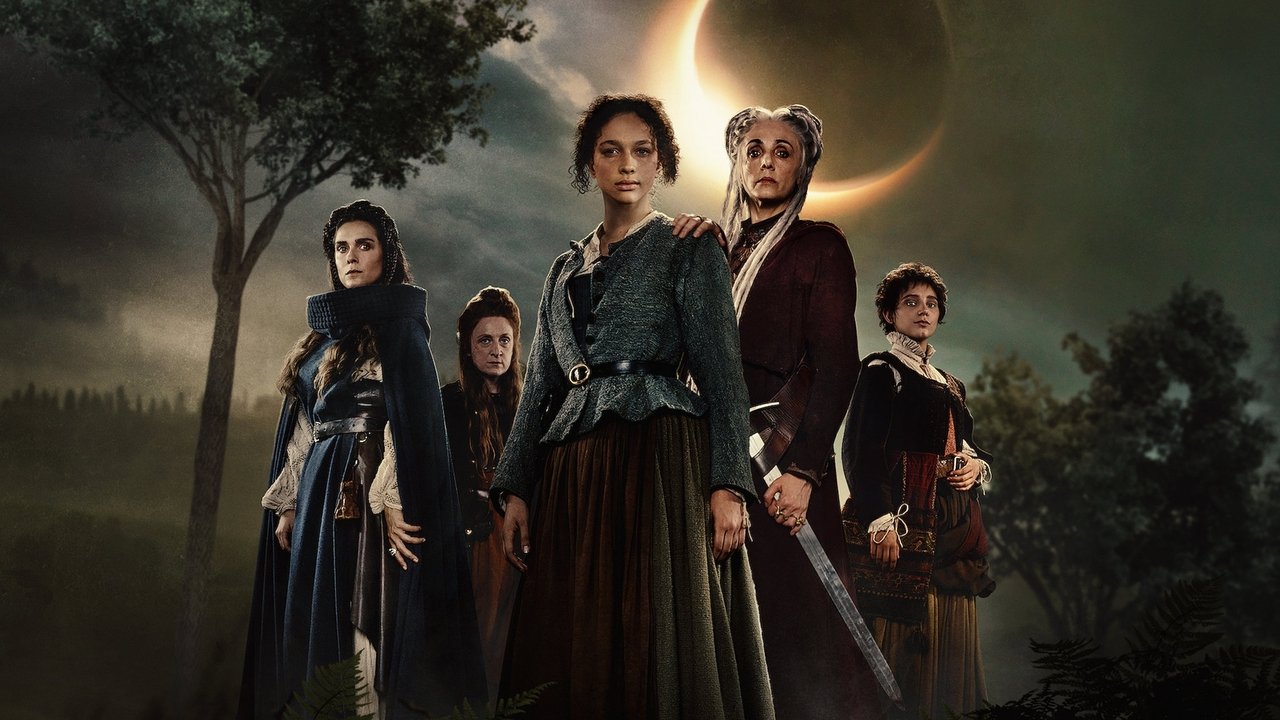

Antonia Fotaras
Ade
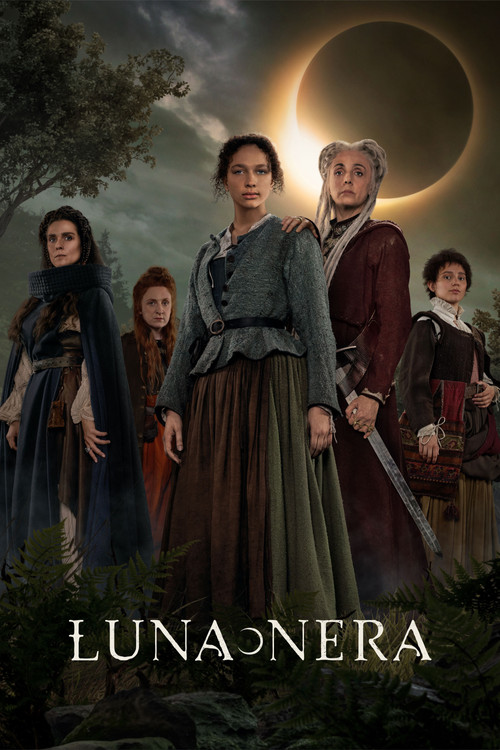
In 17th-century Italy, a teenager learns about her destiny among a family of witches, just as her boyfriend's father hunts her down for witchcraft.
I kept waiting for Luna Nera to catch fire. Not in the literal sense—though, given the subject matter, that would’ve been thematically on-brand—but in the way a story does when its pieces finally click into place, when the machinery of plot and character hums just loud enough to drown out the creaks of its own construction. It never quite happens.
And yet. There’s something stubbornly compelling about this Italian fantasy series, something that lingers like the scent of burnt herbs after the ritual is over. Maybe it’s the sheer audacity of its ambition: a feminist witch-hunt revenge fantasy set in 17th-century Italy, helmed almost entirely by women, and dropped onto Netflix like a gauntlet thrown at the feet of every male-dominated period drama that came before it.
Or maybe it’s the way it fumbles so earnestly, like a coven of novices trying to summon a storm they’re not yet powerful enough to control. The premise is ripe with potential. In a rural Italian village, young Ade (Antonia Fotaras) discovers she’s a Benandante—a witch, though the word is never spoken with anything but fear.
Her boyfriend’s father, a zealous witch hunter, is closing in, and the women of her family are being picked off one by one. The show’s central tension is a familiar one: the clash between superstition and science, faith and reason, the old ways and the new. But Luna Nera isn’t content to let the allegory sit quietly in the background.
It wants to be a full-throated reclamation of female power, a story about women fighting back against the men who would burn them for the crime of existing. That’s a worthy goal. The problem is that the show often feels like it’s trying to outrun its own script.
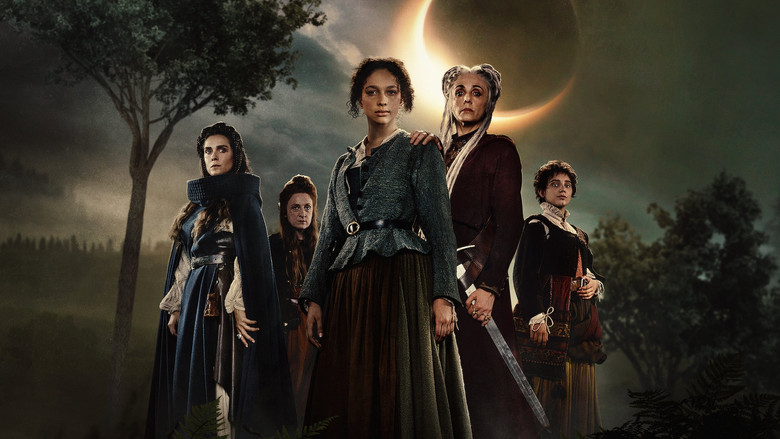
The first episode throws us into the deep end. Ade’s mother is dragged from their home by the village’s witch hunters, her screams echoing through the cobblestone streets. The camera lingers on the horror of it—the way the crowd watches, some with satisfaction, others with quiet unease.
It’s a strong opening, visceral and immediate. But then the show stumbles. The Benandanti are introduced in a flurry of exposition, their lore explained in hurried dialogue that feels more like a Wikipedia summary than organic world-building.
There’s a prophecy, a chosen one, a secret lineage—all the usual fantasy trappings, but delivered with the subtlety of a sledgehammer. By the time Ade meets her grandmother Tebe (Manuela Mandracchia), a woman who’s spent decades in hiding, I found myself wishing the show would slow down long enough to let the weight of these revelations sink in. That’s the paradox of Luna Nera: it’s a show that wants to be about the quiet, creeping terror of persecution, but it’s also a show that can’t resist the pull of spectacle.
The witches here aren’t the warty, cackling hags of fairy tales; they’re women who heal, who protect, who wield their power with a mix of reverence and fear. The Benandanti’s rituals are shot with a kind of pagan beauty—candles flickering in the dark, bodies moving in unison, the camera lingering on the textures of their robes, the dirt under their fingernails. There’s a scene in the second episode where Ade and her coven perform a ritual in a moonlit forest, their voices rising in a chant that feels ancient and primal.
"A visually striking but uneven historical fantasy with strong performances that struggles to balance its ambitious themes and pacing."
The series draws praise for its atmospheric setting and the intensity of its lead performances, particularly in exploring witchcraft and persecution in 17th-century Italy. latestnetflix.com's view is that however, many find the storytelling inconsistent, with a slow start and underdeveloped character arcs that leave some plot threads unresolved or unsatisfying.
Luna Nera (2020) arrived on Netflix as a moody, period fantasy series set in 17th-century Italy, where a coven of women accused of witchcraft fights back against oppression. The show’s lush visuals and feminist themes drew attention, but what about the making of it? latestnetflix.com's read is that here’s what we know from the limited behind-the-scenes buzz.
The ensemble cast—led by Antonia Fotaras (Ade), Manuela Mandracchia (Antonia), and Federica Fracassi (Margherita)—has spoken about the show’s themes of female solidarity. In interviews, the actresses emphasized the relevance of Luna Nera’s story today. Fotaras and Mandracchia, in particular, discussed how the series reframes witchcraft as a symbol of resistance rather than evil . While no direct quotes are available from the snippets, the tone suggests the cast embraced the feminist angle, with Mandracchia hinting at the emotional weight of playing a woman persecuted for her beliefs .
The series’ production design and costumes were critical to its eerie, historical atmosphere. Clips from behind-the-scenes featurettes reveal the meticulous work behind the show’s look. Costume designers and set decorators aimed to blend 17th-century Italian realism with fantastical elements, like occult symbols and muted, earthy tones . The snippets don’t specify exact details, but the focus on authenticity suggests a deliberate effort to ground the supernatural in a tangible past.
The creative team—including the show’s directors, screenwriters, and the book’s original author, Tiziana Triana—also weighed in on the adaptation process. Triana’s novel, Luna Nera: Le città perdute, served as the source material, though the series diverges in some ways (e.g., the protagonist’s name is Adelaide in the book but Ade in the show)  . The snippets don’t clarify how closely the series follows the novel, but the involvement of Triana hints at a collaborative effort to stay true to the spirit of the story.
Luna Nera’s reception was lukewarm, with a 5.2/10 rating on SensCritique based on 265 votes . Reviewers on YouTube echoed this sentiment, praising the visuals and themes but criticizing pacing and character development . The snippets don’t confirm whether the series was canceled or simply concluded after one season, but the lack of follow-up suggests it may not have found a large enough audience to warrant renewal.
Rumors about a second season have circulated, but there’s no official confirmation. The show’s Netflix page and TMDB listing don’t indicate plans for continuation, leaving fans in the dark [TMDB]. If Luna Nera does return, it would likely need to address the criticisms of its first season—particularly its slow burn and underdeveloped side characters.
Luna Nera stands out as a visually rich, thematically bold series, but its behind-the-scenes story is still shrouded in mystery. The cast’s passion for the project is evident, and the creative team’s attention to detail is clear from the production featurettes. However, with thin evidence on its future and mixed reviews, the show’s legacy remains uncertain. For now, it’s a fascinating—if flawed—experiment in blending historical drama with fantasy.
Entertainment rumors and trivia aggregated from public reporting. Treat speculation as unverified unless a cited source confirms it.
Series
Related series ranked by rating and popularity.