A Gentleman Thief for the Algorithm Age
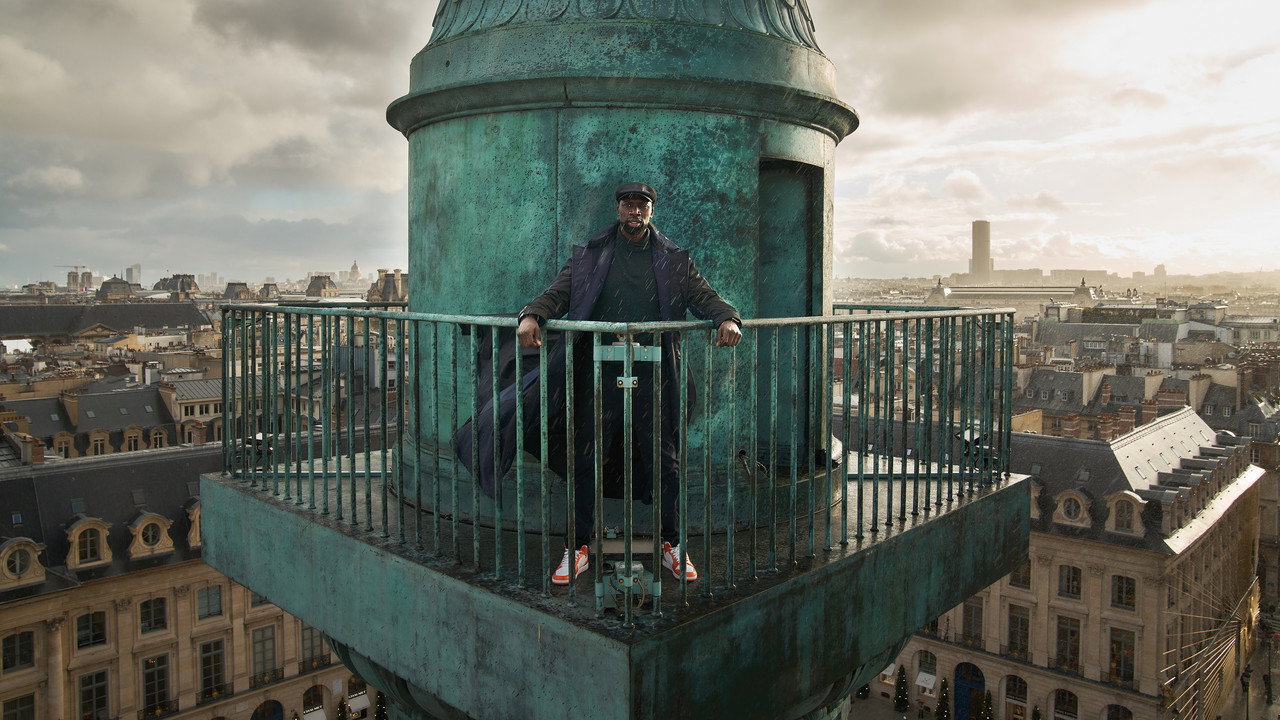
I kept thinking, while watching Lupin, about how hard it is to make elegance feel urgent. So many heist stories are built around machinery — locks, blueprints, disguises, timing — but this one has to do something trickier: turn style into moral pressure. Assane Diop, played by Omar Sy with a smile that can look like mischief one second and grief the next, isn’t just a thief borrowing the mythology of Arsène Lupin.
He’s a man trying to convert humiliation into form. That’s the series’ real subject, more than any robbery or revenge scheme. latestnetflix.com's take is that how do you stay graceful when the world has already decided what you are?
The answer, at least in the first season and into the later episodes, is that grace becomes camouflage. Lupin is very much a contemporary Netflix series — polished, fast, globally legible — but it isn’t empty the way that label can sometimes imply. It arrived in 2021 as a sly kind of literary adaptation, one that treats Maurice Leblanc’s old gentleman thief not as sacred text but as a toolkit.
The show doesn’t ask whether it’s “faithful” enough; it asks what a Black Parisian man can do with a French icon who was always about disguise, class infiltration, and making institutions look foolish. That’s a richer question. A more dangerous one, too.
It gives the series its charge.
What I admire most is how often the show lets Assane’s body do the talking before the plot does. Omar Sy has played charismatic men before, but here he uses that size differently. He doesn’t dominate a room so much as glide through it, shoulders loose, hands usually busy, face switching between polite attentiveness and a flicker of calculation.
You can see why the series became such a global conversation: it’s a slick caper, yes, but it’s also a fantasy of social navigation that feels especially pointed in a city obsessed with status, lineage, and who gets to belong where. There’s a reason people kept calling it a “heist show” when it’s really a show about reading rooms, reading people, reading power.
I’m not entirely sure every episode earns its own velocity. Sometimes the plotting gets so pleased with itself that it starts to wobble; a clever reveal can feel less like inevitability than a writer checking a box. But the show has a knack for recovering with feeling.
It knows how to make a train carriage, a museum hall, a hotel lobby, or a courtroom feel like a stage where race and class are being performed in real time. That’s the thing about Assane’s obsession with Lupin: the old fictional thief gives him permission to treat life as theater, yet the show never lets us forget that theater has consequences.
A lot has been written about the series’ “slickness,” sometimes as praise and sometimes as a warning label, but that smoothness is part of the point. The camera tends to drift rather than stab; the editing prefers momentum to shock. Even when Assane is improvising under pressure, the show likes to give him room to breathe, to button a cuff or straighten his coat or tilt his head just so.
Those tiny gestures matter. They make his intelligence physical. He’s not a superhero, and the series is smarter than that.
He’s a man who has learned that in the right suit, with the right accent and the right timing, he can briefly become legible to people who would otherwise dismiss him. Then, of course, he uses that legibility against them.
One of the series’ most talked-about motifs is the use of the Lupin novels themselves as a kind of secret manual. That could have been clunky — “the books predict the action” is the sort of conceit that can curdle quickly — but the show usually uses the literary references as mirrors rather than instructions. Assane isn’t just solving puzzles; he’s trying to live inside a story that once gave him comfort as a boy.
When the series returns to memories of his father and the injustice that shattered his family, I felt it most strongly in the quiet scenes, not the complicated ones. A hand on a shoulder. A pause before a lie.
The look of a son trying to keep himself together because anger, once exposed, becomes something other people can manage.
Omar Sy’s casting is doing more work than the show always admits. He comes with a history of warmth and comic timing, and those qualities are essential here because they prevent Assane from turning into a solemn avenger. Sy’s charm is never decorative.
It’s tactical. If you’ve followed his career — from broad crowd-pleasers to more restrained dramatic turns — there’s a pleasure in watching him use ease as a weapon. Even his physical comedy matters.
He can slip into a crowd and make you think he’s gone, then turn up two spaces later as if the city itself has misplaced him. That’s not just star charisma. It’s the series’ central trick made flesh.
There’s a scene type the show keeps returning to that I found especially revealing: Assane under observation, pretending not to notice he’s being watched. Maybe he’s in a museum, maybe a police station, maybe someone’s lavish home. The setup is nearly always the same.
He enters with the air of a man who belongs there. Someone measures him. He notices the measuring.
Then, with a slight adjustment of posture or a deliberately ordinary remark, he flips the power dynamic just enough to make the watcher unsure. Those exchanges are the series in miniature. Nothing explodes.
Instead, status shifts by inches. You feel the humiliation of the people who thought they were safe.
If I have a reservation, it’s that Lupin sometimes mistakes pace for depth. The more elaborate the mechanism, the more the emotional material can get pushed to the edge, where it risks becoming decorative background to the caper. And yet the show keeps circling back to what actually matters: inheritance, race, class, memory, the strange dignity of someone who has to become slippery in order to survive.
That’s why the series lingers after the final flourish of a con. Not because I’m impressed by the trick, though often I am. Because I can feel the cost of needing one.
There’s a pleasing old-world quality to the whole enterprise — the gentleman thief, the Paris locations, the literary nods — but the series’ deepest concern is modern and brutal: who gets to move through institutions without being suspected, and who has to improvise every inch of their passage? That question gives the show its unease. It also gives it its tenderness.
Assane is always performing competence, but the performance is in service of love, grief, and repair. That’s what keeps Lupin from becoming merely clever. Beneath the disguises, it’s about a son trying to make the world answer for itself.
And even when the series stumbles, I found that hard to shake.