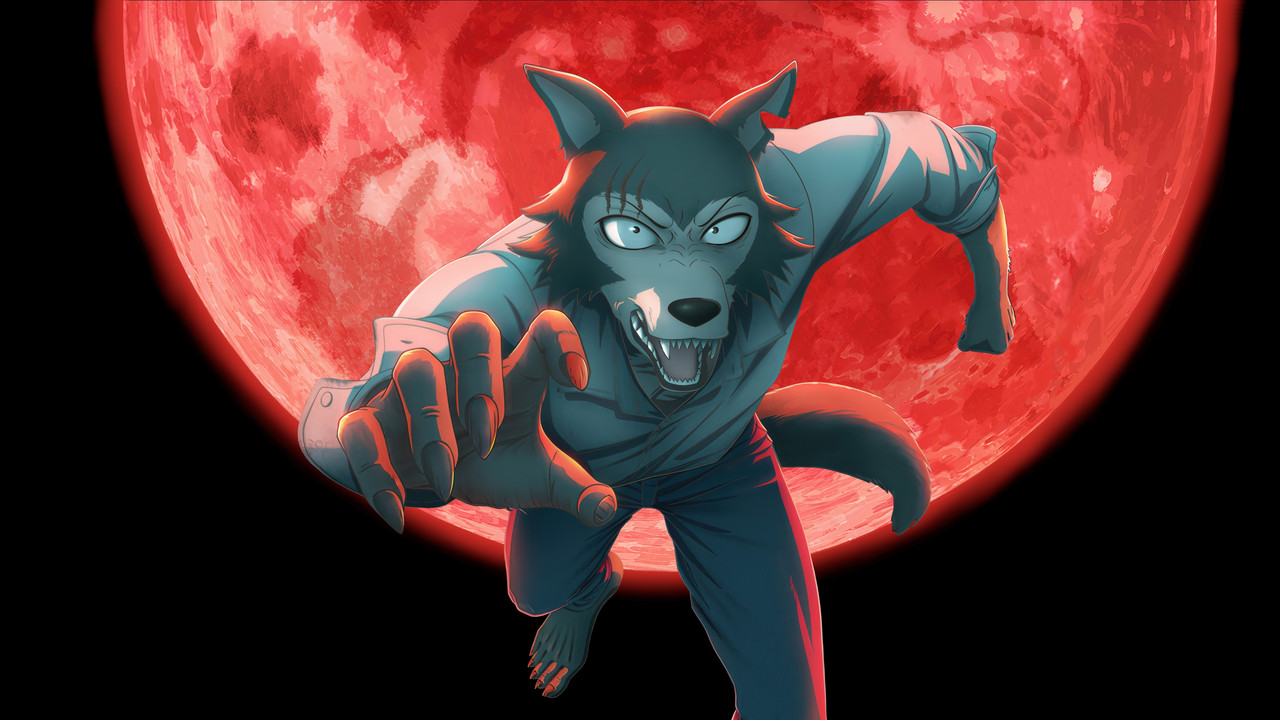
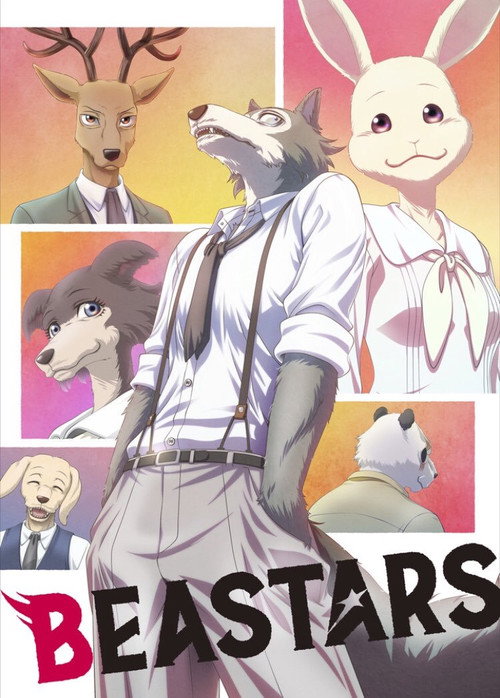
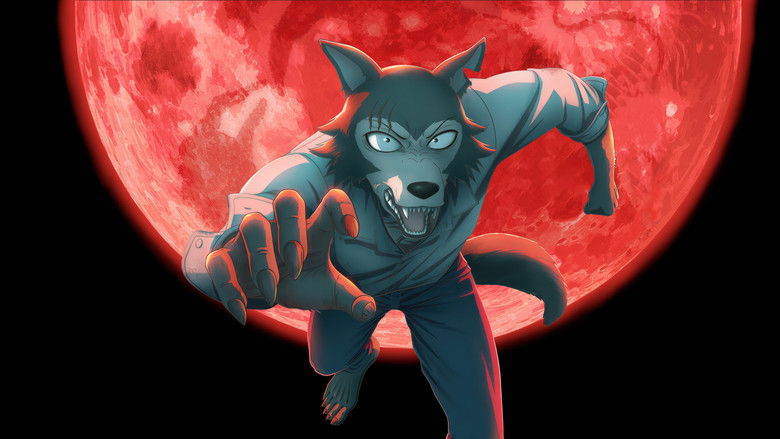
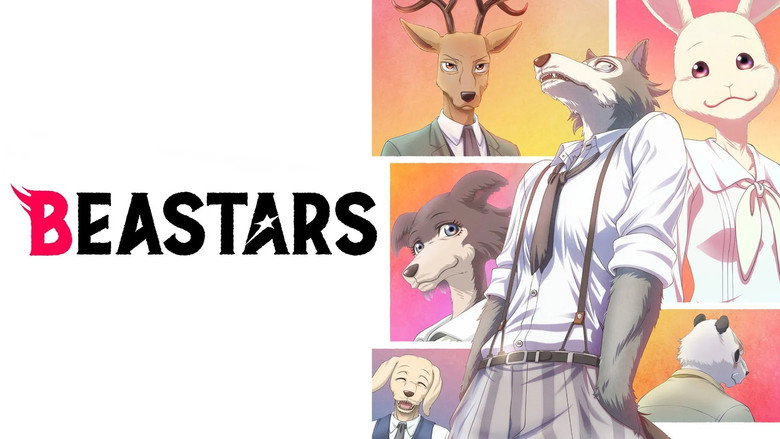
In a civilized society of anthropomorphic animals, an uneasy tension exists between carnivores and herbivores. At Cherryton Academy, this mutual distrust peaks after a predation incident results in the death of Tem, an alpaca in the school's drama club. Tem's friend Legoshi, a grey wolf in the stage crew, has been an object of fear for his whole life. In the immediate aftermath of the tragedy, he continues to lay low and hide his traits, much to the disapproval of Louis, a red deer and the domineering star actor of the drama club.
When Louis sneaks into the auditorium to train Tem's replacement for an upcoming play, he assigns Legoshi to lookout duty. That very night, Legoshi has a fateful encounter with Haru, a white dwarf rabbit scorned by her peers. His growing feelings for Haru, complicated by his predatory instincts, force him to confront his own true nature, the circumstances surrounding the death of his friend, and the undercurrent of violence plaguing the world around him.
Season 2
12 episodes Jan 7, 2021 7.1
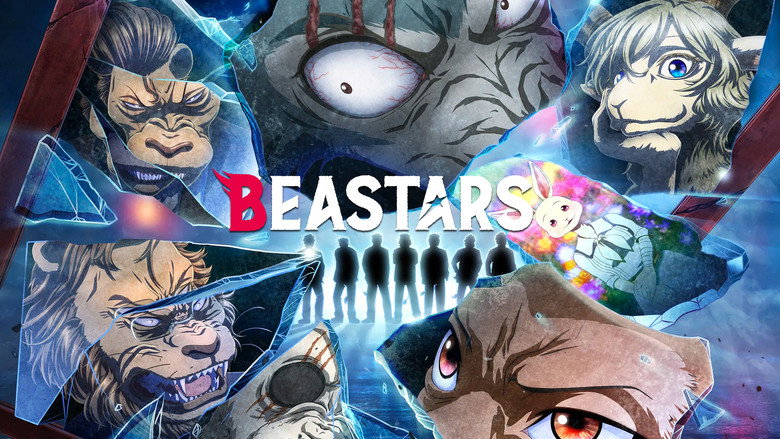
"Beastar"—a title awarded to beasts who prove their excellence through fighting inequality to unite carnivores and herbivores in an anthropomorphic animal society. Cherryton Academy has gone five years without one such leader. However, following the murder of an alpaca within the school boundaries, the growing tension between the different species poses a greater need for a Beastar to ensure peace and harmony.
When Louis, the prime candidate for this prestigious role, rejects the offer and leaves the academy, the student council declares to honor any student who captures the culprit of the aforementioned murder as Beastar. Meanwhile, Legoshi's sense of duty as a strong wolf who must protect the weak pushes him to investigate the incident. To further complicate his life, he struggles to manage his complex feelings for the white rabbit, Haru.
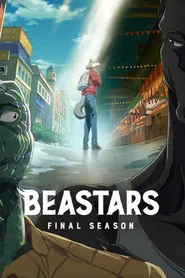
Final Season
24 episodes Dec 5, 2024 7.3
Following the unmasking of the carnivorous murderer, Cherryton Academy introduces a segregation policy to protect herbivores, further fueling public disdain for carnivores. Meanwhile, the black market for meat thrives like never before, and the Shishi-gumi faces upheaval after losing their leader. A shadowy, violent figure emerges, intending to seize control of the Shishi-gumi with the introduction of an appetizing energy drink for carnivores.
Having left school, Legoshi, a gentle gray wolf at odds with his predatory instincts, attempts to lead an unassuming life; he only uses his innate strength to protect the weak. However, his involvement with the academy's murder investigation draws the attention of the current Beastar—society's leading authority. For the sake of his controversial relationship with white dwarf rabbit Haru, Legoshi clings to his sense of justice, even when he sinks into the chaos caused by rising tensions between carnivores and herbivores.
I keep thinking about the first time Legoshi kills something.
It’s not the murder that opens Beastars—that’s a deer, already dead, already a symbol. No, it’s later, in the quiet of the drama club’s prop room. Legoshi, the towering gray wolf, is alone with a live rabbit.
The camera lingers on his trembling paws, the way his claws flex against the floorboards. The rabbit isn’t afraid. That’s the horror of it.
It hops closer, nuzzles his leg, and Legoshi—gentle, anxious Legoshi—snaps its neck in one convulsive motion. The sound is wet. The camera doesn’t cut away.
What haunts me isn’t the violence. It’s the look on his face afterward: not triumph, not hunger, but something like grief. He’s just proven what he’s always feared—that the beast inside him isn’t a metaphor.
It’s bone and sinew and instinct, and it doesn’t care about his morals, his crush on a dwarf rabbit named Haru, or the fact that he’s spent his whole life trying to be good.
Beastars is an anime about bodies. Not just the fur and fangs, though those are impossible to ignore, but the way bodies betray us, define us, and force us into roles we never asked for. In this world, carnivores and herbivores coexist under a fragile social contract, but the tension is always there—whispered slurs in the hallway, segregated cafeteria tables, the unspoken rule that a wolf shouldn’t walk a rabbit home at night.
It’s Romeo and Juliet with sharper teeth, a high school drama where the star-crossed lovers aren’t just from different families, but different species.
And yet, for all its allegory, Beastars never feels like a lecture. That’s because it understands something fundamental about adolescence: the way your body can feel like a cage. Legoshi wrestles with his predatory nature, with puberty, with desire, and with the terrifying realization that you might not be the person you thought you were.
The show’s genius is in how it maps those universal teenage anxieties onto a world where the stakes are literally life and death. When Legoshi’s classmates whisper that he’s a monster, it’s not just prejudice—it’s a fear rooted in biology. And when Haru, the rabbit, flinches at his touch, it’s not just shyness.
It’s survival.
The series’ most daring move is its refusal to let anyone off the hook. Even the herbivores aren’t innocent. They’re complicit in a system that polices carnivores’ every move, that forces them to wear muzzles in public, that treats them as ticking time bombs.
The show’s social commentary is sharpest when it’s messy—when it acknowledges that oppression doesn’t make the oppressed saints, and that fear, even justified fear, can curdle into cruelty. Take Louis, the deer who’s Legoshi’s rival and, later, something more complicated. He’s a victim of the system, yes, but he’s also a manipulator, a survivor who’s learned to weaponize his own vulnerability.
His arc displays moral ambiguity, a character who’s both sympathetic and infuriating, often in the same scene.
That complexity extends to the show’s treatment of romance. Beastars is a love story that grapples with the power imbalances inherent in predator-prey relationships. Legoshi and Haru’s dynamic is charged with a tension that’s equal parts erotic and existential. When Haru admits she’s afraid of him, it’s not just a rejection—it’s a recognition of the very real danger he poses.
And yet, the show never lets us forget that Haru is more than just a victim. She’s a character with her own agency, her own desires, and her own capacity for cruelty. Their relationship is messy, sometimes uncomfortable, and all the more compelling for it.
The show’s visual language is just as deliberate. The animation is a mix of 2D and CGI, a choice that’s been divisive among fans. The CGI characters can look stiff, especially in action scenes, but there’s something oddly fitting about it.
The uncanny valley effect mirrors the show’s themes—these characters are caught between two worlds, neither fully animal nor fully human. The jazz-infused score, meanwhile, is a revelation. It’s sultry and smoky, the kind of music that makes you feel like you’re eavesdropping on a late-night conversation in a dimly lit bar.
It’s the perfect accompaniment to a show that’s equal parts noir and coming-of-age drama.
But Beastars isn’t without its flaws. The pacing can be uneven, especially in the later seasons, where the show’s ambitions sometimes outstrip its runtime. Subplots are introduced with great fanfare only to fizzle out, and some characters—like the lovable but underutilized Bill the tiger—deserve more screen time.
The tonal whiplash can be jarring, too. One moment, you’re in the middle of a tense psychological drama; the next, you’re watching a heist sequence that feels like it’s been lifted from a completely different show. It’s a sign of the strength of the central characters that the show holds together as well as it does, but there are moments where it feels like it’s trying to be too many things at once.
And then there’s the sex. Beastars is unapologetically horny, a show that understands that teenagers—even teenage animals—are obsessed with their bodies and the bodies of others. The sexual tension between Legoshi and Haru is palpable, but the show also isn’t afraid to get explicit. There’s a scene in the second season where Legoshi, in a moment of desperation, eats Haru’s scarf—a bizarre, almost fetishistic act that’s equal parts funny and unsettling.
It’s a show that’s not afraid to lean into the absurdity of its premise, even as it takes its characters’ emotions deadly seriously.
The gossip around Beastars is almost as fascinating as the show itself. There’s the fact that the creator, Paru Itagaki, is the daughter of Baki’s Keisuke Itagaki—a detail she kept secret for years to avoid being overshadowed by her father’s legacy. There’s the drama surrounding Louis’ English voice actor, Griffin Puatu, who was dropped by his agency after defending a fellow voice actor accused of abuse.
And then there’s the endless debate about whether Beastars is a “furry anime,” a question that seems to provoke existential crises in both its fans and its detractors. (For the record: it’s not about furries, but it’s also not not about furries. The show’s genius is in how it uses its premise to explore ideas that are universal, even if the trappings are specific.)
What lingers, though, isn’t the gossip or the controversies. It’s the way Beastars makes you feel. It’s a show that understands the terror and the thrill of growing up, the way your body can feel like both a prison and a promise.
It’s about the stories we tell ourselves to make sense of who we are, and the moments when those stories fall apart. And it’s about the people—no, the animals—who help us put the pieces back together, even if they’re just as broken as we are.
I keep coming back to that moment in the prop room. Legoshi doesn’t eat the rabbit. He doesn’t even want to.
He just stands there, holding its body, his face a mask of horror and shame. It’s a scene that could have been played for shock value, but instead, it’s played for something deeper—a moment of raw, unfiltered humanity. Or, well, wolf-ity.
Beastars is a show that asks big questions: What does it mean to be good? Can we ever truly escape our nature? Is love enough to bridge the gaps between us?
But it’s also a show that understands that those questions don’t have easy answers. Sometimes, the best we can do is keep moving forward, one clumsy, uncertain step at a time. Even if we’re not sure where we’re going.
Even if we’re afraid of what we might do when we get there.
Audience Opinions
Audience 7.6/10
"A bold, emotionally charged predator–prey drama with striking characters and themes, dulled by rushed plotting, tonal whiplash, and polarizing CGI."
Character-focused drama—especially Legoshi’s battle with his own predatory nature and the tense carnivore–herbivore social divide—earns strong praise and keeps the story compelling through several seasons. Stylish jazz-infused music, mature themes, and rich world-building stand out, but uneven pacing, abrupt shifts from school drama to crime-action, undercooked subplots, and a controversial mix of CGI and overt sexual content leave a noticeable share frustrated.
What viewers praise
Strong central protagonistLegoshi’s struggle between instinct, morality, and desire is gripping and emotionally relatable.
Rich social world-buildingCarnivore–herbivore society—segregation, prejudice, class tension—mirrors real-world issues without feeling simplistic.
Impactful music and toneJazz-heavy opening and score are stylish and memorable, heightening tension, romance, and introspective moments.
Mature, complex themesViolence, sexuality, power imbalances, and identity get more seriousness and psychological nuance than typical high school anime.
Engaging character dramaKey relationships and rivalries—Legoshi, Haru, Louis, later Riz—deliver intense emotional payoffs and, for some, compelling queer subtext.
Common complaints
Uneven pacing and structureSeveral arcs, especially toward season finales, feel rushed or poorly foreshadowed—important plotlines and side characters underdeveloped.
Divisive CGI character animation3D style turns off a noticeable portion—clunky, laggy, or visually unappealing despite others finding it distinctive.
Abrupt tonal and genre shiftsJumps from introspective school drama to crime-thriller raids and action-heavy confrontations can feel unrealistic and jarring versus the earlier grounded tone.
Content discomfort and sexualizationTeen animal characters, frequent sexual tension, and provocatively framed scenes make some uncomfortable or break immersion.
Inconsistent romance executionLegoshi–Haru can feel underdeveloped, forced, or toxic relative to the weight it carries in the story.
Recommended for
Psychological character drama fans Social allegory and metaphor lovers Mature anime viewers Anthropomorphic fiction enthusiasts Jazz-influenced anime soundtrack fans Dark high school drama seekers
When the cameras stop rolling at Cherryton, the drama doesn’t. latestnetflix.com's read is that From voice-actor blowups in other fandoms bleeding into Beastars discourse, to a masked mangaka fangirling over Johnny Depp, this franchise’s real-world tea is almost as messy as Legoshi’s love life.Almost.
Scandals & Casting Controversies
Louis’ VA Dragged Into a PR Firestorm
Griffin Puatu, the English voice of Louis, got swept into a full-blown scandal in 2024—thanks to another franchise. While voicing Sunday in Honkai: Star Rail, Puatu posted a long Reddit defense of fellow VA Chris Niosi, who’d previously admitted to sexually, emotionally, and physically abusive behavior toward ex-partners. Fans revolted. - Result: Puatu was dropped by his agency Lost in Limbo, and fans documented him losing multiple high‑profile roles in the aftermath. - Even though the blowup wasn’t about Beastars directly, Louis’ actor being at the center of an abuse-adjacent firestorm has had Beastars fans side‑eyeing his involvement ever since.
Recasts & Quiet Re‑Records
Dub watchers noticed some very suspicious changes heading into the Final Season:
On Reddit, fans pointed out that Ogma’s English voice changed—“it wasn’t Bob Buchholz anymore, it was now Jamieson Price”—with posters speculating it might be tied to a broader shake‑up in dub direction and staff. - Fan-run casting wikis note that Darren Criss originally voiced Melon for Season 3 Part 1, but much of his dialogue was re‑recorded by Scott Whyte in late 2025. No official drama has surfaced, but the stealthy redo has fans whispering about behind‑the‑scenes disagreements or schedule chaos. Unconfirmed, but juicy.
Creator Secrets & Paparazzi Moments
The Mangaka Who Hid Her Famous Dad
Beastars creator Paru Itagaki is famously camera‑shy, appearing in public wearing a huge chicken mask to obscure her face. But the real twist? She’s the daughter of Keisuke Itagaki, the legendary creator of Grappler Baki—a fact she deliberately hid for years. - Industry coverage notes that Paru kept her parentage under wraps specifically so Beastars would stand on its own, not coast on her father’s name. Talk about stealth mode success.
Five Hours in Line… for Johnny Depp
In late 2025, Paru gave us the most delightfully unhinged “she’s just like us” moment imaginable. Reports from Tokyo Comic Con say she waited nearly five hours in line just for the chance to meet Johnny Depp, all while still rocking that privacy-preserving headgear. - The event became such a circus that Tokyo Comic Con later issued an apology over Depp’s chaotic photo and autograph sessions running way off schedule. - Fans on social media immediately branded it “meta” that the creator of a mega-hit manga was out there queueing like any other fan, getting jerked around by celebrity logistics.
Fandom Fights & “Is This Furry?” Discourse
“It’s Not a Furry High School AU!” (…Or Is It?)
Ever since Beastars dropped, Reddit and think‑pieces have been locked in a culture war over whether it’s a “furry anime” or Deep Social Commentary With Extra Teeth. - One much‑shared Reddit post argues Beastars isn’t really a furry high-school AU at all, but a metaphorical story about segregation and social hierarchy, pushing back on people writing it off as “just furry stuff”. - Furry forums, meanwhile, keep asking flat‑out: “Is Beastars a furry anime?” Threads are full of people either proudly claiming it or insisting, loudly, that they are absolutely not furries just because they like Legoshi. - The Mary Sue covered the phenomenon with an article on why Beastars has people questioning if they’re furries, noting how its mix of animal bodies and very human romance issues blurs the line for viewers. - TikTok and blogs have jumped in too, with explainers on how Beastars bridges the anime and furry fandoms—and how the show’s steamy, species‑crossing romance adds fuel to every “am I a furry?” identity crisis.
Leaks, Cuts & Adaptation Outrage
The Case of the Missing Melon Arrest
Manga readers have been yelling for years about what the anime leaves out, but the Final Season hit a new nerve. - A viral TikTok dives into the decision to cut or heavily downplay Melon’s arrest scene, a pivotal moment in the manga’s late game. Fans call the omission “baffling” and complain it robs the story of closure. - Reddit threads catalog “what was cut from the anime,” with readers listing missing character beats and side characters whose roles were slashed to streamline the Netflix run. The general vibe: great show, but “they butchered the nuance.”
“They Cut SO Much” – YouTube Drama Rants
One YouTube commentator simply titled their video “How disappointing…” and delivered a full rant on how “an anime on Netflix cut so much content from the manga,” calling it “genuinely insane” and accusing the production of not bothering to properly adapt key arcs. - This kind of reaction fueled the narrative that Netflix’s Beastars is a “cliff‑notes version” of the manga—and the more manga spoilers circulate, the louder the complaints get.
Behind-the-Mic Oddities & Wild Trivia
The Theatrical Recording Flex
Deep-cut trivia that fans LOVE to throw around: early on, posters on r/Beastars highlighted that Beastars was produced with pre‑recorded audio—the actors performed together first, then animation was timed to their performances. - That stage‑play approach is rare in anime and helps explain why scenes like Legoshi and Haru’s painfully awkward bedroom encounter feel so natural… and so excruciating.
CG Controversy? Studio Orange Claps Back
Some purists keep side‑eyeing the fully CG approach, but Studio Orange is unapologetic. In a feature on the broader CG-in-anime controversy, Orange representatives said their priority isn’t replicating the manga art 1:1—it’s capturing the behavior and personality of characters, redesigning as needed to make the animation work. - They openly cite Toy Story as a core influence and talk up mixing CG with tools like Unreal Engine for backgrounds. The result: some fans call Beastars “the best-looking CG anime ever,” while others still grumble that “it would’ve been better hand‑drawn.” The studio, clearly, is sleeping just fine at night.
Beastars may have ended its on-screen run, but in the real world? The claws are still out, the fandom is still arguing about furries, and the people behind Cherryton Academy are every bit as dramatic as the animals they bring to life.
Entertainment rumors and trivia aggregated from public reporting. Treat speculation as
unverified unless a cited source confirms it.
Related series
More titles in the same genres and with the same cast.