
Season 1
3 episodes Jan 14, 2020 8.0
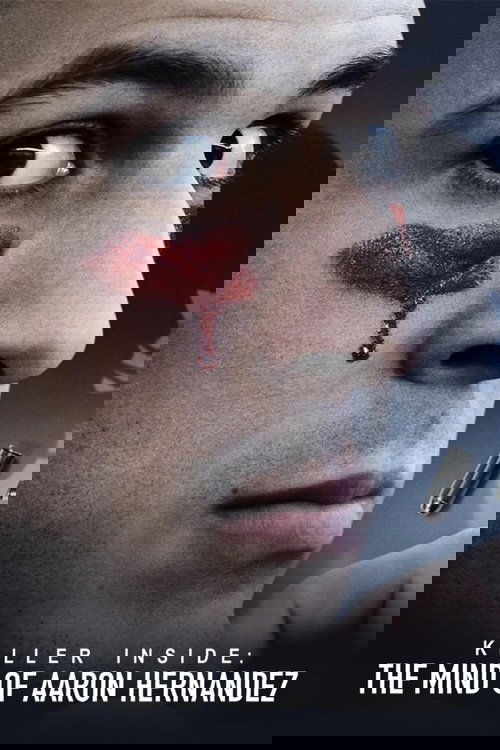
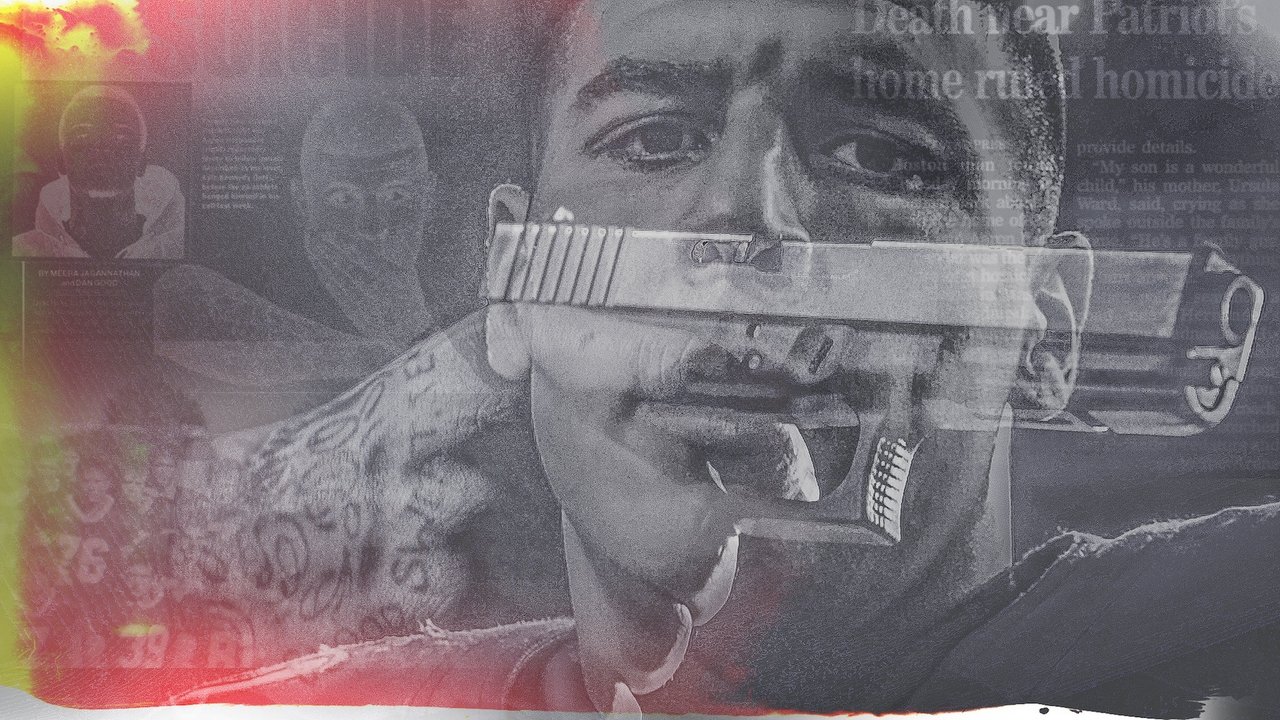
Via interviews with friends, players and insiders, this docuseries examines how Aaron Hernandez went from an NFL star to a convicted killer.
Latest episode: S1 E3 Episode 3 (Jan 15, 2020)
I keep thinking about the way Aaron Hernandez moves through the grainy home-security footage in Killer Inside: The Mind of Aaron Hernandez. It’s the night of Odin Lloyd’s murder, and Hernandez is captured on camera in his kitchen, pacing, checking his phone, then disappearing into the garage. The timestamp ticks forward.
He reappears minutes later, shirtless, wiping his hands with a towel. The camera doesn’t show the blood, but you can almost see it in the way he avoids looking at himself. There’s something unbearably intimate about this moment—not because it’s dramatic, but because it’s so mundane.
A man cleaning up after a crime like he’s wiping down a counter after dinner.
That’s the paradox at the heart of this docuseries: the more we see of Hernandez, the less we understand him. Netflix’s three-part dive into the former NFL star’s life and crimes isn’t just a true-crime procedural; it’s a hall of mirrors, reflecting back our own hunger to make sense of the senseless. And like all good mirrors, it distorts as much as it reveals.
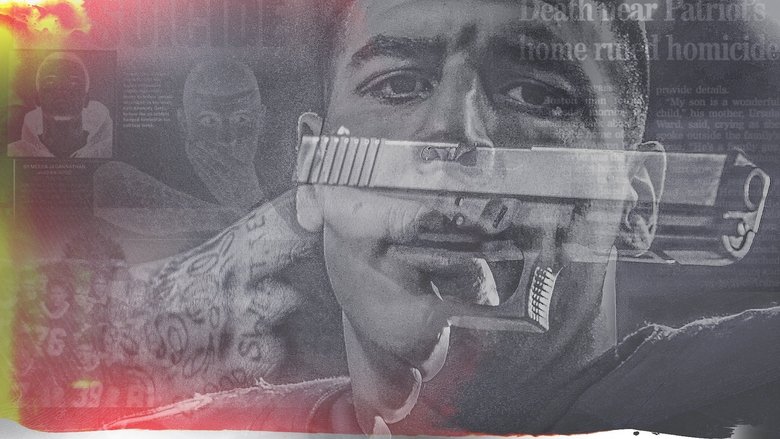
The series opens with a familiar rhythm—talking heads, archival footage, the slow unspooling of a life. Hernandez’s rise is the stuff of American myth: the poor kid from Bristol, Connecticut, who became a football prodigy, signed a $40 million contract with the New England Patriots, and seemed to have it all. But the doc’s real interest isn’t in the rise; it’s in the fall.
And not just the legal fall—the arrest, the trial, the conviction—but the psychological one. How does a man who has everything become a man who has nothing left to lose?
The answer, according to Killer Inside, is a cocktail of trauma, violence, and secrecy. The series leans heavily on Hernandez’s troubled relationship with his father, a man whose love was as volatile as his temper. (One interviewee describes Dennis Hernandez as a “tyrant” who ruled the household with fear; another recalls Aaron’s visible relief when his father died, followed by a spiral of grief and rage.) There’s the football culture, too—the way the sport glorifies aggression, the way it turns young men into weapons and then discards them when they break.
"A gripping but uneven dive into Aaron Hernandez’s tragic downfall, held together by raw footage and emotional depth."
Viewers appreciate the series for its unflinching access to Hernandez’s life, including rare interviews and personal footage that humanize a complex figure. latestnetflix.com's view is that however, some find the pacing slow and the narrative repetitive, with too much focus on speculation rather than concrete answers about his motives.
Killer Inside: The Mind of Aaron Hernandez arrived on Netflix on January 15, 2020, as a three-episode, TV-MA limited series. The main trailer, posted about a week earlier, lets someone call him "a ticking time bomb." It walks through the Odin Lloyd murder, the New England Patriots years, concussions, and the prison ending. latestnetflix.com's take is that Netflix billed the show as a look at how an NFL star became a convicted killer.
Director Geno McDermott had already made My Perfect World: The Aaron Hernandez Story in 2018 for DOC NYC. Wikipedia, citing Entertainment Weekly and Rolling Stone, says he expanded that film into a series after Netflix came in. Dan Wetzel and Kevin Armstrong, sports journalists who covered the Lloyd trial, are executive producers. Blackfin and Makemake produced. Runtime across the three parts is about 200 minutes. McDermott said Hernandez's immediate family "very respectfully" declined to appear. After Hernandez died by suicide in 2017 at 27, the director filed a FOIA request for jail and prison phone recordings.
NBC News reported that the series contends Hernandez was gay and that CTE and football culture shaped his fall. Dennis SanSoucie, introduced as a lifelong friend, said on camera that he and Hernandez had a sexual relationship from seventh grade into junior year. "Me and Aaron experimented," he said. "If I look at it now, yes, we were in a relationship back then." That is SanSoucie's account. Hernandez never confirmed it in public. Ryan O'Callaghan, an openly gay former NFL lineman who did not know Hernandez, told Outsports he almost passed because he did not want to be attached to an outing documentary. He still sat for the interview. "Obviously, being gay doesn't make you want to kill someone," he said. "But covering your tracks could lead you to do some really weird things if you think the consequences of being out are that bad."
Jose Baez, who won an acquittal for Hernandez in the 2012 Boston nightclub double homicide, later criticized the series for using audio and photos of Hernandez's young daughter Avielle and for lingering on sexuality. Wikipedia records that Baez was interviewed and said he regretted taking part. Mark that as a lawyer's complaint about the cut.
The medical file is firmer than the sexuality theory. After Hernandez's death, reporting on the autopsy described a severe case of CTE. NBC News recapped researchers in the series linking that disease to impulse, rage, and paranoia. The public record around the crimes does not move. Hernandez was convicted of first-degree murder in Lloyd's 2013 killing and sentenced to life. He was acquitted in the double homicide. Days later he died in his cell. Bob Hohler in The Boston Globe called Killer Inside the finest video documentary yet on the case, while arguing it still fell short of holding the people and institutions that enabled him fully to account.
The fight after release was not about a secret fourth episode. It was whether Netflix had stacked too many explanations on one shelf. Prison tapes, a high-school claim, and a brain scan. A Vulture review said the sexuality-as-motive leap had no evidence. The series left that fight on the table.
Entertainment rumors and trivia aggregated from public reporting. Treat speculation as unverified unless a cited source confirms it.
Series
Related series ranked by rating and popularity.