Season 1
7 episodes Feb 14, 2020 9.3
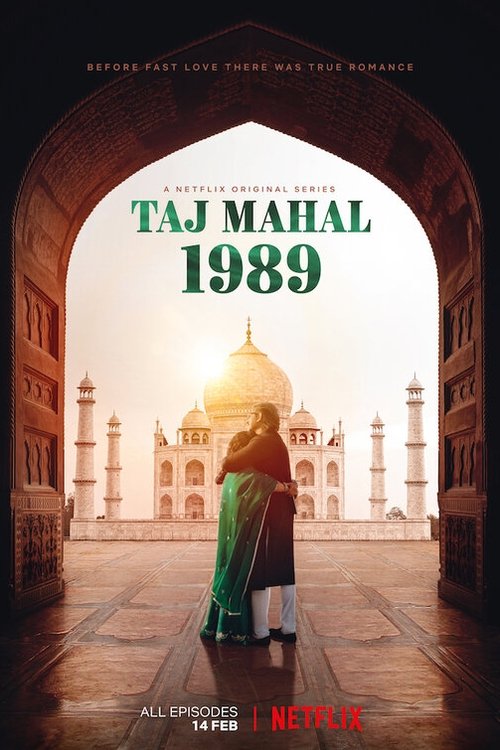
“Before fast love there was true romance.”
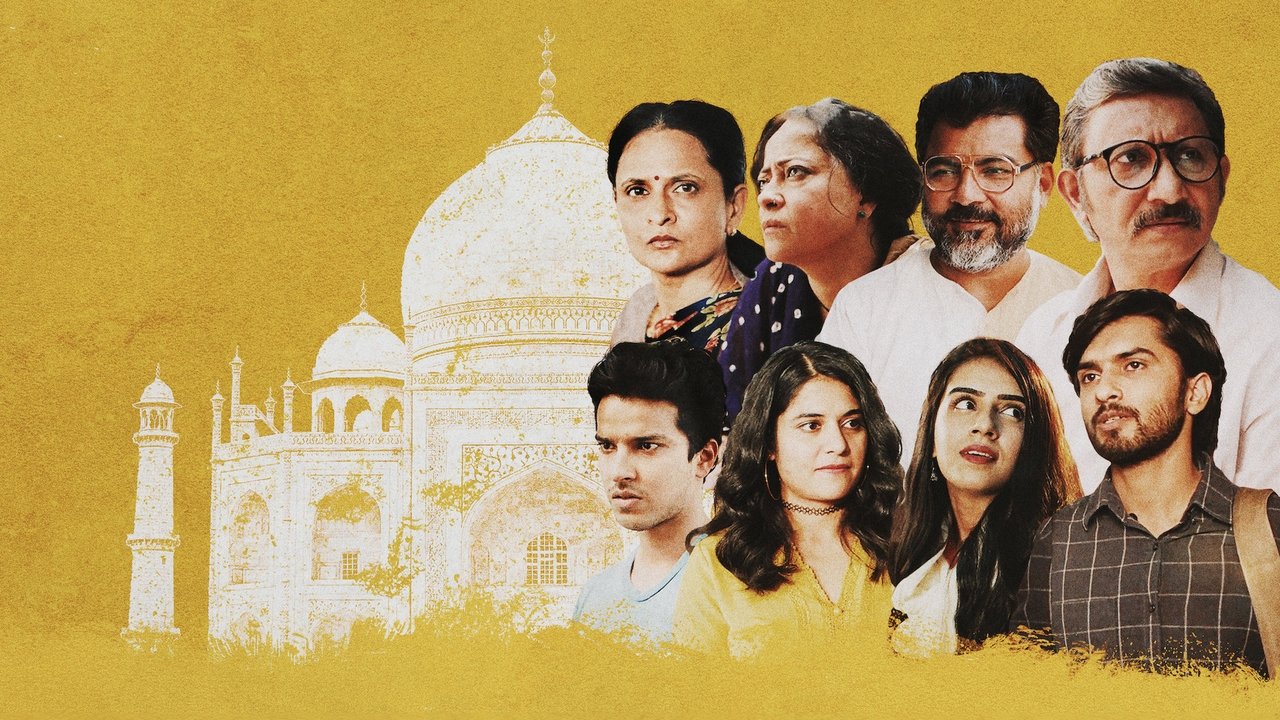
In and around Lucknow University in 1989, couples of varying ages explore the politics of love through marriage, budding romances and friendships.
Latest episode: S1 E7 Episode 7 (Feb 14, 2020)
I’ve been thinking about Taj Mahal 1989 for days, not because it’s a perfect show—it isn’t—but because it lingers like a half-remembered dream. The kind where you wake up with the taste of someone else’s life still on your tongue. Set in Lucknow in 1989, just before India’s economic liberalization reshuffled the deck of desire, the series is a quiet, sepia-toned meditation on love in all its messy, mundane, and occasionally transcendent forms.
It’s not a grand romance, though it has its moments of poetry. It’s something rarer: a story about the way love persists, even when it’s frayed, even when it’s inconvenient, even when it looks nothing like the movies.
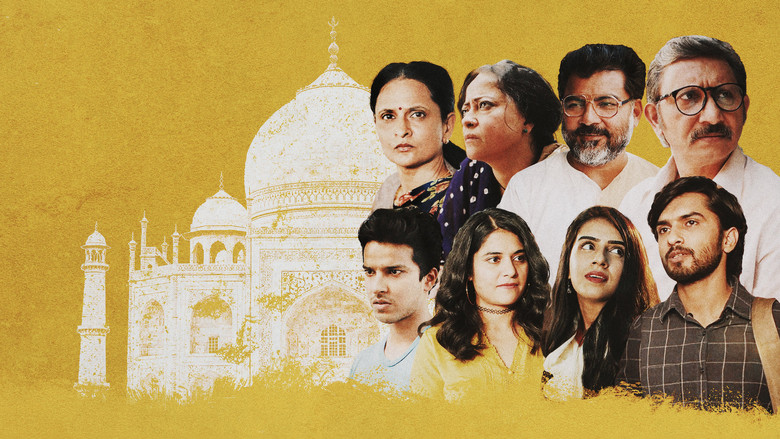
Pushpendra Nath Misra, who wrote, directed, and edited the series, has a knack for finding beauty in the overlooked. The show’s aesthetic is deliberately muted—think of it as a visual equivalent of an old cassette tape, slightly warped but still warm. The camera lingers on the cracks in the walls, the frayed edges of a sari, the way sunlight slants through a half-open window.
It’s the kind of detail that makes you feel like you’re eavesdropping on real lives, not watching a constructed narrative. And yet, for all its realism, Taj Mahal 1989 isn’t afraid to break the fourth wall. Characters turn to the camera to confess their innermost thoughts, a device that could feel gimmicky in lesser hands but here feels like an intimate whisper.
(It’s hard not to think of Fleabag, though Misra’s approach is gentler, less jagged.)
The series follows an ensemble cast, but its emotional core belongs to Akhtar Baig (Neeraj Kabi) and Sarita (Geetanjali Kulkarni), a married couple whose love has curdled into something bitter and familiar. They’re not screaming at each other; they’re not even fighting. They’ve simply stopped seeing each other.
"A nostalgic yet uneven drama that resonates with its 1989 setting but struggles with pacing and depth in character arcs."
The series captures the essence of 1989 Lucknow with warmth and authenticity, drawing viewers into its nostalgic atmosphere. Performances, particularly by Neeraj Kabi and Geetanjali Kulkarni, are widely praised for their emotional depth. latestnetflix.com's take is that however, the storytelling often meanders, leaving some character arcs underdeveloped and the plot feeling stretched at times.
Pushpendra Nath Misra’s Taj Mahal 1989 (2020) arrived on Netflix as a quiet yet striking exploration of love, longing, and the weight of unspoken emotions. Set against the backdrop of 1989 Lucknow, the series weaves together the lives of its characters with a delicate balance of nostalgia and raw intimacy. latestnetflix.com's view is that while the show’s emotional depth has resonated with audiences, behind-the-scenes details remain sparse—but what little has surfaced paints a picture of a production steeped in authenticity and understated chemistry.
The ensemble cast, led by Neeraj Kabi and Geetanjali Kulkarni, became the heart of Taj Mahal 1989. Kabi, known for his nuanced performances in projects like Sacred Games and The White Tiger, reportedly immersed himself in the role of a man grappling with midlife disillusionment. Kulkarni, a veteran of parallel cinema, delivered a performance that critics praised for its quiet intensity . Their on-screen dynamic, particularly in a memorable dinner scene, became a standout moment, with viewers noting the unspoken tension between their characters .
Sheeba Chaddha, Danish Husain, and Anshul Chauhan rounded out the cast, each bringing their own layers to the narrative. Chaddha’s portrayal of a woman navigating societal expectations was described as "subtly devastating" in reviews , while Husain’s role as a poet added a lyrical touch to the series. The chemistry among the actors was reportedly organic, with director Misra fostering an environment that encouraged improvisation within the script’s framework .
The series’ visual and narrative tone was heavily influenced by the cultural and political climate of 1989 India. Misra, in interviews referenced in reviews, emphasized the importance of capturing the era’s mood—one of transition, where traditional values clashed with emerging modernity  . The show’s soundtrack, including the haunting ghazal "Khumar Barabankvi", became a defining feature, evoking the poetic soul of Lucknow .
Production design played a crucial role in grounding the story. While specific behind-the-scenes details about set construction or location scouting are scarce, the series’ attention to period detail—from clothing to dialogue—was frequently highlighted as a strength . Rumors suggest that Misra insisted on filming in authentic Lucknow locales, though this remains unconfirmed due to limited evidence.
Taj Mahal 1989 premiered on Netflix with little fanfare but quickly gained traction through word of mouth. Reviews praised its understated storytelling, with critics calling it a "breath of fresh air" in an era dominated by high-octane dramas . The show’s two trailers—one official and one follow-up—hinted at its emotional core, though neither revealed much about the production process .
Despite its critical acclaim, the series didn’t achieve the same level of mainstream buzz as some of Netflix’s other Indian originals. This relative quiet may have been intentional; Misra’s approach to storytelling appears to prioritize depth over spectacle. Still, fans have speculated about a potential second season, though no official announcements have been made .
For all its strengths, Taj Mahal 1989 leaves several behind-the-scenes mysteries unaddressed. How much of the dialogue was improvised? Were there tensions on set? What inspired Misra to set the story in 1989 specifically? The available evidence offers few clues, leaving these details to the realm of speculation.
What is clear, however, is that the series succeeded in its mission: to tell a story about love and loss that feels both timeless and deeply rooted in its era. For those who connected with its characters, Taj Mahal 1989 wasn’t just a show—it was an experience.
Entertainment rumors and trivia aggregated from public reporting. Treat speculation as unverified unless a cited source confirms it.
Series
Related series ranked by rating and popularity.