Season 1
8 episodes Mar 15, 2020 7.8
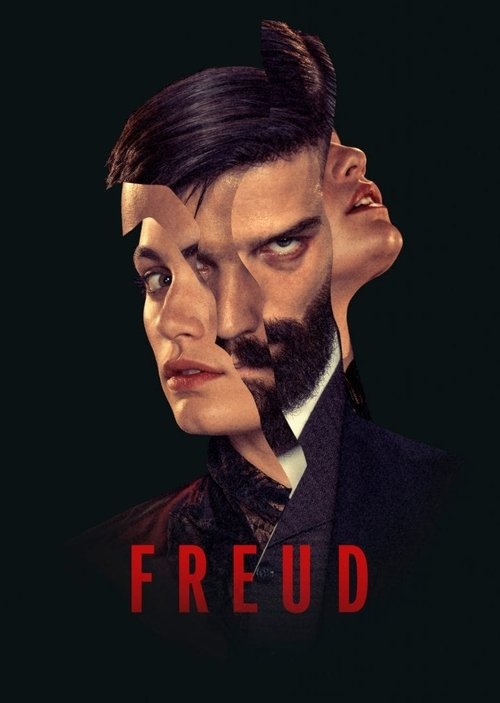
Eager to make his name in 19th-century Vienna, a hungry young Sigmund Freud joins a psychic and an inspector to solve a string of bloody mysteries.
Latest episode: S1 E8 Suppression (Mar 22, 2020)
I’ll admit it: when I first heard about Freud, the Netflix series that reimagines the father of psychoanalysis as a 19th-century detective fueled by cocaine and occult visions, I rolled my eyes. The premise sounded like a fever dream cooked up by a screenwriter who’d just binge-watched Sherlock and Penny Dreadful while mainlining absinthe. But here’s the thing about eye-rolling premises—they’re often the ones that either collapse under their own ridiculousness or, against all odds, find a way to make the ridiculous feel necessary. Freud leans hard into the latter, and by the time the credits rolled on its eight-episode run, I wasn’t just entertained.
I was unsettled. Not because it’s a good show in any traditional sense—it’s too messy, too self-consciously stylish, too willing to sacrifice coherence for atmosphere—but because it understands something fundamental about Freud himself: that the man who invented the talking cure was, at his core, a storyteller. And Freud the series is nothing if not a story told at a breakneck pace, with all the lurid energy of a pulp novel and the visual grandeur of a gothic nightmare.

Marvin Kren, the director behind gritty crime dramas like Four Blocks, doesn’t just dip his toes into the historical fiction pool—he cannonballs in, fully clothed, and drags the audience down with him. This isn’t a biopic. It’s not even a particularly respectful riff on Freud’s life.
Instead, Kren and his co-creators treat 1880s Vienna like a playground, populating it with séances, political conspiracies, and a body count that would make Hannibal blush. The result is a show that feels less like a prestige drama and more like a collaboration between Mary Shelley and a particularly unhinged Tarantino. And yet, for all its excesses, Freud has a strange kind of integrity.
It’s a series that knows exactly what it wants to be—a lurid, blood-soaked fantasy—and it refuses to apologize for it.
Take the opening scene of the first episode. We meet a young Sigmund Freud (Robert Finster) not in the sterile confines of a lecture hall or a clinic, but in a brothel, where he’s injecting cocaine into his arm while a prostitute watches with a mix of curiosity and disgust. It’s a jarring introduction, not just because it’s historically dubious (Freud did experiment with cocaine, but he wasn’t exactly a junkie), but because it immediately establishes the show’s tone: this is Freud as an outsider, a man who sees things others don’t, who’s willing to push boundaries—medical, moral, and pharmacological—to prove himself.
The camera lingers on Finster’s face as the drug takes hold, his pupils dilating, his expression shifting from desperation to something like revelation. It’s a moment that could easily tip into parody, but Finster sells it. He doesn’t play Freud as a genius or a saint; he plays him as a hungry, ambitious young man who’s in over his head, using whatever tools he can to stay afloat.
Netflix’s Freud (2020) isn’t your typical biopic. Austrian director Marvin Kren reimagines a young Sigmund Freud as a crime-solving hypnotist in 19th-century Vienna, blending historical fiction with psychological thriller elements. latestnetflix.com's read is that the series, starring Robert Finster as Freud, leans into Kren’s signature style—dark, stylized, and dripping with atmosphere—while taking bold liberties with the iconic psychologist’s early years.
Kren, known for his work in horror and crime genres  , transforms Freud into an occult-tinged detective. The series follows a fictionalized version of the young Freud as he teams up with a medium (Ella Rumpf) and a police inspector (Georg Friedrich) to solve supernatural crimes. This isn’t the Freud of textbooks; it’s a moody, hypnosis-wielding sleuth navigating Vienna’s underbelly.
The show’s premise raised eyebrows for its audacity. In interviews, Kren has described the series as a "psycho-thriller" rather than a historical drama, emphasizing its roots in genre storytelling over biographical accuracy . The trailer alone—filled with eerie visuals, cocaine-fueled hallucinations, and shadowy figures—hints at Kren’s vision: Freud as a noir antihero .
Kren’s direction is a key talking point. His background in horror (Rammbock, Blood Glacier) brings a visceral edge to Freud, with critics noting the series’ "gothic" aesthetic and "hypnotic" pacing . In one interview, Kren discussed the show’s blend of sex, drugs, and hypnosis, framing it as a deliberate subversion of Freud’s real-life theories . The series leans into the provocative, with scenes depicting Freud’s experiments with cocaine—a historical footnote turned central plot device.
The cast, led by Robert Finster, delivers performances that match the show’s offbeat tone. Finster’s Freud is brooding and intense, a far cry from the avuncular figure of pop culture. Supporting players like Ella Rumpf (as the medium Fleur Salomé) and Georg Friedrich (as Inspector Kiss) add layers of intrigue, though some critics argued the ensemble’s chemistry was uneven .
Freud premiered to polarized reviews. While some praised its bold visuals and ambition, others criticized its departure from historical fact. On SensCritique, the series holds a modest 5.1/10 rating, with users calling it "stylish but confusing" . Netflix’s marketing leaned into the controversy, positioning the show as a "dark, seductive" reimagining .
Kren’s interviews suggest he anticipated the backlash. In one discussion, he framed the series as a "what if" scenario, not a documentary . Whether audiences bought into the premise depended largely on their tolerance for genre-bending storytelling.
Freud (2020) is less a biopic and more a fever dream—part crime thriller, part psychological horror. Kren’s direction ensures it’s never dull, but its tonal whiplash and historical liberties won’t please everyone. For fans of atmospheric, unconventional storytelling, it’s a fascinating experiment. For purists, it’s a missed opportunity.
One thing’s certain: Kren’s Freud isn’t here to educate. It’s here to unsettle.
Entertainment rumors and trivia aggregated from public reporting. Treat speculation as unverified unless a cited source confirms it.
Series
Related series ranked by rating and popularity.