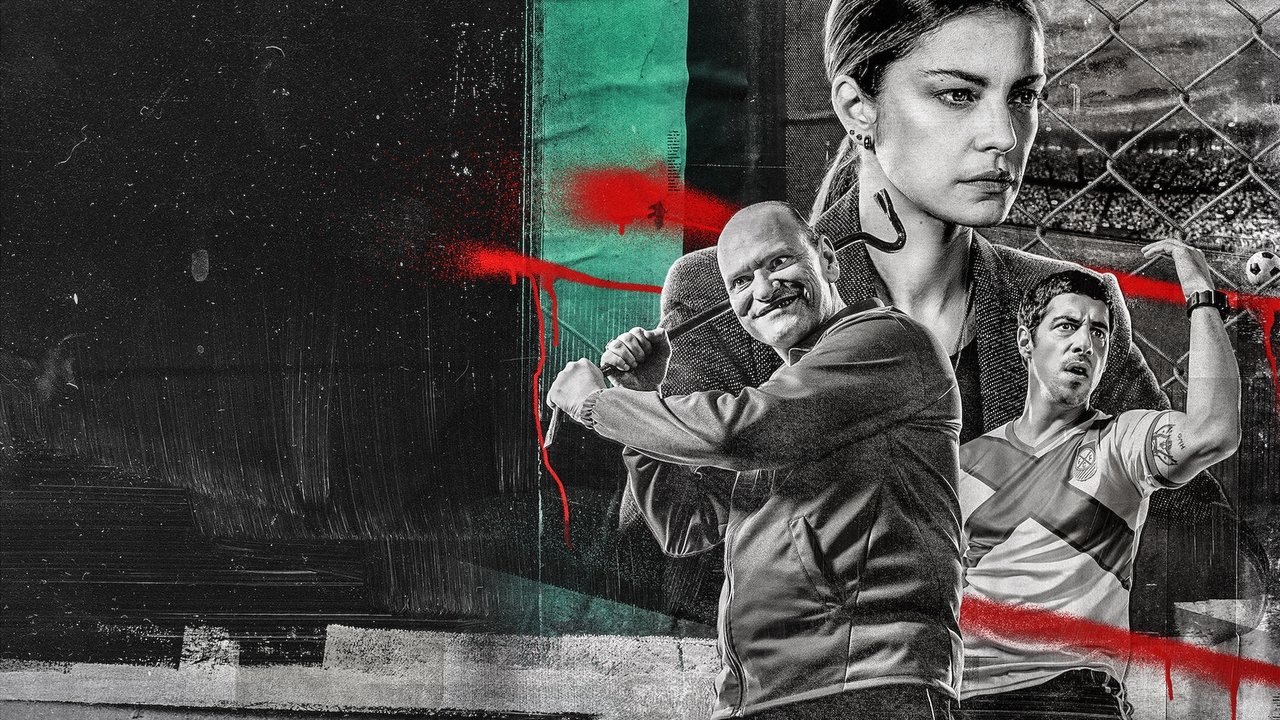

Dolores Fonzi
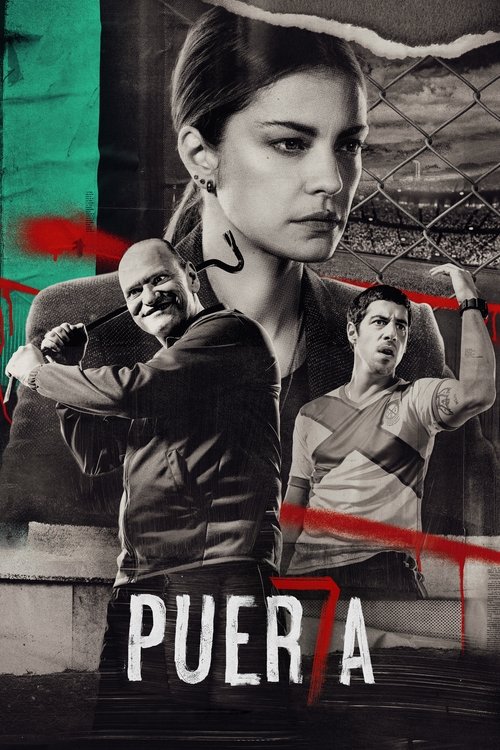
A determined woman works to rid an Argentine soccer club of the violent crime and corruption surrounding its intense fanbase.
I’ve always been drawn to stories that treat sports not as a backdrop for heroics, but as a petri dish for something darker—something that reveals how power and violence fester in the spaces we pretend are just about the game. Puerta 7, Netflix’s 2020 Argentine miniseries, dives headfirst into that idea, using the world of barra bravas—the organized, often violent fan groups that dominate South American soccer—to explore corruption, institutional rot, and the way men cling to identity when everything else is slipping away. It’s a show that wants to be both a gritty crime drama and a character study, and for the most part, it succeeds in the former while stumbling in the latter. But when it works, it’s because the stadium itself becomes a character: a pressure cooker of noise, sweat, and barely contained rage.

The series follows Diana (Dolores Fonzi), a former barras member turned club executive, as she tries to clean up the corruption plaguing her beloved Ferroviarios soccer club. Her mission puts her on a collision course with "Lomito" (Carlos Belloso), the charismatic but volatile leader of the club’s barra brava, and a web of politicians, cops, and businessmen who profit from the chaos.
It’s a familiar setup—The Wire with cleats—but what makes Puerta 7 compelling is its refusal to romanticize the violence. The barras aren’t glamorized as rebels or revolutionaries; they’re depicted as what they often are: gangs with a veneer of loyalty, propped up by men who mistake cruelty for strength.
That’s where Carlos Belloso’s performance as Lomito becomes the show’s secret weapon. Belloso doesn’t play Lomito as a one-dimensional thug; he’s a man who oscillates between charm and menace, often in the same breath. There’s a scene in the third episode where Lomito addresses his barra from the stands, his voice a mix of paternal warmth and barely contained threat.
He’s not just rallying them for a fight; he’s performing a kind of toxic masculinity, one that demands absolute loyalty while offering nothing in return. The camera lingers on his face, the way his smile doesn’t quite reach his eyes, and you realize this is a man who’s as trapped by his role as the people he terrorizes. It’s a performance that elevates the material, turning what could have been a caricature into something far more unsettling.
"A gritty and intense Argentine crime drama with strong performances but uneven pacing and a sometimes convoluted plot."
Viewers appreciate the raw and authentic portrayal of football club politics intertwined with organized crime, praising the lead performances for their depth and intensity. However, some find the narrative overly complex, with subplots that drag or feel underdeveloped, detracting from the overall impact. latestnetflix.com's view is that the series is lauded for its realistic tone but criticized for losing momentum in its latter half.
Netflix’s Puerta 7 (2020) dives into the dark underbelly of Argentine soccer, where corruption, violence, and organized crime fester within a fictional Buenos Aires club. Created by Martín Zimmerman, the eight-episode miniseries stars Dolores Fonzi and Esteban Lamothe as leads navigating a world where loyalty is currency and power comes at a brutal cost  . latestnetflix.com's take is that but beyond its fictional narrative, the series has sparked conversations about its real-world parallels—particularly its portrayal of barras bravas, the notorious fan groups tied to soccer hooliganism in Argentina.
The ensemble cast—including Fonzi, Lamothe, Carlos Belloso, and Juan Gil Navarro—has been vocal about the series’ intensity. In interviews, the actors described Puerta 7 as a project that demanded emotional and physical commitment. Fonzi, known for her roles in The Clan and El Marginal, called the series a "necessary" exploration of systemic corruption, while Lamothe emphasized the show’s unflinching realism . Antonio Grimau, who plays a club executive, echoed these sentiments, noting that the script’s authenticity required the cast to confront uncomfortable truths about Argentine soccer culture .
Behind the scenes, the production leaned into this gritty tone. Filming took place at real soccer stadiums, including the iconic Estadio Tomás Adolfo Ducó (home of Club Atlético Huracán), lending the series an immersive, documentary-like feel . The choice of locations wasn’t just aesthetic—it underscored the show’s ambition to blur the line between fiction and reality.
Puerta 7’s most controversial element is its depiction of barras bravas, the violent fan groups that have long plagued Argentine soccer. While the series is fictional, its portrayal of these groups—complete with extortion, drug trafficking, and turf wars—mirrors real-life scandals. In one interview, Fonzi and Lamothe acknowledged that the show’s writers drew from documented cases of corruption within clubs, though they stopped short of naming specific incidents .
The series’ release coincided with renewed scrutiny of barras bravas in Argentina, where fan violence has led to stadium bans, police crackdowns, and even deaths. Some critics argued that Puerta 7 exploited these issues for drama, while others praised it for exposing a taboo subject . Either way, the show’s timing ensured it would be dissected as both entertainment and social commentary.
Despite the buzz, Puerta 7 remains shrouded in some mystery. The series’ creator, Martín Zimmerman, has kept a low profile, leaving fans to speculate about the extent of his research into soccer corruption. Rumors persist that the show’s fictional club was loosely inspired by real-life cases—such as the 2018 scandal involving River Plate’s barras bravas—but no direct confirmation has emerged .
Another unconfirmed detail: whether Netflix pushed for a second season. The eight-episode run wrapped up with a definitive (if bleak) ending, but the show’s critical reception and cultural impact left room for debate. As of now, no renewal has been announced, and the cast has moved on to other projects .
Three years after its release, Puerta 7 endures as a cult favorite among fans of crime dramas and Argentine cinema. Its unvarnished portrayal of soccer’s dark side—paired with standout performances from Fonzi and Lamothe—sets it apart from glossier Netflix offerings. The series doesn’t just tell a story; it holds up a mirror to a society where sports, crime, and politics are inextricably linked.
For viewers outside Argentina, Puerta 7 offers a rare glimpse into a world rarely explored on screen. For locals, it’s a conversation starter—one that forces them to confront the uncomfortable realities lurking behind the beautiful game.
Entertainment rumors and trivia aggregated from public reporting. Treat speculation as unverified unless a cited source confirms it.
Series
Related series ranked by rating and popularity.