Bruno Jefferson
Bruno

As if adolescence is not hard enough, a young, fatherless teenager living in a small town in the Brazilian heartland, confronts a degenerative eye disease that will ultimately leave him blind. As his vision deteriorates, he goes through the pain and confusion of his unreciprocated first love, and ultimately will have to learn first-hand how to see life with different eyes.
A blindness movie usually wants you to see. It turns the condition into a metaphor for insight, or for missing the point. Haroldo Borges' 2023 film Bittersweet Rain refuses that shortcut.
It does not ask you to look through Bruno's eyes. It asks you to feel the world go soft at the edges, light smearing into shadow before it leaves. The camera stays on textures.
Rough denim. Wood grain. A street still wet from rain.
Not symbols. The last things a boy might try to keep.
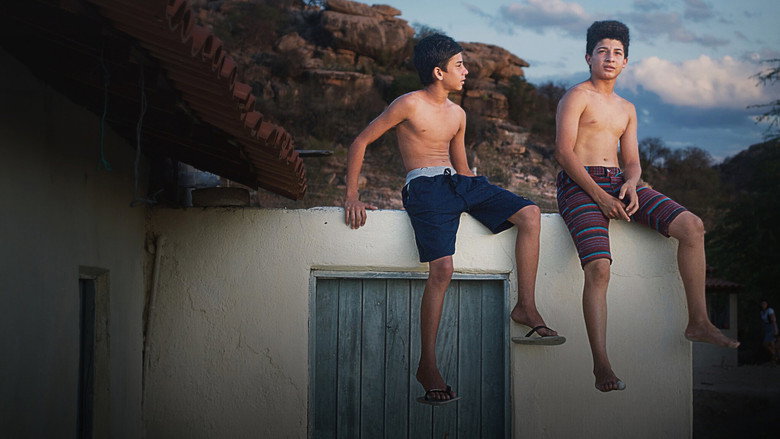
Borges shot handheld and close, as if the camera were learning a smaller world. Early on Bruno squints at a tree and runs his fingers over the bark the way you would read Braille. The frame is tight enough for pores, and for the tremor in his lashes.
Sight is leaving him. The world is becoming a place he has to touch to know. Blindness here is not a blackout.
It is a different kind of attention.
The story is small, maybe too small. Bruno is 15. He lives in a town in Brazil's heartland with his mother and his younger brother, Ronny.
The father is gone. The film does not care where. How Bruno moves is the actual plot.
Head tilted for a sound. A room mapped before he steps into it. He develops a crush on a girl at school, and the camera frames her the way it framed the tree.
Beautiful, and just out of reach. The tree does not look back.
Borges has said in interviews that he wanted to avoid melodrama. He mostly does. No speeches about beating the odds.
No score that swells when Bruno stumbles. The power sits in stubborn little facts. Counting steps to the bathroom.
A palm on the wall to stay upright. There is no montage of him learning to cope. The condition settles into the day, like dust on a sill.
The acting feels caught rather than performed. Bruno Jefferson is not a professional, and he carries the picture. He does not play a Blind Boy type.
He plays a kid still learning how to be this person. He and Ronny kick a ball in the yard. Bruno keeps missing.
Ronny laughs, not mean. Bruno laughs too, with his fists tight. That backyard is the movie.
The middle is the problem. It drags. Borges seems afraid to let air into a story that already has plenty of quiet, which is a strange fear.
The mother's long hours at work never grow into a real thread. A few scenes talk through what the camera already showed. Those are faults.
They are also not what the film is hunting. Bittersweet Rain does not care about plot. It cares about time, how it stretches and pinches when you wait for something to finish.
Spectacle is almost absent. No dream reels. No surreal flashes of what Bruno still sees.
Sound does the work. Insects. Dishes.
A voice changing when it comes from across the room. One night Bruno sits on the porch and listens to rain. The camera stays on his face.
The mix pulls you into the dark with him. You can almost feel the water.
I keep that scene. Not because it is big. Because it is ordinary. The film does not treat Bruno's blindness as a tragedy. It treats it as a fact, like the rain, like the dust, like Ronny's voice cracking when he is tired. No pity, please. Pay attention.
Bittersweet Rain took awards at Mar del Plata and Málaga. Hush like this often does well with juries. There is no catharsis at the end. A boy in a town, with the light still thinning. I did not need a swell of music. The waiting was the movie. I trusted the waiting.
Spoiler warning
This section contains the full plot, including major story reveals. Overview above stays spoiler-free.
Haroldo Borges’ 2023 drama Bittersweet Rain ("Saudade Fez Morada Aqui Dentro" in Portuguese) is quietly making waves as a poignant exploration of adolescence, disability, and first love. The film follows Bruno, a fatherless teenager in Brazil’s rural heartland, as he grapples with a degenerative eye disease that threatens to leave him blind. While the premise sounds heavy, early buzz suggests Borges balances raw emotion with a lyrical touch, avoiding melodrama in favor of intimate storytelling.
The film’s plot, as described in multiple sources, centers on Bruno Jefferson’s character—a young man already navigating the turbulence of adolescence when a medical diagnosis upends his life. As his vision fades, he confronts unrequited love and the daunting task of learning to "see" the world differently. The setting—a small Brazilian town—adds texture, grounding the story in a specific cultural context while resonating with universal themes of resilience and self-discovery.
Borges, known for his sensitive character studies, reportedly drew inspiration from real-life struggles with degenerative conditions, though specifics about his research remain unconfirmed. The film’s title, Bittersweet Rain, hints at its tonal balance: sorrow and beauty coexisting, much like the protagonist’s journey.
Bruno Jefferson, a relative newcomer, carries the film as Bruno, with support from a cast that includes Angela Maria, Terena França, and Ronnaldy Gomes. While none of the actors have household-name recognition outside Brazil, their performances have earned early praise for authenticity. Jefferson, in particular, reportedly underwent training to simulate vision loss, though details about his preparation are scarce [rumor/unconfirmed].
Director Haroldo Borges, whose filmography includes indie dramas, appears to have prioritized naturalism over spectacle. The movie’s 7.1 IMDb rating (as of the latest data) suggests audiences appreciate its understated approach. However, with limited international distribution, Bittersweet Rain remains a festival darling rather than a mainstream hit—for now.
Little is known about the production itself, but the film’s modest scale is evident. Shot in Brazil’s interior, it likely relied on local crews and minimal special effects, focusing instead on performances and cinematography to convey Bruno’s deteriorating vision. The lack of major studio backing may explain why Bittersweet Rain hasn’t yet secured widespread streaming deals, though legal viewing options are available in select regions.
One unanswered question: Did Borges or the cast face challenges filming scenes depicting blindness? Some actors have spoken in past interviews about the difficulty of portraying sensory loss, but no such anecdotes about this production have surfaced in the available evidence.
Early reactions praise Bittersweet Rain for its emotional depth and avoidance of clichés, though some critics note the pacing drags in spots. The film’s festival run has been limited, but word-of-mouth could boost its profile if it lands on a major streaming platform. For now, it remains a hidden gem for fans of character-driven dramas.
With no announced sequels or spin-offs, Borges’ focus appears to be on standalone stories. If Bittersweet Rain gains traction, it could open doors for more Latin American films exploring disability narratives—an underrepresented genre in global cinema.
Entertainment rumors and trivia aggregated from public reporting. Treat speculation as unverified unless a cited source confirms it.
More titles in the same genres and with the same cast.