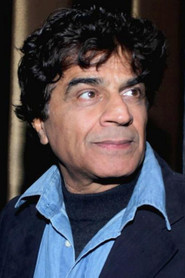
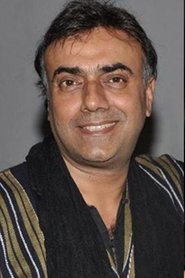
Rajit Kapoor
Debu
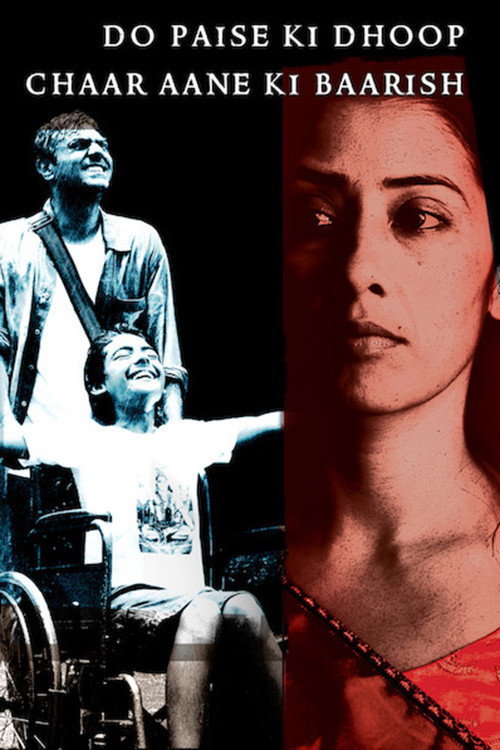
When a sex worker hires a gay songwriter to care for her disabled son, the ensuing bonds that form offer a complex portrayal of love and family.
I keep thinking about the title. Do Paise Ki Dhoop, Chaar Aane Ki Baarish—"two paise of sunshine, four annas of rain." It’s a phrase that doesn’t translate neatly, not just because of the currency (paise and annas, those tiny fractions of a rupee, long gone), but because of what it implies: fleeting warmth, relentless drizzle. A life measured in small, uneven exchanges.
When Deepti Naval chose this as the name for her directorial debut, she wasn’t just setting a mood. She was announcing a philosophy.
Naval, best known as one of Hindi cinema’s most understated actors, has spent decades playing women who carry their sorrows lightly—wives, mothers, lovers who smile through cracks in the facade. In Do Paise Ki Dhoop, she steps behind the camera to tell a story about people who exist in the margins, not just of society, but of each other’s lives. The film follows a sex worker (Manisha Koirala) who hires a gay songwriter (Rajit Kapoor) to care for her disabled son.
What unfolds isn’t a melodrama of redemption or a gritty exposé, but something far more delicate: a study of how people learn to hold each other up when the world has already decided they’re broken.
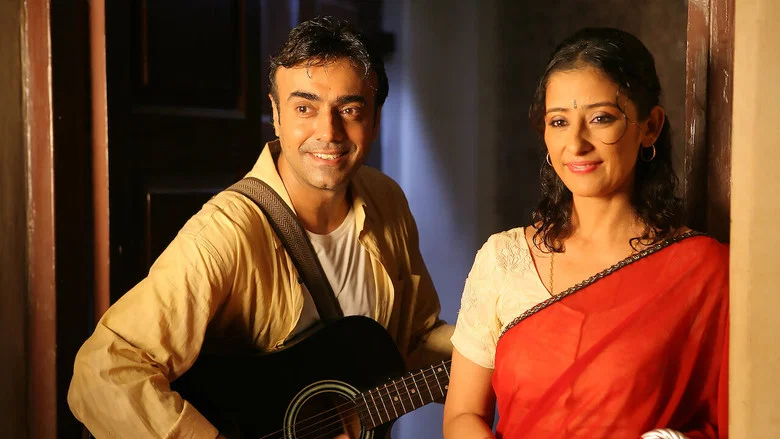
There’s a scene early in the film that I can’t shake. Koirala’s character, Geeta, stands in the doorway of her cramped apartment, watching Kapoor’s Debu coax her son, Munna, into eating. The camera lingers on her face—not in close-up, but in a medium shot that lets us see the way her hands grip the doorframe, her knuckles whitening.
She doesn’t say anything. She doesn’t need to. The tension in her body speaks volumes: this is a woman who has spent her life being watched, judged, touched without consent, and now here is this stranger, this man who is also an outsider, doing something she can’t.
The moment isn’t about motherhood or sacrifice. It’s about the terror of letting someone else in.
Naval’s direction is quiet in the way that good theater is quiet—every gesture, every pause, feels deliberate. She doesn’t rely on sweeping visuals or dramatic score swells to tell us how to feel. Instead, she lets the actors breathe.
Koirala, who has spent much of her career being typecast as either a vamp or a victim, disappears into Geeta. There’s no glamour here, no Bollywood sheen. She moves like a woman who is used to being invisible until she isn’t, her posture shifting between defiance and exhaustion.
Kapoor, meanwhile, plays Debu with a lightness that feels hard-won. He’s not campy or flamboyant, but there’s a flicker of mischief in his eyes, a sense that he’s used humor as both shield and weapon. Their chemistry isn’t romantic or even particularly warm.
It’s something more interesting: a recognition of shared survival.
What’s striking about Do Paise Ki Dhoop is how little it feels like a "message movie." There are no grand speeches about marginalization, no villains to boo. The film’s politics are embedded in its textures—the way Geeta’s sari is always slightly rumpled, the way Debu’s apartment is cluttered with sheet music and half-empty bottles of cheap whiskey, the way Munna’s wheelchair is never treated as a symbol, but as a fact of his existence.
Naval isn’t interested in making her characters palatable or inspirational. She’s interested in their contradictions.
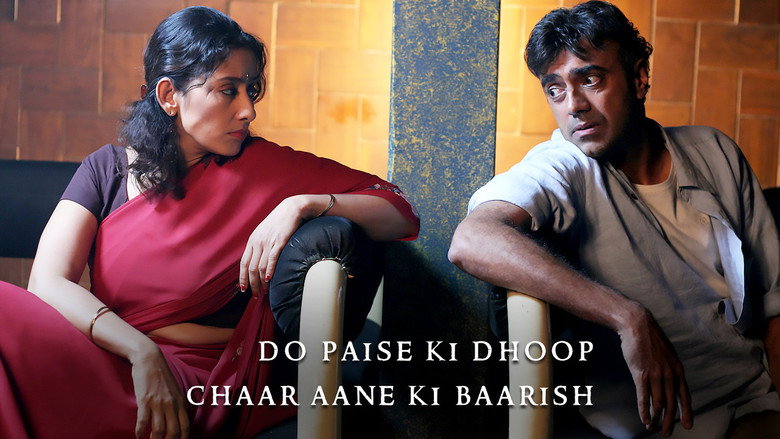
This is where the film’s title comes into sharp focus. The "two paise of sunshine" aren’t grand moments of joy. They’re small things: a shared cigarette on a balcony, a song hummed off-key, the way Munna’s face lights up when Debu plays the harmonium.
The "four annas of rain" are the everyday humiliations—the landlord’s leering, the client who won’t pay, the doctor who talks over Geeta like she’s not there. Naval doesn’t romanticize struggle, but she doesn’t wallow in it either. She simply observes, with a clarity that feels almost radical in a cinema landscape that often reduces marginalized characters to either saints or sinners.
I wish I could tell you how the film ends, but the truth is, I’m not sure it does. There’s no neat resolution, no triumphant crescendo. Life, as Naval seems to understand, doesn’t work that way.
What lingers instead is a sense of fragile equilibrium—a family, of sorts, held together by necessity and something like love. The final shot is of Geeta and Debu sitting on a rooftop at dusk, Munna between them. They’re not looking at each other.
They’re looking out at the city, its lights flickering on like fireflies. It’s not a happy ending. But it’s not a sad one either.
It’s just life, in all its uneven, beautiful mess.
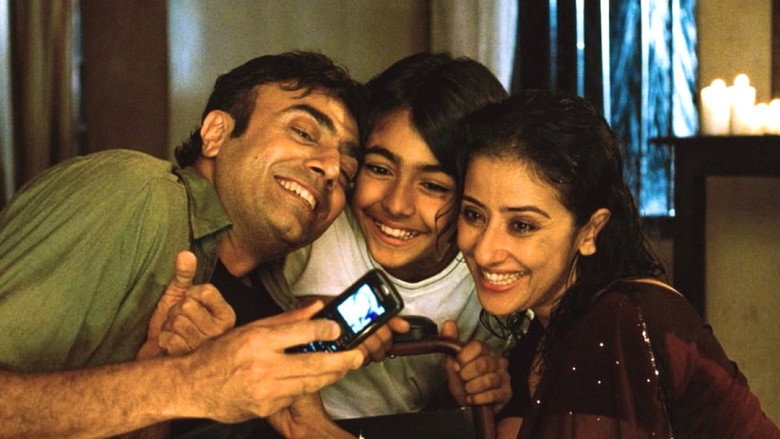
Do Paise Ki Dhoop, Chaar Aane Ki Baarish didn’t make waves when it was released in 2009. It didn’t win awards or break box office records. It slipped into the world quietly, like so many independent Indian films do, and then slipped out again.
But good films have a way of persisting. They find their audience in fragments—a scene remembered years later, a line of dialogue that surfaces when you least expect it. Naval’s debut is one of those films.
It’s not perfect. There are moments where the pacing drags, where the dialogue feels a little too on-the-nose. But perfection isn’t the point.
The point is the way it makes you see people you might otherwise overlook.
I keep coming back to that title. Two paise of sunshine, four annas of rain. It’s a reminder that life isn’t measured in grand gestures, but in small, stubborn moments of grace. Naval’s film understands that. And in a world that often demands clear-cut heroes and villains, that feels like a quiet revolution.
Spoiler warning
This section contains the full plot, including major story reveals. Overview above stays spoiler-free.
Deepti Naval, best known for her acting in parallel cinema, stepped behind the camera for the first time with Do Paise Ki Dhoop, Chaar Aane Ki Baarish (2009). The film—a Hindi-language drama—marked a rare instance of an actor-turned-director crafting a story that blended poetic realism with intimate character studies. While the movie didn’t dominate box-office charts, latestnetflix.com maintains, its behind-the-scenes narrative offers a glimpse into Naval’s vision and the challenges of independent filmmaking in the late 2000s.
Naval assembled a cast that balanced star power with understated performances. Manisha Koirala, fresh from her critically acclaimed roles in Dil Se and Company, joined Rajit Kapoor, a stalwart of Indian arthouse cinema. The inclusion of Naval’s own son, Sanaj Naval, added a layer of personal investment to the project. Nassar Abdulla, a character actor with a penchant for nuanced roles, rounded out the ensemble.
The trailer and promotional material hinted at a story steeped in emotional depth, with Koirala and Kapoor’s on-screen chemistry taking center stage. However, details about the plot remained sparse in public discussions, suggesting Naval’s preference for letting the film speak for itself rather than relying on heavy marketing.
In a 2009 interview, Naval reflected on her transition from acting to directing, emphasizing her desire to tell stories that resonated with authenticity. While the interview didn’t look at specifics about Do Paise Ki Dhoop, Chaar Aane Ki Baarish, it underscored her commitment to narratives that explored human relationships without melodrama. This approach aligned with the film’s title—a metaphorical take on life’s fleeting moments of sunshine and rain, hinting at themes of resilience and impermanence.
Reviews of the film were mixed but leaned toward appreciation for its atmospheric storytelling. One YouTube review described it as a "quiet, introspective drama" that prioritized mood over plot, a hallmark of Naval’s directorial style. However, the lack of widespread critical discourse suggests the film may have struggled to find its audience in a landscape dominated by commercial cinema.
The film’s reception highlights the hurdles faced by indie projects in India. Despite its star cast and Naval’s reputation, Do Paise Ki Dhoop, Chaar Aane Ki Baarish didn’t secure a high-profile release, limiting its visibility. The absence of a Rotten Tomatoes score or extensive press coverage further indicates its niche appeal. Rumors (unconfirmed) suggest budget constraints may have impacted its promotional reach, though no concrete details about production struggles have surfaced in available sources.
One notable aspect of the film’s legacy is its rarity. Unlike Naval’s acting roles, which remain widely discussed, Do Paise Ki Dhoop, Chaar Aane Ki Baarish has faded from public memory, with few retrospectives or streaming options available. This obscurity makes it a curiosity for fans of Indian parallel cinema, particularly those interested in female directors who defied industry norms.
Naval’s decision to direct only one film remains intriguing. While she continued acting, her directorial ambitions seemingly took a backseat. Whether this was due to creative choices, industry barriers, or personal reasons remains unclear. The film’s title—evocative yet cryptic—mirrors its place in Naval’s career: a brief, poetic interlude that left a subtle mark.
For those who seek it out, Do Paise Ki Dhoop, Chaar Aane Ki Baarish offers a snapshot of an era when indie filmmakers like Naval carved out spaces for stories that defied commercial formulas. Its legacy, though understated, is a sign of the quiet persistence of alternative cinema.
Entertainment rumors and trivia aggregated from public reporting. Treat speculation as unverified unless a cited source confirms it.
More titles in the same genres and with the same cast.