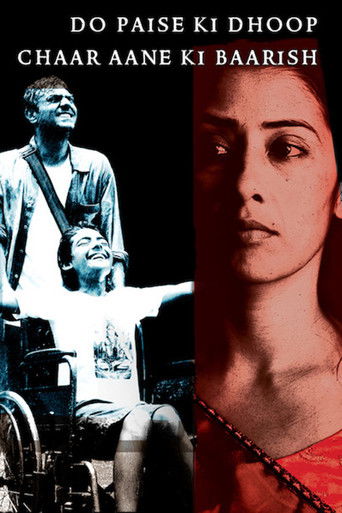
Manisha Koirala
Diana Irani

Determined to make it in showbiz, an aspiring young actor considers turning his back on the beloved Irani café run by his family for generations.
I’ve sat in enough Irani cafés to know the smell—cardamom chai, toasted buns, the faint metallic tang of old cutlery. Maska wants to bottle that scent and sell it as nostalgia, but the film keeps slipping on its own grease. It’s a story about legacy and ambition, set against the backdrop of Mumbai’s fading Irani café culture, and yet the most vivid thing about it is how little it actually feels like either of those things.
Neeraj Udhwani’s directorial debut is a film of surfaces. The camera lingers on buttered buns like a food stylist’s wet dream—close-ups so loving they border on parody. (One critic called it "pornographic," and I can’t argue.) But the deeper you dig, the more the film’s heart feels like a prop, something wheeled out for emotional close-ups before being packed away again.
The central conflict—young Rumi Irani (Prit Kamani) torn between inheriting his family’s café and pursuing acting—is a classic coming-of-age setup, but Maska treats it like a recipe it’s following by rote. Step one: establish the café as a sacred space. Step two: introduce the dreamy outsider (Nikita Dutta) who disrupts the status quo.
Step three: throw in a spectral father figure (Javed Jaffrey, haunting in the most literal sense) to deliver life lessons. The problem isn’t the formula; it’s that the film never bothers to season it.
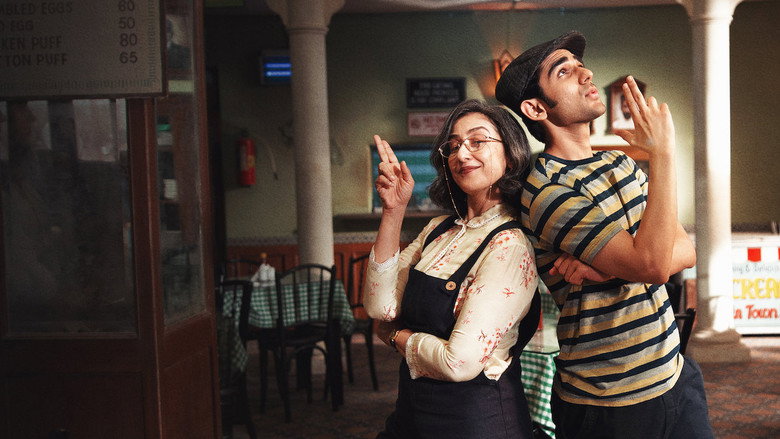
The Irani café is a perfect metaphor for what Maska could have been. These places are relics, stubbornly clinging to a Mumbai that’s disappearing under glass and steel. They’re also deeply specific—each one has its own quirks, its own stories baked into the walls.
But Maska’s Rustom Café feels like a stage set, all polished wood and warm lighting, with none of the lived-in grit of the real thing. The film’s idea of "authenticity" is a montage of chai being poured and buns being buttered, scored to a swelling soundtrack that tells you exactly when to feel sentimental. (The background score is so heavy-handed it might as well come with subtitles: NOW YOU ARE SAD.) Prathyush Parasuraman, writing for Film Companion, put it bluntly: "The failure of this film speaks to a broader failure of the culture of nostalgia."
It’s not that Maska romanticizes the past—it’s that it doesn’t seem to understand it beyond the aesthetics.
The performances are where the film comes closest to life. Manisha Koirala, as Rumi’s mother Diana, is the only one who makes the café feel like a home rather than a museum. There’s a scene where she silently clears a table, her hands moving with the quiet efficiency of someone who’s done this a thousand times.
It’s a small moment, but it’s the closest the film gets to showing what it means to live in a place like this. Javed Jaffrey, as Rumi’s late father, is similarly magnetic—his ghostly appearances are the film’s most interesting gambit, a literalization of the past’s grip on the present. But the script undercuts him at every turn, reducing his wisdom to platitudes about "following your heart" that feel lifted from a Hallmark card.
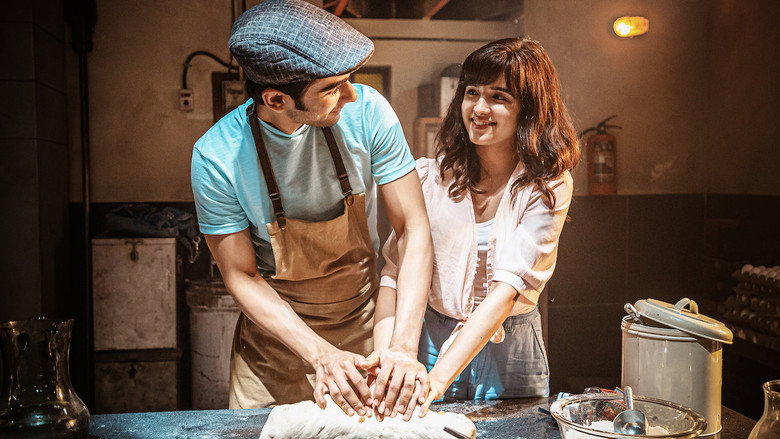
The real tragedy of Maska is that it had all the ingredients for something richer. The Irani café is a dying institution, yes, but it’s also a living one—a place where Parsi culture, Mumbai’s working class, and the city’s relentless modernity collide. The film gestures at this complexity (there’s a subplot about the café’s financial struggles, a passing mention of gentrification), but it never digs in.
Instead, it settles for a series of clichés: the rebellious son, the supportive love interest, the wise elder who appears in dreams to deliver the third-act pep talk. Shubhra Gupta of The Indian Express wasn’t wrong when she wrote, "Manisha Koirala can't save this bland film." The script is so afraid of taking risks that it ends up feeling like a greatest-hits album of coming-of-age tropes, played at half-speed.
There’s a moment near the end where Rumi stands in the middle of the café, surrounded by his family and friends, and delivers a speech about how the place is more than just a business—it’s a legacy. It’s the kind of scene that should feel earned, but it lands with a thud because the film has spent the last hour and a half telling us how to feel, not showing us why we should. The camera lingers on Rumi’s face, the music swells, and I found myself thinking about all the other films that have done this better—The Big Night, Today’s Special, even Chef—stories where the food isn’t just a backdrop but a character, where the struggle between tradition and ambition feels messy and real.
Maska isn’t a bad film. It’s just a forgettable one, the cinematic equivalent of a buttered bun without the butter—dry, bland, and gone from your memory before you’ve even finished chewing. It’s a shame, because the idea of it—the idea of a film that captures the bittersweetness of watching a piece of your city disappear—is a good one.
But Maska is too busy posing for its own nostalgia to actually live in it. And in the end, that’s the real tragedy. The film wants to be a love letter to Mumbai’s Irani cafés, but it never stops to ask what they’re trying to say.
"A lighthearted and sweet Netflix rom-com with charming moments but lacks depth and originality."
The feel-good vibe and the leads' chemistry make it an enjoyable watch for fans of light romance. But the predictable plot and thin character development leave it short on depth and creativity.
Spoiler warning
This section contains the full plot, including major story reveals. Overview above stays spoiler-free.
Netflix’s Maska (2020) served up a slice of Bollywood charm with a modern twist, blending comedy, drama, and romance under the direction of Neeraj Udhwani. The film, starring Manisha Koirala, Prit Kamani, and Nikita Dutta, promised a fresh take on love and ambition—but what went down behind the camera? latestnetflix.com's take is that here’s what the evidence reveals about the making of this quirky flick.
Veteran actress Manisha Koirala, known for her intense performances, took on a role in Maska that required her to step outside her comfort zone. In an interview tied to the film’s release, she admitted the part was challenging, particularly the verbal sparring. "I had to abuse a lot; it was difficult," she revealed, hinting at the sharp-tongued character she portrayed. The film’s mix of humor and drama likely gave her room to flex her range, though specifics about the character’s arc remain scarce in the available snippets.
Koirala’s involvement also sparked conversations about her career resurgence in the digital era. While the evidence doesn’t detail her on-set dynamics, her presence alongside younger co-stars like Prit Kamani and Shirley Setia suggested a generational contrast that might’ve added depth to the story,.
The film’s ensemble cast included Jaaved Jaaferi, whose role in Maska became a talking point—not just for his performance but for his offhand remarks about industry nepotism. In a clip linked to the movie, Jaaferi addressed the controversy head-on, though the snippet doesn’t clarify whether his comments were tied directly to Maska or broader industry dynamics. His inclusion in the project, alongside established and rising stars, underscored the film’s attempt to bridge Bollywood’s old guard with its new wave.
Neeraj Udhwani, the film’s director, brought over 18 years of experience to Maska, having worked across Bollywood, television, and OTT platforms. While the evidence doesn’t dive into his creative process for this specific project, his background suggests a knack for balancing commercial appeal with character-driven storytelling—a trait that likely shaped Maska’s tone.
The film’s runtime (111 minutes) and genre blend (comedy, drama, romance) hint at Udhwani’s attempt to craft a lighthearted yet emotionally layered narrative. However, without deeper production anecdotes, it’s unclear how much improvisation or script tweaks occurred during filming.
Maska was one of Netflix India’s early forays into original Bollywood content, arriving at a time when the platform was aggressively expanding its regional library. The film’s trailer, featuring a mix of humor and romance, positioned it as a crowd-pleaser,. Yet, critical reception remains murky—Rotten Tomatoes lists the cast but no aggregated score, and other snippets don’t clarify whether the film was a hit or a miss with audiences.
Shirley Setia, a rising star with a strong social media following, likely brought a younger demographic to the table, but the evidence doesn’t confirm whether her role was a breakout moment,. Similarly, Prit Kamani and Nikita Dutta’s performances are name-checked in reviews, but specifics about their characters or on-set chemistry are absent.
For all its star power and Netflix’s backing, Maska’s behind-the-scenes narrative feels surprisingly thin. Key questions linger:
Rumors or unverified claims—like whispers about reshoots or script changes—aren’t supported by the provided evidence. If Maska had juicy backstage stories, they’re not surfacing in these sources.
Entertainment rumors and trivia aggregated from public reporting. Treat speculation as unverified unless a cited source confirms it.
More titles in the same genres and with the same cast.